
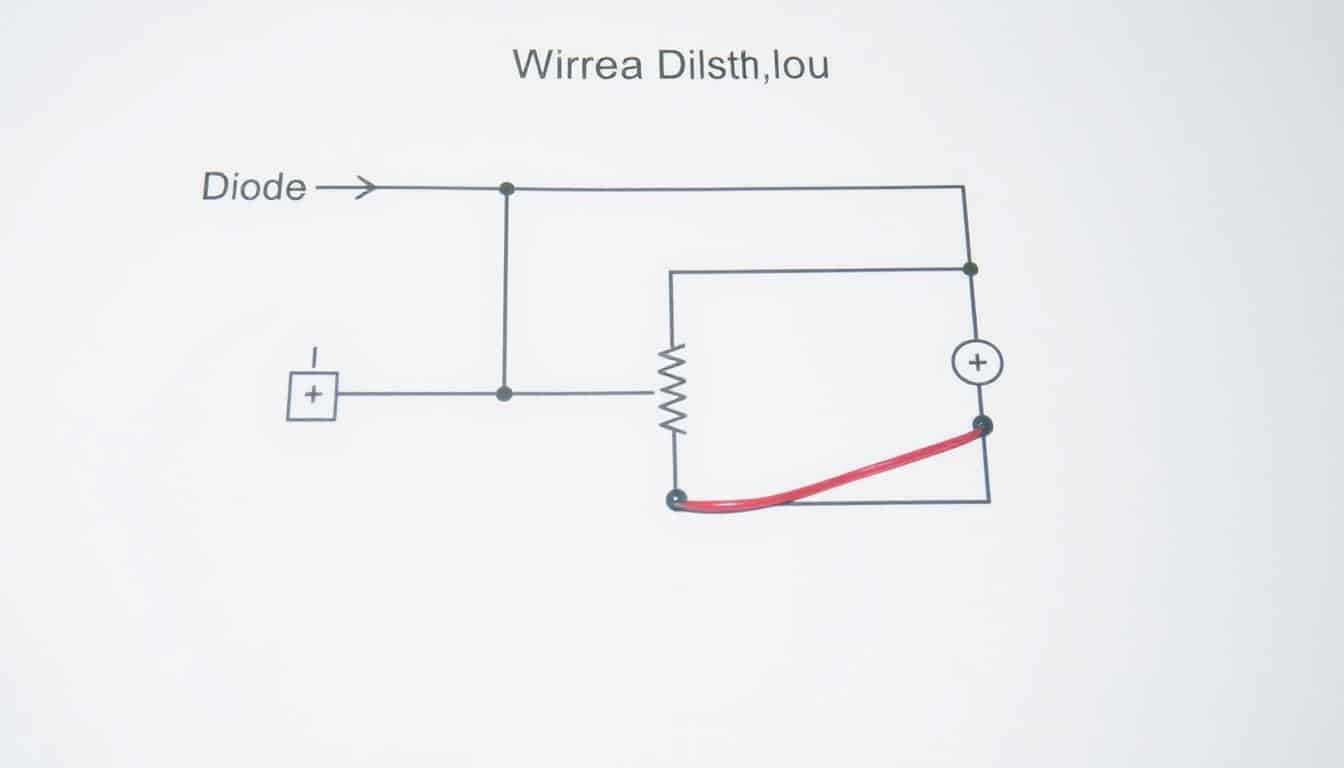
Wiring a Diode: Easy Step-by-Step Guide
Affiliate links — we may earn a commission
“`html
Have you ever considered an easy method to connect a diode without errors? Whether you are a DIY enthusiast or a professional technician, knowing how to connect a diode correctly is essential. This guide will instruct you, from selecting the appropriate components to ensuring it’s connected properly. In doing so, your devices will function efficiently and your diode will perform its role effectively.
Important Insights
- Discover how to connect a diode efficiently and what measures to follow.
- Recognizing the orientation from anode to cathode is vital to prevent mistakes.
- Proficiency in diode wiring enhances the performance of various electronic applications.
- Avoid circuit damage by ensuring the accurate installation of diodes.
- This diode wiring guide is appropriate for both hobbyists and professionals alike.
Comprehending Diodes: Varieties and Applications
Diodes play a significant role in electronic circuits. Each variety has its unique function. They assist with illumination, voltage control, and more, making them essential for numerous applications.
Light Emitting Diodes (LEDs)
LEDs are excellent for illuminating projects. They emit light when electricity passes through them. Understanding how to utilize LED circuit diagrams is crucial for designing effective lighting solutions.
Zener Diodes
Zener diodes are unique in that they operate when voltage is elevated. They are ideal for maintaining voltage stability in electronic circuits, ensuring many devices function correctly.
Schottky Diodes
Schottky diodes switch rapidly due to their structure. They are perfect for fast digital operations. Utilizing them enhances the performance of high-speed circuits.
Rectifier Diodes
Rectifier diodes convert AC to DC voltage. They ensure that electricity flows appropriately, aiding many devices in functioning smoothly. They are vital for maintaining operational efficiency.
How Diodes Operate: Fundamentals of Semiconductor Theory
Diodes function based on semiconductor theory. It initiates with semiconductor wiring. This illustrates how electrons traverse among materials to generate electrical characteristics.
P-N Junctions
The P-N junction is fundamental in semiconductor theory. It is where p-type and n-type semiconductors converge. This region governs the flow of electric current. The polarity of diodes determines whether current can traverse.
Forward Bias and Reverse Bias
Diodes behave differently under forward and reverse bias. Forward bias facilitates current flow as electrons and holes merge. This is the mechanism behind LEDs functioning, resulting in light generation.
In reverse bias, diodes obstruct current flow. This is critical for Zener diodes, which are employed for voltage-sensitive switching.
Generating Charge Carriers through Doping
Doping is essential in semiconductor manufacturing. It introduces impurities to manage charge carriers—electrons and holes. This process is termed charge carrier doping. It is fundamental for the electrical properties of diodes.
| Procedure | Description | Application |
|---|---|---|
| Forward Bias | Enables current flow as charge carriers recombine | LEDs, Standard Diodes |
| Reverse Bias | Restricts significant current flow | Zener Diodes |
| Doping | Introducing impurities to manage charge carriers | All Semiconductor Devices |
Parts Required for Connecting a Diode
To connect a diode circuit, you will need several essential components. These elements are vital for your circuit to function correctly and remain safe.
Diode Selection
Selecting the appropriate diode is the initial step. You may need LEDs, Zener diodes, Schottky diodes, or rectifier diodes. Each type is optimal for various tasks. Refer to your circuit diagrams to choose the right option.
Resistors
Resistors manage the current flowing in your circuit. They prevent the current from exceeding safe levels, which could damage your diodes. Ensure the resistor values align with those specified in your circuit diagrams.
Power Supply
A reliable power supply is crucial. It provides your circuit with the necessary voltage and current. Your power supply should correspond to the voltage and current requirements of your diodes.
Breadboard
The breadboard is essential for testing your circuits. It allows you to experiment and modify your diode circuits effortlessly. This way, you can verify that everything operates correctly before finalizing it.
How to Connect a Diode
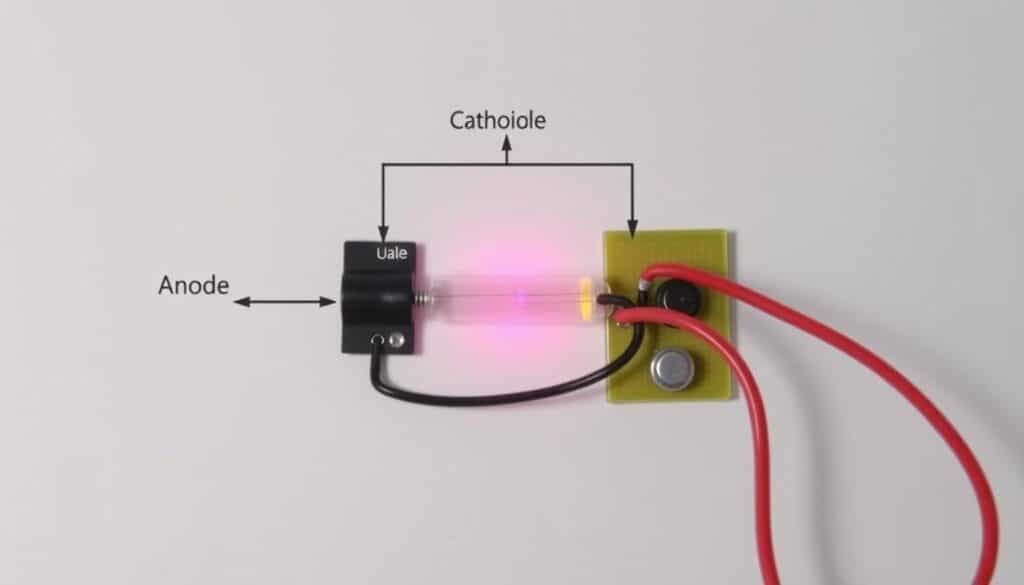
Connecting a diode may appear challenging, but with the appropriate diode installation instructions and comprehension of diode polarity, you can achieve it. Here’s a comprehensive guide to help you connect diodes correctly.
Grasping Diode Polarity
Understanding diode polarity is essential. Every diode features an anode and a cathode. Ensure to connect the anode to the positive side and the cathode to the negative side. Incorrect polarity can damage the diode and affect other circuit components.
Schematic Diagrams
Schematic diagrams play a critical role in visualizing your circuit. They illustrate the positions of each component, such as diodes and resistors, and how they interconnect. By adhering to these diagrams, you can confirm that everything is accurately connected.
Step-by-Step Wiring Process
Here’s how to connect a diode step by step, following best practices and diode installation instructions:
- Identify the anode and cathode of the diode. The anode connects to the positive side, and the cathode to the negative side.
- Refer to the schematic diagram for your project. Verify that each component is positioned correctly.
- Insert the diode into the breadboard, ensuring it is oriented properly. The anode and cathode should correspond with the circuit’s positive and negative terminals.
- Attach additional components like resistors and wires as indicated in the diagram. Review all connections to prevent errors.
- Power on the circuit and verify if the diode operates correctly. If it does, you’ve succeeded.
By adhering to these instructions and being mindful of diode polarity and connecting diodes, you can confidently wire diodes for any project.
Connecting an LED in a Circuit
Connecting an LED in a circuit involves understanding polarity and component placement. Initially, identify the anode and cathode of the LED. The longer leg signifies the anode, which connects to the positive voltage. The shorter leg, the cathode, is linked to the ground.
When creating LED circuit diagrams, incorporating a current-limiting resistor is essential. It prevents the LED from overheating and failing prematurely. To determine the appropriate resistor value, apply Ohm’s Law: R = (V – Vf)/I. Here, R represents resistance, V is the supply voltage, Vf indicates the forward voltage of the LED, and I is the desired current.
Connecting an LED correctly opens up numerous possibilities. You can create displays, indicators, or new lighting concepts. Here’s a basic example:
| Element | Description |
|---|---|
| LED | A semiconductor device that emits light when forward biased. |
| Current-Limiting Resistor | Restricts the LED from drawing excessive current. |
| Power Supply | Delivers the necessary voltage to the circuit. |
| Breadboard | Facilitates easy connections and modifications without soldering. |
Zener Diode in Voltage Regulation Circuits
A Zener diode is a unique
“““html
diode utilized in voltage regulation mechanisms. It maintains your electronic devices at a consistent voltage, even when the power supply fluctuates. Proper usage of Zener diodes is essential for dependable performance.
Selecting the Appropriate Breakdown Voltage
Selecting the appropriate breakdown voltage for a Zener diode is vital. The breakdown voltage must correspond to the voltage you wish to stabilize. This ensures the voltage remains constant, safeguarding your devices from excessive voltage.
Here is a comparative table that can assist in guiding your selection:
| Application | Suggested Breakdown Voltage |
|---|---|
| Low Voltage ( | 3.3V – 4.7V |
| Medium Voltage (5V-12V) | 6.8V – 10V |
| High Voltage (>12V) | 13V – 18V |
Series and Parallel Configurations
Understanding how to connect Zener diodes in series and parallel is significant. Connecting them in series enhances voltage handling, suitable for high voltage demands. Connecting them in parallel improves current handling, making the circuit more resilient against current fluctuations.
Key aspects for each configuration:
- Series Connection: Increases overall voltage capacity by adding the breakdown voltages of each diode.
- Parallel Connection: Improves current handling capabilities by distributing the current over multiple diodes.
Employing these connections properly ensures your voltage regulation operates effectively and efficiently.
Utilizing Schottky Diodes for Rapid Switching Applications
Schottky diodes are recognized for their minimal voltage drop and rapid switching capabilities. This makes them exceptionally efficient, particularly in high-frequency and power-sensitive domains. Their metal-semiconductor junction reduces voltage loss, enhancing performance in various electronic systems.
In power rectification and radio frequency detection, Schottky diodes excel. They are swift, which is critical for today’s digital systems that require fast transitions. When engaged in semiconductor wiring or constructing intricate diode circuit diagrams, employing a Schottky diode can significantly enhance your projects.
- Low forward voltage drop results in improved efficiency.
- They function well in high-frequency applications because of reduced voltage loss.
- They are crucial for rapid switching in digital systems, ensuring swift changes.
- They are essential in power rectification circuits and radio frequency detection.
To maximize the benefits of Schottky diodes, it’s essential to comprehend their role within semiconductor wiring. Understanding how they integrate into diode circuit diagrams is also vital. Whether you are designing a new device or enhancing an existing one, these diodes can be pivotal for superior performance and reliability.
Constructing a Full-Wave Bridge Rectifier Circuit
A full-wave bridge rectifier circuit converts AC to DC. It utilizes four diodes to utilize the entire waveform, making it more effective than half-wave rectifiers.
Comprehending Bridge Rectifier Layout
The full-wave bridge rectifier consists of four diodes arranged in a bridge configuration. It efficiently converts AC to DC. Each diode plays a critical role in managing both halves of the AC cycle.
Step-by-Step Connection Instructions
Learning how to wire a diode in this configuration is essential. Here’s a straightforward guide to help you begin:
- Identify the Diodes: Ensure you have four rectifier diodes. Check their polarity markings.
- Connect Diodes in a Bridge Configuration: Arrange the diodes in a diamond shape. Connect the anode of D1 to the cathode of D2. Repeat for the other diodes, forming a square shape.
- Attach the AC Input: Connect the AC supply to two opposite points of the bridge.
- Link the DC Output: Connect the load across the remaining two points of the bridge. This provides the DC output.
Here’s a table illustrating the connections required for the bridge rectifier circuit:
| Component | Connection Points | Function |
|---|---|---|
| Diode D1 | Anode to AC1, Cathode to DC+ | Allows current during positive AC cycle |
| Diode D2 | Anode to DC+, Cathode to AC2 | Completes the circuit for DC conversion |
| Diode D3 | Anode to AC2, Cathode to DC- | Allows current during negative AC cycle |
| Diode D4 | Anode to DC-, Cathode to AC1 | Completes the circuit for DC conversion |
By connecting the diodes as shown, you achieve effective rectification. This process is essential for powering numerous electronic devices. Knowing how to wire a diode in this manner is fundamental.
Frequent Errors and How to Avoid Them
When connecting diodes, several common errors can impact your circuit’s efficiency. Recognizing these mistakes and how to steer clear of them can significantly enhance your work. Adhering to the proper diode installation instructions is crucial for ensuring your devices function correctly. It also aids when troubleshooting diode circuits.
Incorrect Polarity
A major blunder is connecting the diode incorrectly. Diodes function only in one direction, so reversing them can render them non-functional or even destroy them. Always verify the cathode and anode sides before completing your circuit to avoid this mistake.
Overheating Challenges
Another prevalent issue is overheating due to inadequate current management. This can occur if appropriate resistors are not used or are entirely omitted. Selecting the correct resistor size for your circuit can prevent excessive heat buildup. This damage not only affects the diode but could also jeopardize the entire circuit.
Missed Connections
Overlooked or faulty connections can lead to improper circuit function. This often arises due to neglected wiring or loose connections. Exercising caution and thoroughly testing your circuit can help identify and rectify these issues swiftly. Regularly checking your work can avert these errors, ensuring your diode operates effectively and facilitating circuit repairs.
FAQ
How do you connect a diode correctly?
What types of diodes are available and their applications?
What is the significance of semiconductor theory in diodes?
What components are necessary for wiring a diode?
How do you comprehend diode polarity?
What are schematic diagrams utilized for in diode wiring?
How do you link an LED in a circuit?
How do Zener diodes function in voltage regulation circuits?
What are the benefits of utilizing Schottky diodes for rapid switching tasks?
What constitutes a full-wave bridge rectifier circuit?
What are frequent errors when wiring diodes and how can they be prevented?
Reference Links
- How-To: Diodes – https://www.instructables.com/How-To-Diodes/
- How To Connect A Diode: Step-By-Step Instructions – https://weishielectronics.com/how-to-wire-a-diode/
- Incorporating diode into wiring? Seeking advice. – https://vansairforce.net/threads/adding-diode-to-wiring-need-advice.90247/
“`



Could we also explore how temperature affects a diodes performance? I think its a crucial aspect thats often overlooked.
Interesting guide, but do Zener diodes still hold their importance in modern electronic circuits as much as LEDs do?
Definitely! Zener diodes are vital for voltage regulation, LEDs cant handle that task.
Interesting guide! But does the efficiency of a diodes application depend on the wiring process? Just curious.
While the article offers solid advice on wiring diodes, shouldnt it also touch on potential risks of incorrect installations?