


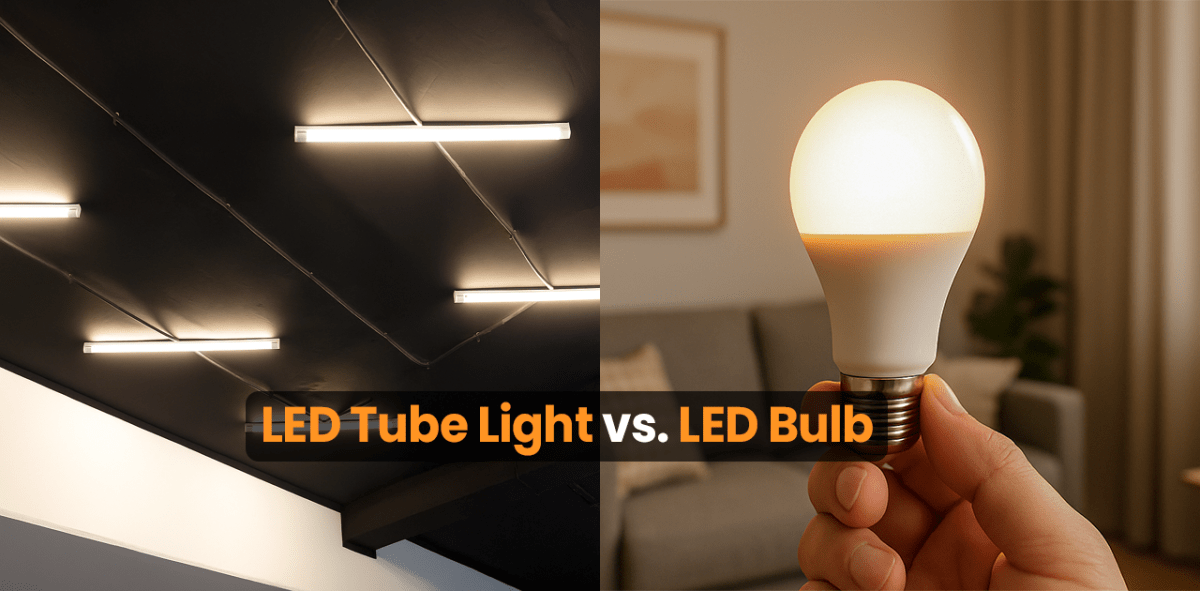
Are you trying to decide between LED tube lights and LED bulbs for your home or office? Choosing the right lighting can save you money, improve your space, and even boost your mood.
But with so many options, it’s easy to feel confused. What if you could quickly find out which one fits your needs best? You’ll discover the key differences, benefits, and drawbacks of LED tube lights and LED bulbs. By the end, you’ll know exactly which option works smarter for you and your space.
Keep reading to make a bright choice that truly shines!

Light Quality And Brightness
Light quality and brightness play a key role in choosing between an LED tube light and an LED bulb. These factors affect how clear and comfortable a space feels. Good lighting can reduce eye strain and make activities easier. Understanding the differences helps pick the right light for your needs.
Color Temperature Options
LED tube lights usually offer a range of color temperatures. They can shine in cool white, warm white, or daylight tones. LED bulbs also provide these options but often focus more on warm or soft white. Color temperature changes the mood of a room. Cooler light feels bright and clean. Warmer light feels cozy and relaxing.
Brightness Levels
Brightness depends on lumens, not watts. LED tube lights often have higher lumens. They work well for big spaces or offices. LED bulbs come in many brightness levels too. They suit smaller rooms or focused lighting. Choose brightness based on room size and use.
Light Distribution
LED tube lights spread light evenly over a wide area. This makes them great for large rooms or workspaces. LED bulbs send light in many directions but less wide. They work best for lamps or spot lighting. Think about where you want light to fall before choosing.
Energy Efficiency
Energy efficiency is a key factor in choosing between LED tube lights and LED bulbs. It affects electricity bills and helps protect the environment. Understanding how each option uses power can guide better choices for your home or office lighting.
Power Consumption
LED tube lights usually consume more power than LED bulbs. A typical LED tube light uses around 18 to 22 watts. LED bulbs often use 8 to 12 watts for similar brightness. Lower power use means less energy wasted and lower bills.
Lifespan Comparison
LED bulbs generally last longer than tube lights. Bulbs can work for up to 25,000 hours. Tube lights last about 15,000 to 20,000 hours. A longer lifespan means fewer replacements and less waste.
Cost Savings Over Time
Lower power use and longer life add up to savings. LED bulbs save more money on electricity bills. Replacing bulbs less often also cuts costs. Over time, these savings make a big difference in your budget.
Installation And Compatibility
Installation and compatibility are key factors in choosing between LED tube lights and LED bulbs. These aspects affect how easily the lights fit into your existing fixtures. They also determine the cost and effort involved in setting up new lighting.
Understanding these details helps you decide which option suits your space best. Both LED tube lights and LED bulbs offer different benefits depending on your needs.
Ease Of Installation
LED bulbs are simple to install. Just screw them into the socket like traditional bulbs. No special tools or skills are needed.
LED tube lights require more effort. They often need a fixture change or rewiring. This can be tricky for those without electrical experience.
Fitting Types
LED bulbs come in various sizes and shapes to fit many fixtures. Common types include E26 and E27 bases.
LED tube lights mostly fit into fluorescent tube holders. These are long and slim fixtures. Compatibility depends on the fixture size and type.
Retrofit Vs New Setup
LED bulbs are ideal for retrofitting. They work with existing sockets and wiring. This keeps costs low and installation fast.
LED tube lights suit new setups better. Switching to LED tubes may need new fixtures or removing ballasts. This involves more time and money.

Design And Aesthetics
Design and aesthetics play a big role in choosing between LED tube lights and LED bulbs. The look of your lighting affects the room’s feel. Both options offer different styles and shapes to fit various designs. Understanding these differences helps pick the right light for your space.
Appearance And Style
LED tube lights have a sleek, long shape. They give a modern, clean look. These lights fit well in offices and kitchens. LED bulbs come in many styles, like round or globe shapes. They can look classic or trendy. Bulbs often add warmth and charm to a room.
Size And Shape Variations
LED tube lights usually come in standard lengths. They are slim and linear. This shape works for wide lighting coverage. LED bulbs vary more in size and shape. Small bulbs fit into tight lamps. Larger bulbs can serve as statement pieces in a room.
Suitability For Different Spaces
Tube lights suit large, open areas needing bright light. They work well in workspaces or garages. LED bulbs fit better in cozy spots like living rooms. They suit table lamps, ceiling fixtures, and wall sconces. Choosing the right design matches the room’s function and style.
Durability And Maintenance
Durability and maintenance play a big role in choosing between LED tube lights and LED bulbs. Both types of lights last a long time. But their build and care needs differ. Understanding these differences helps pick the right lighting for your home or office.
Build Quality
LED tube lights often have a sturdy plastic or glass cover. This protects the inner parts from dust and damage. LED bulbs usually have a glass body with a metal base. The materials in tube lights tend to be thicker. This makes tube lights less likely to break from small hits.
Resistance To Damage
LED tube lights resist shocks better because of their shape. Their long, slim design spreads force evenly. LED bulbs can break more easily due to their round shape. The glass on bulbs is thinner and more fragile. Tube lights also handle heat better. This adds to their lifespan and reliability.
Maintenance Needs
Both LED tube lights and bulbs need little maintenance. Tube lights require occasional cleaning to remove dust. Bulbs also need dusting but can be harder to clean due to their shape. Replacing LED bulbs is usually easier and faster. Tube lights may need more effort to change, especially in high fixtures.
Cost Comparison
Cost plays a big role in choosing between LED tube lights and LED bulbs. Understanding different types of costs helps to make a smart choice. This section breaks down the costs into three parts. It covers the price to buy, the cost to run, and the value over time. Each part gives clear facts about these lighting options.
Initial Purchase Price
LED bulbs usually cost less upfront than LED tube lights. Bulbs are small and simple. Tubes are longer and use more materials. This makes tubes cost more at the start. Bulbs fit most lamps easily. Tubes often need special fixtures. This can add to the first cost. For basic lighting needs, bulbs are cheaper to buy.
Operating Costs
LED tube lights use less power than many bulbs. They spread light over a bigger area. This means fewer lights are needed in a room. Bulbs may use more electricity if many are on. Tubes last longer, so they need fewer replacements. Lower power use and fewer replacements save money on bills. Tubes offer better savings in daily running costs.
Long-term Investment
LED tube lights have a longer lifespan than bulbs. This means fewer purchases and less waste. Tubes work well in offices, schools, and big rooms. Bulbs suit small spaces and lamps. Over time, tubes pay off despite higher initial cost. Bulbs cost less first but may need replacing more. Think about your space and use to pick the best option.
Environmental Impact
Understanding the environmental impact of lighting helps us choose better options. LED tube lights and LED bulbs both save energy. But they differ in how they affect the environment beyond electricity use.
Looking closely at energy use, materials, and disposal reveals which one is greener.
Energy Consumption
LED tube lights usually consume less energy than traditional tube lights. Compared to LED bulbs, the difference depends on size and brightness. Both LEDs use far less power than old bulbs. Less power means fewer carbon emissions. This helps reduce air pollution and climate change.
Material Sustainability
LED bulbs are smaller and use fewer materials. Tube lights need more raw materials like glass and metal. Using fewer materials reduces mining and waste. Some parts of LEDs can be recycled. Sustainable materials lower the impact on nature and save resources.
Disposal And Recycling
LED lights last long but still need disposal. Tube lights are larger and harder to recycle. LED bulbs are easier to handle and recycle. Proper recycling prevents harmful substances from entering soil and water. Safe disposal protects wildlife and human health.
Best Use Cases
Choosing between LED tube lights and LED bulbs depends on the place and purpose. Each has unique features that fit specific needs. Knowing the best use cases helps pick the right light for every space.
Residential Applications
LED bulbs suit most rooms at home. They fit easily into lamps and ceiling fixtures. These bulbs give soft, warm light for living rooms and bedrooms. LED tube lights work well in kitchens and basements. They spread light evenly and cover large areas. Both save energy and last longer than old bulbs.
Commercial And Industrial Uses
LED tube lights shine bright in offices and stores. They provide clear, bright light for workspaces. Factories and warehouses use tube lights for wide coverage. LED bulbs can highlight products or add accent lighting. Both types reduce electricity bills in large buildings.
Outdoor Lighting
LED tube lights are less common outside but work in covered areas. LED bulbs are popular for outdoor fixtures like porch lights. They can handle weather changes better with proper casing. Both options improve safety by lighting paths and entrances. Energy efficiency helps keep outdoor lighting costs low.
Frequently Asked Questions
Which Is More Energy-efficient, Led Tube Light Or Led Bulb?
LED bulbs are generally more energy-efficient for small spaces. LED tube lights consume slightly more power but provide broader illumination. Choose based on your lighting needs and area size for optimal energy savings.
Are Led Tube Lights Or Led Bulbs Better For Office Lighting?
LED tube lights are better for office lighting due to their wide coverage. They provide uniform, bright light, reducing eye strain. LED bulbs work well in smaller, focused areas but lack broad illumination.
Which Lasts Longer, Led Tube Lights Or Led Bulbs?
Both LED tube lights and LED bulbs have similar lifespans, typically 25,000 to 50,000 hours. Lifespan depends on usage, quality, and manufacturer. Proper installation and maintenance can extend their durability.
Can Led Tube Lights Replace Traditional Fluorescent Tubes Effectively?
Yes, LED tube lights effectively replace fluorescent tubes. They consume less power, have longer lifespans, and provide better light quality. They fit existing fixtures, making upgrades simple and cost-effective.
Conclusion
Choosing between an LED tube light and an LED bulb depends on your needs. Tube lights work well for large spaces and provide even light. Bulbs suit smaller areas and offer flexibility in style. Both save energy and last long.
Think about where you want to use them. Also, consider brightness and design. This helps you pick the right one for your home or office. Simple choices lead to better lighting and energy savings.



Leave a Reply