

Step-by-Step Guide: How to Install Landscape Lighting
Affiliate links — we may earn a commission
Installing landscape lighting can transform your home’s nighttime curb appeal, enhance safety, and increase security. With this DIY landscape lighting tutorial, you’ll learn the essentials of how to install landscape lighting in no time. Follow this step-by-step landscape lighting installation guide to revamp your outdoor space with beautiful, energy-efficient lighting.
From planning the layout to connecting various light fixtures to a power source, this outdoor lighting installation guide covers everything you need to know. Let’s brighten up your garden, patio, or deck with stunning landscape lighting!
Key Takeaways
- Types of landscape lighting: solar, low voltage, and line voltage systems
- Effectively plan your landscape lighting layout for optimal illumination and aesthetic appeal
- Gather essential tools and materials for a smooth installation process
- Understand the basics of solar and low voltage landscape lighting installation techniques
- Troubleshoot and maintain your landscape lighting system for lasting performance
Exploring the Types of Landscape Lighting
Landscape lighting can be an effective means of enhancing the aesthetics of your property, providing added security, and improving overall safety. It comes in three primary types, each requiring different installation methods. In this section, we will take a closer look at solar landscape lighting, low voltage landscape lighting, and line voltage landscape lighting, and provide installation tips for each.
Comparison of Solar, Low Voltage, and Line Voltage Systems
Before diving into the details of each type of landscape lighting system, let’s first explore their basic differences. Below is a brief overview of their key distinctions:
Solar Landscape Lighting: This eco-friendly option is powered by photovoltaic cells, which convert sunlight into electricity. Solar lights are wire-free, making them incredibly simple to install. However, they require ample sunlight to charge and may not be the best option for overly shaded areas.
Low Voltage Landscape Lighting: These systems use a transformer to reduce household current to 12 volts, making installation safe and offering flexibility in placement. Low voltage lights are often more energy-efficient and brighter than solar options, but require more in-depth installation.
Line Voltage Landscape Lighting: Operating at the same voltage as standard household current, line voltage systems typically offer the brightest lighting. These types of systems are more complex to install and generally require professional assistance.
Now, let’s break down the distinct aspects of each of these types of landscape lighting systems:
| Type | Power Source | Installation Complexity | Ideal Location |
|---|---|---|---|
| Solar | Photovoltaic cells | Simple | Areas with ample sunlight |
| Low Voltage | Transformer | Moderate | Almost anywhere, but closer to the transformer is more energy-efficient |
| Line Voltage | Standard household current | Highly complex | Large properties and commercial applications |
By understanding the advantages and limitations of each type of landscape lighting, you can better select the system that best suits your requirements and preferences.
A few helpful landscape lighting installation tips to keep in mind include:
- Always read and follow manufacturer guidelines for installation and placement.
- Evaluate your landscape to identify the areas that would genuinely benefit from illumination.
- Plan your layout and acquire the necessary tools in advance to help expedite the installation process.
In conclusion, there are several types of landscape lighting systems available to homeowners, and selecting the right option requires considering factors such as installation complexity, power source, and location. By evaluating these factors alongside the aesthetics and functionality of each type of system, you can choose the landscape lighting option that best suits your needs and enjoy a beautifully illuminated outdoor space.
Planning Your Landscape Lighting Layout
Proper planning is essential when it comes to installing landscape lighting. By taking the time to create a well-thought-out landscape lighting layout, your outdoor space will not only be visually appealing but also safe and functional. Following these **best practices for installing landscape lighting** ensures ideal results:
- Determine the purpose of your lighting: Whether you’re looking to enhance safety and security, highlight key features, or create ambiance, each purpose may require different planning approaches.
- Analyze your outdoor space: Take note of existing features such as pathways, driveways, gardens, trees, and architecture to decide which areas should be illuminated.
- Choose the right type of landscape lighting: Depending on your purpose and location, select solar, low voltage, or line voltage landscape lighting systems to fit your needs.
- Consider the placement of power sources : Ensure that your chosen lighting system can be connected to an appropriate power source.
Once you’ve established the purpose and analyzed your outdoor space, it’s time to start planning the specific layout of your landscape lighting.
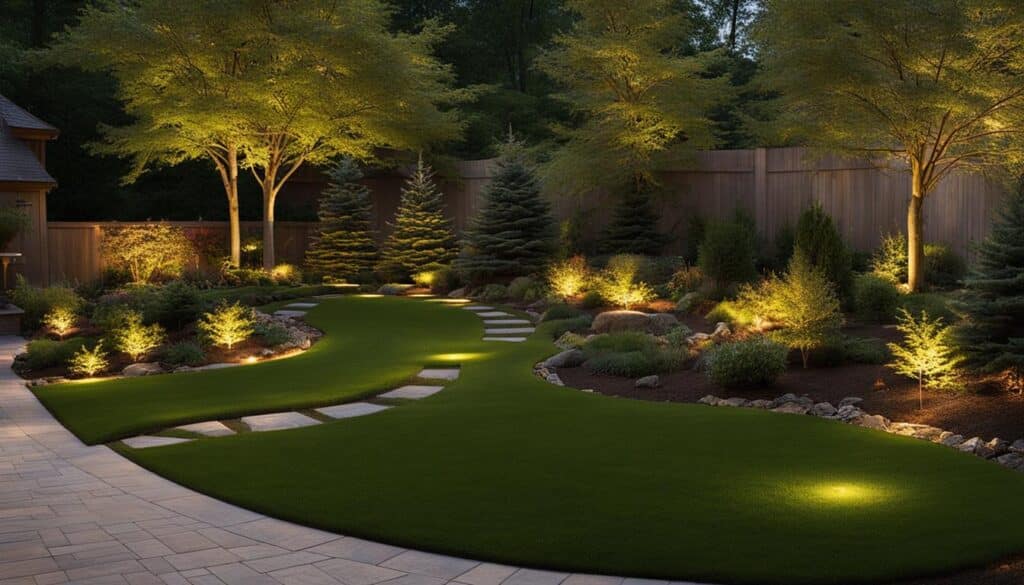
First, make a rough sketch of your outdoor space, marking the spots where you want to install the lights. Be sure to take into account any obstacles or terrain changes that may affect your landscape lighting layout. When planning outdoor lighting, keep these considerations in mind:
| Lighting Type | Placement Considerations |
|---|---|
| Solar Lights | Ensure that there is enough sunlight exposure for charging and avoid placing solar lights close to other bright light sources which may cause a reduction in their performance. |
| Low Voltage Lights | As these lights require wiring, ensure that they are placed near paths, driveways, steps, and architectural features. Be mindful of the distance from the transformer and calculate the required wire length accordingly. |
| Line Voltage Lights | Due to their higher voltage, these lights typically require professional installation. Consult with a licensed electrician to create a safe and compliant layout. |
When your landscape lighting layout is ready, take one last look, considering potential adjustments for better illumination or aesthetics. Remember, a successful landscape lighting installation relies on careful planning and attention to detail.
“Landscape Lighting is part art, part science. When you combine a beautiful landscape with an evening sky, the effect can be breathtaking. The key to landscape lighting success is to properly plan your layout and select the right fixtures to create a comfortable ambiance, whatever the setting.” – Mitch Wilkins, Lighting Specialist
Essential Tools for Landscape Lighting Installation
Installing landscape lighting, whether solar, low-voltage, or line voltage, requires a set of essential tools and accessories to make the process streamlined. In this section, we will look at the necessary tools for the job and discuss the crucial materials required for a successful landscape lighting installation.
Selecting the Right Tools for the Job
The right tools are critical in ensuring an efficient landscape lighting installation. Some of the must-have tools include:
- Wire strippers: Essential for stripping and cutting wires;
- Flat-blade shovels: Used to dig trenches and prep the installation site;
- Phillips screwdrivers: For securing light fixtures and connectors;
- Steel punches: Useful for anchoring fixtures into the ground.
Gathering Materials Before You Begin
To ensure a smooth installation process, it’s crucial to gather all necessary materials and supplies beforehand. Some essential materials include the following:
- Light fixtures: Select fixtures that are compatible with your chosen landscape lighting system (solar, low voltage, or line voltage);
- Transformer: Required for low voltage systems, pick a transformer with sufficient wattage to support your chosen fixtures;
- Low-voltage electrical cable: A key component in connecting your low voltage landscape lights;
- Connectors: Needed for attaching wires and linking fixtures to the main low-voltage cable;
- GFCI-protected outdoor electrical outlet: This safe and secure power source is necessary for low voltage and line voltage systems.
In addition to these materials, you’ll also want to have a shovel on hand for digging trenches for cable laying and anchoring fixtures into the ground.
Pro Tip: Always check the manufacturer’s guidelines and recommendations to ensure you have the appropriate tools, materials, and safety precautions when installing your landscape lighting system.
Once you’ve gathered all the essential tools and supplies, you’re ready to embark on your landscape lighting installation journey. Remember, proper planning and preparation lead to a successful installation that enhances your outdoor space’s beauty, safety, and functionality.
The Basics of Solar Landscape Lighting Installation
Installing solar landscape lights is an increasingly popular choice for homeowners who want to brighten up their outdoor spaces without adding to their electricity bill. The solar lighting setup is quite simple, and it offers a cost-effective and straightforward approach to enhancing a property’s nighttime curb appeal. In this section, we will delve into the solar landscape lighting basics, including location selection, fixture spacing, and area preparation.
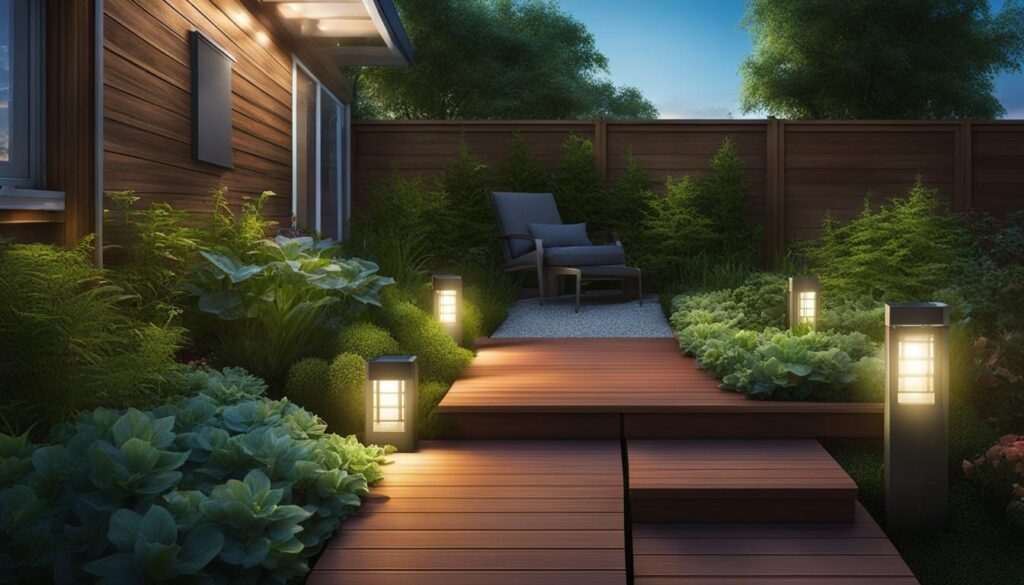
One of the key advantages of solar landscape lights is their wire-free design, which allows for easy installation. However, to work efficiently, these lights need access to ample sunlight for charging their photovoltaic cells. When choosing the optimal location for your solar landscape lighting, consider areas that receive at least six hours of direct sunlight every day. If possible, avoid areas shaded by trees, large shrubs, or structures during peak sunlight hours.
Proper Fixture Spacing and Area Preparation
After determining the best locations for your solar landscape lights, it is crucial to space the fixtures according to the manufacturer’s recommendations. Adequate spacing helps ensure even lighting distribution, enhances visual appeal, and prolongs the life of the solar cells and batteries. As a general rule, space solar path lights about 6 to 8 feet apart.
Remember to prep the area before installing your solar landscape lights by edging walkways, trimming shrubs, or removing any debris that may obstruct the fixtures’ access to sunlight.
Installation Steps for Solar Landscape Lights
- Choose a sunny location for your solar landscape lighting fixtures.
- Space the fixtures according to the manufacturer’s guidelines.
- Prep the area by edging walkways, trimming foliage, or removing any debris.
- Assemble the solar light fixture, typically by attaching the solar panel, light top, and support stake.
- Insert the solar light stake into the ground firmly, ensuring it is plumb and straight.
- Allow the solar light to fully charge in the sun for optimal performance before installation.
With these solar landscape lighting basics in mind, you can enjoy a bright, inviting outdoor space while also benefiting from a sustainable and environmentally friendly lighting solution.
Assembling and Positioning Solar Lighting Fixtures
Assembling solar landscape lights is a relatively simple process, allowing homeowners to transform their outdoor spaces without the need for extensive electrical experience. Before digging into the ground, make sure you have all necessary components ready, including the light top, support, and stake. Then follow these steps to set up and position your solar lighting fixtures:
- Attach the light top to the support, aligning any holes or attachment points as necessary.
- Next, connect the support to the stake that will be driven into the ground, making sure it is secure and stable.
- Find the optimal location for each fixture, taking into account factors like sunlight exposure, spacing, and area coverage.
- When positioning solar lights, ensure they are plumb with the ground to avoid tilting and are spaced according to manufacturer recommendations. Coordinate measurements with these common solar light placement techniques:
- Pathways: Space solar lights 6-8 feet apart along walkways for sufficient guidance and visibility.
- Driveways: Position solar lights approximately 8-10 feet apart and at least 2 feet away from the driveway edge.
- Landscaping: Place solar lights near key features to highlight their beauty and enhance nighttime curb appeal.
Effective Techniques for Solar Light Placement
“The best solar light placement provides a balance between functionality, aesthetics, and sun exposure.”
Given the importance of sun exposure for solar lights, incorporating the following techniques ensures the most effective solar light placement:
| Technique | Benefits |
|---|---|
| Maximize sun exposure | Choosing locations with direct sunlight for the majority of the day allows for better charging and extended light duration. |
| Use manufacturer-recommended spacing | Following recommended spacing guidelines ensures adequate area coverage and reduces over-bright or dimly lit spots in your landscape. |
| Adjustable fixtures | Choosing solar lights with adjustable fixture heads allows for easy customization of the lighting direction and focus on specific areas or features. |
By following these solar light placement techniques and properly assembling your fixtures, your landscape will be beautifully illuminated, enhancing the safety and visual appeal of your outdoor spaces.
How to Install Low Voltage Lighting: Starting with the Transformer
Low voltage lighting installation starts with setting up a landscape transformer for outdoor lighting. Follow the steps below to ensure a smooth installation process.
- Choose a transformer with a high enough wattage rating for the total load of the lighting system and one that can accommodate future expansion.
- Mount the transformer near a GFCI-protected outdoor electrical outlet, keeping it away from sprinklers and water features.
- Connect the main low-voltage wire to the transformer as per the manufacturer’s instructions.
- Plan wire routes from the transformer to each fixture, ensuring they are hidden from view and within the transformer’s range.

Before you start, ensure you select the right transformer for your needs.
| Transformer Feature | Description |
|---|---|
| Wattage Rating | Ensure the rating is high enough for your system’s total load and can accommodate future additions. |
| Type | Choose between electronic, magnetic, or smart transformers based on your system’s requirements. |
| Timer and Sensor Functions | Select a transformer that can work with timers and sensors for efficient landscape lighting control. |
| Weatherproof Design | Pick a transformer with a durable, weatherproof construction to withstand outdoor conditions. |
By following these tips and guidelines, you’ll set the foundation for a successful low voltage lighting installation. A properly installed transformer ensures that your outdoor space will be illuminated safely and effectively.
Remember: When working with electrical components, always follow safety precautions and consult with a professional if you are unsure about any steps in the installation process.
Wiring and Connecting Your Low Voltage Landscape Lights
Connecting your low voltage landscape lights can be an easy and satisfying process if you are equipped with proper knowledge and tools. In this section, we will go over the necessary steps for landscape lighting wiring and connecting low voltage lights to achieve a beautiful, functional low voltage outdoor lighting setup.
Begin wiring your low voltage landscape lights by connecting the light fixtures along the low-voltage cable. Remember to leave some slack for future adjustments. Various connector options are available to secure the connections between the light fixtures and the main cable, including:
- Quick-connect systems
- Permanent watertight connections
To create a proper connection, follow these steps:
- Strip the low voltage cable’s insulation to expose the copper wire ends.
- Insert the stripped ends of the cable into the connector slots of the chosen connector type.
- Tighten the connectors to securely hold the cable in place.
- Connect the other end of the connector to the corresponding terminals on the light fixture.
After connections are made, verify the functionality by turning on the transformer and the connected lights. If everything is working correctly, go ahead and bury the cable. Create a shallow trench approximately 6 inches deep, and carefully lay the low voltage cable within it. Fill the trench back in, covering the cable and restoring the landscape.
Finally, it’s essential to set up the transformer’s timer or photo sensor. This crucial step helps to automate your newly-installed low voltage outdoor lighting setup and ensures lights turn on and off as required. Consult your specific transformer’s manual for the timer or photo sensor setup guidelines.
By following this wiring and connecting guide for your low voltage landscape lights, you can create a stunning and well-functioning outdoor lighting system that adds safety, security, and beauty to your property.
Conclusion
By following this step-by-step guide on landscape lighting installation, homeowners can achieve a well-lit and visually appealing outdoor space. Utilizing solar lighting provides a straightforward and cost-effective solution, while low voltage systems offer flexibility in design and layout. However, if you desire a professional and high-end result, consulting with a licensed electrician may be necessary when dealing with complex line voltage systems.
Troubleshooting any issues after installation is crucial to ensure optimal performance of your landscape lighting. Check connections, sensors, and timers for proper functioning, and make adjustments as needed. Remember, an attractive and functional outdoor lighting setup not only enhances your home’s curb appeal but also increases safety and security.
Whether you’re a DIY enthusiast or prefer to work with professionals, this guide has provided valuable insights on how to install various types of landscape lighting successfully. Next time you’re considering upgrading your outdoor space, keep these pointers in mind for a smooth and gratifying installation experience.
FAQ
What are the three primary types of landscape lighting?
The three main types of landscape lighting are solar, low voltage, and line voltage systems. Each has different installation methods and requirements.
Why is planning the layout important when installing landscape lighting?
Planning your layout is crucial for proper illumination, aesthetic appeal, as well as determining the placement of power sources and calculating wire length. It helps ensure a successful and efficient installation process.
What essential tools are needed for landscape lighting installation?
Tools needed for landscape lighting installation include wire strippers, flat-blade shovels, Phillips screwdrivers, and steel punches. These help in preparing the site, connecting wires, and anchoring fixtures into the ground.
How do I assemble and position solar lighting fixtures?
Assembling solar lights usually involves connecting the light top to the support and attaching the stake. Position the fixtures with manufacturer-recommended spacing and ensure they are plumb when staked into the ground. Make sure they receive ample sunlight for optimal charging.
What is the initial step in installing low voltage landscape lighting?
The first step in low voltage lighting installation is mounting the transformer near a GFCI outlet and connecting the main low-voltage wire. Make sure the transformer has a high enough wattage rating for the total load of your lighting system and can accommodate future expansion.
How do I wire and connect my low voltage landscape lights?
Connect light fixtures along the low-voltage cable, leaving slack for adjustments. There are various connector options available, including quick-connect systems and permanent watertight connections. After making connections, verify functionality, bury the cable in a shallow trench, and set the transformer’s timer or photo sensor as needed.
What should I do if I encounter issues with my landscape lighting installation?
For any issues, troubleshoot connections and ensure proper settings on timers or sensors. Solar installations are usually straightforward, but low voltage systems may need further adjustments and professional landscape lighting may require the help of a licensed electrician for complex line voltage systems.

leds.to
Hi, I'm leds.to, the founder of the world's #1 LED lighting review site. At leds.to, we strive to provide you with the most comprehensive and reliable reviews on LED lighting products. Whether you're looking for car LEDs, super bright LEDs, or even grow light LEDs, you'll find all the information you need right here on our site. With years of experience in the industry, I'll guide you towards making the best purchasing decisions for your lighting needs. Trust me to shed light on the world of LEDs and help you find the perfect lighting solutions.




Who needs landscape lighting when you can just set up a disco ball? #partyinthebackyard
Who needs landscape lighting when you can just stare at the stars? #naturalbeauty
Who needs landscape lighting when you can just use glow-in-the-dark gnomes? #quirkygardenideas
Comment: I never thought I needed landscape lighting, but now I want my garden to look like a disco party!
I cant believe they didnt mention glow-in-the-dark unicorn lights! Total oversight, guys. 🦄✨
Seriously? Glow-in-the-dark unicorn lights? Are you kidding me? There are far more important things to discuss than some tacky, childish lights. Get a grip and grow up already.
Who needs landscape lighting when you can just enjoy the darkness?
Who needs landscape lighting when you can just use glow-in-the-dark plants? 🌼🌟 #naturalbeauty
I never knew installing landscape lighting could be so complicated! Is it really worth the hassle?
Installing landscape lighting can indeed be a hassle, but the end result is absolutely worth it. It enhances the beauty of your outdoor space, adds security, and increases the value of your property. So, roll up your sleeves and embrace the challenge! You wont regret it.
I dont get the hype about landscape lighting. Cant we just enjoy nature in the dark?
Who needs landscape lighting? Just use a flashlight and call it a day!
Who needs landscape lighting? Just use a flashlight and save your electricity bill!
Solar lighting is overrated. Low voltage systems are more reliable and energy-efficient.
Solar lights are overrated! Line voltage systems provide better lighting quality.
Are solar lights really worth it or just a trendy gimmick?
Who needs landscape lighting anyway? Lets embrace the darkness and save energy!
Who needs landscape lighting when you can just enjoy the darkness? Save electricity, embrace nature!
Who needs landscape lighting when you can just use glow-in-the-dark plants? #naturelover
Who needs landscape lighting? Let nature shine in the dark! 🌿✨
Is solar lighting really worth the investment? Lets discuss pros and cons!
Solar lights are cheaper upfront, but are they worth the extra maintenance? 🤔
I think solar lighting is overrated. Low voltage is the way to go!
I think solar lighting is overrated. Low voltage is the way to go!
Solar lighting is overrated! Low voltage is the way to go for landscape lighting.
I think solar lighting is overrated – low voltage all the way!
Solar lighting is the future, my friend. Low voltage may have its perks, but solar is sustainable, eco-friendly, and cost-effective in the long run. Embrace the power of the sun!
I think solar lighting is overrated, low voltage is the way to go!
Why bother with landscape lighting when we could just leave the darkness?
Interesting read, I must say. However, dont you think the article could have done a better job explaining the pros and cons of the various lighting systems? For someone new to this, a little more depth could really clear things up. Just a thought.
This is a great guide guys, but arent we missing the environmental impact of different lighting systems? Sure, solar is a no-brainer, but what about the carbon footprint of low vs line voltage? And lets not forget, installation is just the first step, maintenance matters too! Just food for thought.
Agreed, its high time we focus on the long-term environmental effects, not just installation ease!
I found the comparison between solar, low voltage, and line voltage systems quite enlightening. However, Im left wondering if the energy efficiency and cost over time were considered in this analysis? I believe this would be an important factor for many of us making a decision on landscape lighting.
Interesting read, but Im curious about the maintenance aspect of these lighting systems. How often do we need to replace bulbs in solar or low voltage systems? And what about the impact of weather conditions on landscape lights? I feel these points would make the guide more comprehensive.
I think the comparison between solar, low voltage, and line voltage systems was interesting. But I wish they had included more tips on troubleshooting common issues with landscape lighting installations. What do you guys think?
I agree, troubleshooting tips wouldve been helpful. Maybe theyll include them in a follow-up article soon.
I found the comparison between solar, low voltage, and line voltage systems really interesting. Do you think the initial cost of installation for one type outweighs the long-term benefits of another? Lets discuss!
Definitely a tough call! I think the long-term savings of solar outweigh the upfront costs. Lets chat more!
Im not convinced about the comparison between solar, low voltage, and line voltage systems. I feel like there are more factors to consider than just cost and energy efficiency. What do you all think?
Isnt it a bit presumptuous to think that solar landscape lighting is suitable for everyone? What about those living in areas with less sunlight exposure? Shouldnt there be a more detailed analysis on this?
While I appreciate this guide, shouldnt we focus more on energy efficiency and sustainability in landscape lighting? Solar systems can be installed without professional help, wouldnt that be cheaper in the long run?
Is it just me or are solar lights overrated? Line voltage systems seem way more reliable. Whats your take, guys?
Overrated? Maybe you havent experienced the joy of a lower electricity bill yet!
Interesting guide, but dont you guys feel solar lighting lacks the robustness of low voltage systems? Just my two cents.
Does anyone else think solar landscape lighting is underrated? Surprised the article didnt delve into its environmental benefits more.
Does anyone else think solar landscape lighting is underappreciated? Its benefits seem to outweigh low voltage and line voltage systems. Thoughts?