

Learn How to Install Canless Recessed Lighting Easily
Affiliate links — we may earn a commission
Have you been thinking about giving your home a lighting upgrade? If so, you’re in the right place. I’m here to show you how to install canless recessed lighting in a few simple steps. With this DIY canless recessed lighting installation guide, you can achieve a sleek and modern look for your space without the hassle of hiring a professional.
Follow along as we cover everything from gathering the necessary tools and materials to the final touches of your new lighting setup. Let’s get started on this easy canless recessed lighting installation!
Key Takeaways
- Canless recessed lighting offers a sleek, modern lighting solution without bulky traditional recessed cans
- Ensure power is turned off at the breaker box for safety before starting any work
- Plan your light placement carefully by marking the ceiling before cutting any holes
- Connect wires appropriately and secure the fixtures in place for a polished, energy-efficient installation
- Test your new lighting setup once installed to make sure everything is working properly
Introduction to Canless Recessed Lighting Installation
Canless recessed lighting has become an increasingly popular choice for homeowners and interior designers due to their sleek and contemporary design. With the ability to fit into tight spaces without the need for attic access, canless recessed lights are an ideal lighting solution for various settings. Additionally, advanced models offer adjustable features, such as color temperature settings, providing ultimate control over the ambiance of your space. This canless recessed lighting installation guide aims to share helpful installation tips and provide an introduction to canless recessed lighting for those looking to tackle this DIY project.
Below are some benefits of choosing canless recessed lighting for your home:
- Thin design: Canless recessed lights have a slim profile, occupying minimal space between your ceiling and the floor above, making them perfect for rooms with low ceilings or limited attic access.
- Versatile installation options: These fixtures can be installed in a variety of spaces without the need for attic access, giving you greater flexibility in designing your room’s lighting layout.
- Adjustable features: Advanced models offer adjustable color temperature settings to match your space’s design preferences and create varying atmospheres as needed.
Before diving into the canless recessed lighting installation process, it’s essential to thoroughly understand the scope of the project, prepare the necessary tools and materials, and take necessary safety precautions to ensure a successful DIY installation.
In the following sections, we’ll discuss important steps in the process, including:
- Pre-Installation Checklist for Canless Recessed Lighting
- Safety First: Turning Off The Power
- Planning Your Canless Recessed Lighting Design
- How to Cut the Perfect Hole for Your Lighting
- Wiring Basics for Canless Recessed Lights
- Connecting Canless Recessed Lights in Series
- Securing the Junction Box and Finalizing Connections
- Mounting the Canless Recessed Lights
- Finishing Touches
Now that we’ve introduced you to canless recessed lighting and its benefits, it’s time to start your DIY journey by learning about the vital pre-installation preparations in the next section.
Pre-Installation Checklist for Canless Recessed Lighting
Before diving into the installation process, we must ensure that we have all the necessary tools and materials required for a successful canless recessed lighting project. Also, understanding the layout of the space will make for an efficient and seamless lighting design.
Gathering the Necessary Tools and Materials
- Drywall saw or multi-tool to cut holes in the ceiling
- Wire strippers
- Voltage tester
- Personal protective equipment (safety goggles, gloves, etc.)
- Canless recessed light fixtures
- Wire nuts and Romex connectors

Understanding the Layout of Your Space
Planning the canless recessed lighting design is a critical step to achieve the desired look and functionality. It’s crucial to visualize and carefully mark out the layout of the lights, taking into account the space’s function and intended effect. Here are some key steps to follow:
1. Measuring and spacing the lights
Determine the number of canless recessed lights needed for the room and ensure that they are spaced evenly. A general rule of thumb is to place lights approximately 2 feet away from the walls and 4-6 feet apart from each other.
2. Using provided templates
Use the templates provided with your canless recessed lights to mark the exact locations for the light fixtures on the ceiling. This will help you create a consistent pattern and harmonious aesthetics in the room.
3. Aligning with structural components
Before finalizing the layout, double-check that the marked spots align with the structural components of the space. Canless fixtures should not intersect with any ceiling joists or other support structures.
4. Considering room traffic and focal points
Keep in mind the room’s traffic patterns and focal points, such as artwork or furniture arrangements. Strategically placing lights to illuminate these areas will further enhance the room’s aesthetics.
Remember, while planning the lighting layout, consider both the aesthetics and functionality of canless recessed lights in the space. Account for areas that require task lighting, ambient lighting, or accent lighting to create an effective design.
With the necessary tools and materials gathered and a well-considered layout in mind, you’re now ready to start your canless recessed lighting installation!
Safety First: Turning Off the Power
When it comes to safety during a canless recessed lighting installation, the most critical step is to ensure proper electrical safety. Before you begin working on the installation, it is essential to turn off the power at the breaker box. Cutting off the electricity may seem obvious, but it’s a crucial step in preventing electrical shock and creating a safe environment for your project.
Once you have turned off the power at the breaker box, it’s necessary to test the area where you’ll be working with a voltage tester. This device will help confirm if there’s any live current in the wires, preventing accidental exposure to electricity. To do this, place the tips of the voltage tester on the exposed wiring and pay attention to the tester’s readings or lights. If there’s no live current, it’s safe to proceed with your installation.
Remember, turning off the power and using a voltage tester is not just a recommendation—it’s a crucial step to ensure your safety during the canless recessed lighting installation process.
- Locate the breaker box in your home.
- Find the circuit breaker that controls the electricity in the room where you’re installing the lights and flip it to the off position.
- Carefully use a voltage tester to confirm that there’s no electric current in the area where you will be working.
- Once the power is confirmed off, proceed with the installation process.
In summary, always prioritize safety when working on electrical projects, such as canless recessed lighting installation. Taking the appropriate precautions ensures that the process is secure and risk-free. By turning off the power at the breaker box and using a voltage tester, you can avoid electric shocks and create a safe installation environment.
Planning Your Canless Recessed Lighting Design
One of the essential aspects of a successful canless recessed lighting installation process is detailed planning. This involves determining the number of lights, their distribution, and marking the ceiling before making any cuts. A well-thought-out light placement strategy is vital for achieving a balanced and visually appealing look.
Marking Your Light Placement
Start by measuring the distances between the desired locations for your canless recessed lights. Keep an equal distance between the fixtures to maintain balance, unless you wish to achieve specific lighting goals that dictate otherwise. Taking the time to carefully plan your layout will greatly improve the final look of your installation.
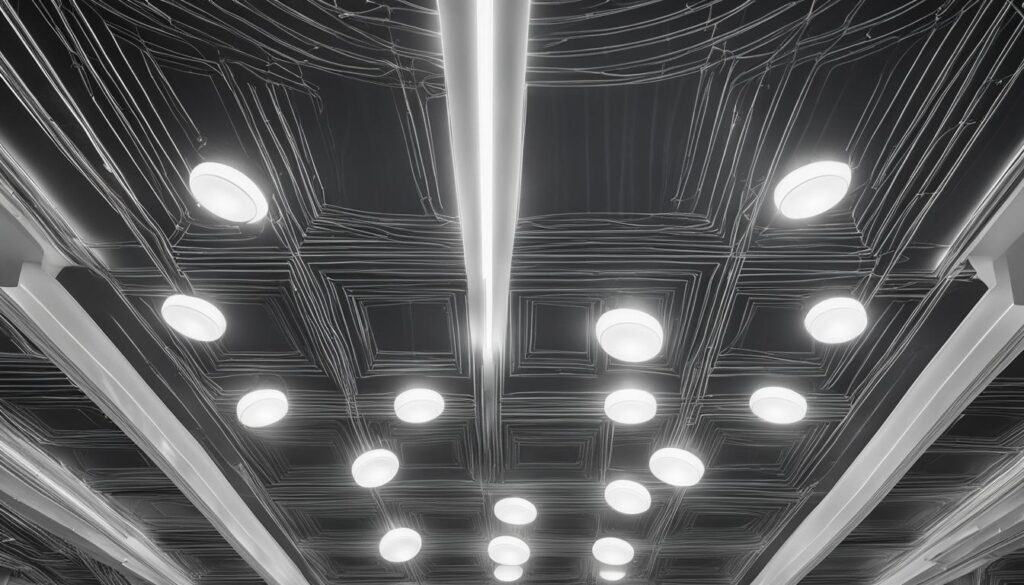
- Measure the desired distance between each light fixture and make a small mark on the ceiling.
- Use a provided template or a compass to draw a circle around each mark, representing the size of the hole required for each canless recessed light.
- Double-check your measurements to ensure consistency and an even distribution of lights.
Remember, making adjustments during this planning stage is much easier than fixing mistakes after cutting the holes in your ceiling. Always measure twice and cut once.
Following a meticulous light placement strategy will lay the foundation for a successful canless recessed lighting installation, resulting in a modern and polished look that enhances the ambiance of your space.
How to Cut the Perfect Hole for Your Lighting
Once you have precisely marked the ceiling for your canless lights, it’s time to cut the perfect hole for each fixture. Cutting clean, accurate holes are crucial to achieving a polished look and snug fit for the light fixtures. Let’s go through the process step-by-step:
- Choose the right tool – For cutting holes in the ceiling, use either a drywall saw, a Dremel Multi-Max tool, or a hole saw. Various tools make the job more manageable, depending on individual preferences and the specific ceiling material.
- Trace the cut-out area using the template – Light fixtures often come with a provided template or measurements for the cut-out area. Trace the template found inside the light’s box or use the given dimensions to determine the cut line accurately on your ceiling marks.
- Cut the hole – With your tool of choice, carefully follow the traced line to cut the hole in the ceiling. Keep a steady hand when cutting to ensure a clean, straight edge.
- Test the fit – Before moving on to the next hole, test the fit of your light fixture by holding it up to the cut hole. This will ensure that the cut is precise enough to accommodate the fixture. If necessary, make minor adjustments to the hole to perfect the fit.
Pro tip: Remember to wear safety goggles and a dust mask when cutting holes in the ceiling to protect yourself from dust and debris.
By carefully choosing the right tool, tracing the template or following given measurements, and testing the fit with the actual fixtures, you will achieve perfect holes for your canless lighting installation. This method will ensure your new lights look professional and well-placed, enhancing the aesthetic appeal of your space.
Wiring Basics for Canless Recessed Lights
Before you get started with connecting the wiring for your canless recessed lighting, it’s essential to have a clear understanding of the process. Properly connecting the electrical wires is crucial for safety and the smooth functioning of your new lighting setup. In this section, we’ll walk you through the steps of making the correct electrical connections for your canless recessed lighting.

First, feed the electrical wiring through the new holes you’ve cut in the ceiling. Strip a few inches off the ends of the wires to reveal the copper wire strands inside. You’ll see three wire strands: black (hot), white (neutral), and green (ground).
Next, unscrew and remove the knockout plugs from each light fixture’s junction box. Once you’ve removed the plugs, connect the Romex connector to the junction box by threading it through the hole and securing it with the provided nut.
- Connect the black (hot) wire from the house to the black wire from the light fixture using a wire nut.
- Connect the white (neutral) wire from the house to the white wire from the light fixture using a wire nut.
- Connect the green (ground) wire from the house to the green wire from the light fixture using a wire nut.
Once you’ve made the proper connections, carefully tuck the wires back into the junction box and cover it with the plate attached to the light fixture.
Pro Tip: Double-check the connections are secure and the right colors are matched together to prevent any issues with the electrical system.
Making the correct electrical connections recessed lighting has never been easier when following these simple steps. With a basic understanding of canless recessed lighting wiring basics, you are now ready to proceed to the next milestone in your canless recessed lighting installation journey.
Connecting Canless Recessed Lights in Series
When it comes to wiring your canless recessed lights, connecting them in series is an effective approach that not only simplifies the installation process but also ensures efficient use of energy. In this section, we’ll walk you through the entire process of daisy-chaining multiple canless lights and managing cables between them.
Managing Cables Between Lights
For a successful and organized installation, you need to route the cables between fixtures and make the necessary electrical connections. When planning your installation, consider the following steps:
- Estimate the distance between the canless recessed lights and cut an adequate length of cable for each connection.
- Feed the cable through the holes you’ve cut for the fixtures, leaving enough slack to allow for the connection of each light.
- Strip approximately 1/2 inch of insulation from the cable ends, exposing the color-coded wires (black, white, and ground).
With the cables prepared, it’s time to connect the canless lights in series. This involves connecting the black wire from the first light to the black wire of the second light, the white wire from the first light to the white wire from the second light, and the ground (green or bare) wires together. You should also connect these wires to the corresponding wires in the junction box supplied with the fixtures.
Note: Be sure to secure all connections with wire nuts, making sure they are tightly attached and taped (if necessary) to prevent accidental disconnection.
When connecting the last fixture in the chain, you’ll notice there is an empty slot on the terminal block designed for the outgoing cable. This slot is not used in the final fixture, and the remaining connections should be made as usual.
Once all canless recessed lights in series have been connected, carefully tuck the wires back into the junction box and proceed to the final stages of the installation process: securing the junction box, attaching it to the light fixture, and mounting the fixtures in place.
Securing the Junction Box and Finalizing Connections
Now that your canless lights are connected in series, it’s time to focus on ensuring a safe and tidy installation by securing the junction box and finalizing your electrical connections. Keep in mind that a secure fit and a clean installation not only improve the aesthetics but also contribute to the overall safety of your lighting system.
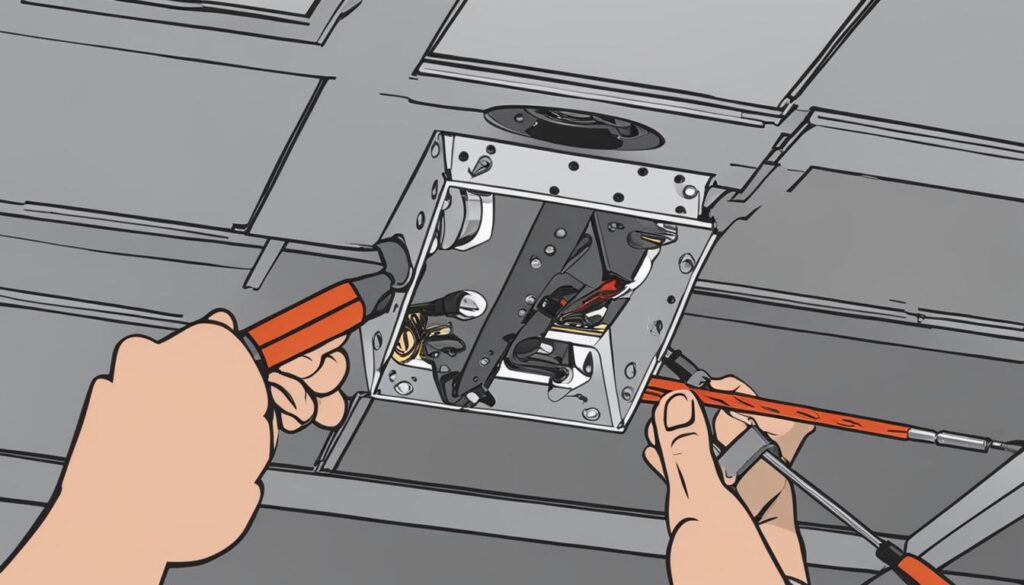
Ensuring a Safe and Tidy Installation
Follow these steps to enclose and mount your junction box and canless light fixture securely:
- Tuck in the wiring: Gently fold the connected electrical wires and push them into the junction box, taking care not to damage the connections or overcrowd the box.
- Close the junction box: Attach the cover to the junction box, making sure it is securely fastened and completely enclosing the electrical connections. This helps prevent any potential electrical hazards.
- Attach the junction box to the light fixture: Align the junction box with the mounting brackets or slots on your canless light fixture and fasten it securely using screws or clips.
Once these steps are completed, your electrical connections should be neatly contained within the junction box, and your canless light fixture should be securely attached to it.
Remember to double-check your work and ensure that all components are properly enclosed and mounted. Any loose connections or improperly secured junction boxes can pose a risk to the safety of your lighting system.
| Step | Task |
|---|---|
| 1 | Tuck in the electrical wires |
| 2 | Close the junction box |
| 3 | Attach the junction box to the light fixture |
With the junction box and electrical connections secure, you’re ready to move on to the final step of mounting your canless recessed lights onto the ceiling. By following these guidelines, you’ll be well on your way toward enjoying a safe, efficient, and attractive canless lighting solution.
Mounting the Canless Recessed Lights
Now that the junction boxes are securely closed and attached to the light fixtures, it’s time to focus on mounting the canless recessed lights. The process is surprisingly simple and streamlined, with some key advantages in comparison to traditional fixtures.
Start by approaching the hole in the ceiling where the light will be mounted. Most canless LED lights are equipped with spring-loaded wings or tabs that latch onto the ceiling material, ensuring a snug and flush fit.

Align the light fixture by positioning it directly above the hole in the ceiling. Then, simply press the light into the opening and allow the spring-loaded wings or tabs to snap into place. These wings or tabs will grip the ceiling material and create a secure connection. The light should be flush with the ceiling, providing a seamless and polished look.
Note: Some models of canless recessed lights may utilize a slightly different mounting mechanism, so be sure to consult the manufacturer’s instructions for specific guidance on your chosen fixture.
Once all the lights are mounted, take a step back and admire your work. You have successfully installed canless LED lights into your space, transforming the room with a modern and energy-efficient lighting solution.
Mounting canless recessed lights is easier than you may think, with spring-loaded wings or tabs that make installation a breeze.
Finishing Touches
Now that your canless recessed lights are installed, it’s time for the final touches. The last step involves turning the power back on and testing each light to make sure they’re working properly. Any adjustments to light settings, if available, should be done before this step to prevent the hassle of reopening the junction boxes.
Please ensure you turn the power back on only after you have finished installing and connecting all the lights. Safety should always be your top priority.
Testing Your New Lighting Setup
Before testing your canless recessed lights, take a moment to double-check all connections and make sure everything is securely in place. Once you are confident that the installation is complete, you can follow these steps:
- Turn the power back on at the breaker box.
- Switch on the lights using the main room switch or any associated dimmer switch (if applicable).
- Check each light to confirm they’re working correctly. Keep an eye out for any flickering, dimming, or unusual behavior.
Note: If any lights aren’t functioning as expected, it may indicate a faulty connection or a faulty light fixture. Ensure all connections are secure and try replacing the light if the problem persists.
Once you’ve tested your newly installed canless recessed lights, take a step back and admire your work. Your energy-efficient and sleek lighting setup has brought a modern touch to your space, and you can enjoy the benefits it offers for years to come.
Conclusion
After completing the canless recessed lighting installation, it is clear that this modern and sleek lighting solution elevates the aesthetics and functionality of any space. Throughout the entire process, I followed a systematic approach, from gathering materials and creating a layout design, all the way to ensuring that each light is connected and functioning properly. The result is a beautiful, energy-efficient lighting setup that can transform any room.
This hands-on project covers all the essential knowledge needed for a DIY canless recessed lighting installation. It highlights safety measures, proper wiring, and secure mounting techniques, allowing even those with little to no experience in electrical work to take on this project with confidence. The efficiency and aesthetic these energy-saving lights provide are definite game-changers in home improvement projects and cater to a wide variety of demographics.
In conclusion, with the canless recessed lighting installation complete, I encourage others to consider this lighting technology for other areas in their home or workplace. It’s a versatile, energy-efficient, and affordable solution that adds a touch of modernity to your unique space. Take pride in your completed project and watch as it revamps and reenergizes your surroundings!
FAQ
What tools and materials do I need for canless recessed lighting installation?
To successfully install canless recessed lighting, you’ll need the following tools and materials: canless light fixtures, a provided template, a drywall saw or multi-tool, wire strippers, a voltage tester, Romex connectors, wire nuts, and personal protective equipment.
How do I plan the layout of my canless recessed lighting?
Visualize the desired effect and function of the space, then measure the distances between fixtures, using the provided template for consistent marking. Aim for an equal distance between fixtures to achieve a balanced look unless specific lighting goals dictate otherwise.
What safety measures should I take before starting the installation?
Before beginning installation, turn off the power at the breaker box, and use a voltage tester to ensure there’s no live current in the wires to avoid electric shock and create a safe work environment.
How do I cut the correct hole size for canless recessed lights?
Use the provided template to trace the cut-out area on the ceiling for each light fixture. Then, use a drywall saw, Dremel Multi-Max tool, or a hole saw to carefully cut the holes, testing the fit with the light fixtures to ensure precision.
What is the proper process for connecting canless recessed lights in a series?
To connect multiple canless lights in a series, route cables between lights, and make precise electrical connections according to color codes: black to black, white to white, and ground to green. If a fixture is the last in the chain, it will have an empty slot in the terminal that should be capped.
How do I properly secure the junction box and finalize the connections?
Tuck the electrical wires neatly into the junction box, close it securely, and attach the junction box to the light fixture. Ensure a secure fit and a clean installation, with all components properly enclosed and mounted.
How do I mount canless recessed lights to the ceiling?
Snap the light into the ceiling using spring-loaded wings or tabs, ensuring the light fits snugly and flush with the ceiling surface. Canless lights are generally easier to mount compared to traditional fixtures.
How do I test my new canless recessed lighting setup?
Once the installation is complete, turn the power back on and test each light to ensure proper function. If your fixtures have adjustable settings, make these adjustments before turning the power back on to avoid reopening the junction boxes.


Comment: I never knew recessed lighting could be installed without cans! Mind-blowing stuff! 🤯
Comment: Who needs canless recessed lighting when you can just use a flashlight? #oldschool
I cant believe they didnt mention the importance of wearing a unicorn onesie while installing canless recessed lighting! 🦄✨
Seriously? Wearing a unicorn onesie has no relevance to installing canless recessed lighting. Lets focus on practicality and safety rather than unnecessary gimmicks.
Who needs canless recessed lighting when you can just use fairy lights?
Comment: Who needs canless recessed lighting when you can just use a lamp? 🤷♀️
Who needs canless recessed lighting when you can just use glow-in-the-dark stickers? #budgetfriendly
Glow-in-the-dark stickers may work for some, but they cant match the elegance and functionality of canless recessed lighting. Its all about creating the right ambiance and enhancing your space, not just settling for a cheap alternative. #qualityoverquantity
I dont get why anyone would bother with canless recessed lighting. Seems like unnecessary hassle.
Who needs canless recessed lighting when you can just use a flashlight? 🕯️
Canless recessed lighting? No thanks, I prefer the good old-fashioned light bulbs!
Who needs canless recessed lighting when you can just use fairy lights?
Who needs fancy canless recessed lighting when candles provide a warm, cozy ambiance? #oldschoolvibes
Who needs recessed lighting when you can just use a good ol flashlight?
I dont see the point of installing canless recessed lighting. Its just unnecessary!
I dont see the point in installing canless lighting, seems like a waste.
Comment: Why bother with canless recessed lighting when candles are more romantic?
I dont get the hype about canless recessed lighting. Give me good old-fashioned lamps any day!
I dont get the hype about canless lighting. Seems like a waste of money.
Do we really need canless recessed lighting? Seems like a waste of time and money.
I think traditional lighting is better, canless seems unnecessary.
Why bother with canless recessed lighting when candles create a cozy ambiance?
I dont see the point of canless lighting. Seems like a waste of money.
I think traditional recessed lighting is still better than canless.
Canless lights? Waste of money. Stick to traditional lighting methods.
I think traditional recessed lighting is better for ambiance. Who needs canless lights?
I think using canless recessed lighting is a game-changer for home upgrades!
Installing canless recessed lighting seems like a fun DIY project to tackle!
I never knew installing canless recessed lighting could be this easy! Mind blown 💡🤯
I dont see the point in canless lighting when traditional recessed lighting works fine.
I dont see the point of canless lighting. Its just unnecessary complexity.
Canless lighting offers simplicity by eliminating the need for bulky cans and providing a sleeker look. It also saves on installation time and costs. Dont knock it till you try it!
I think canless recessed lighting is overrated. Give me traditional lighting any day!
I think traditional recessed lighting is better – why fix what isnt broken?
Has anyone tried installing canless lighting upside down for a unique look?
I dont see the point of canless recessed lighting. Traditional lights work just fine.
I think installing canless recessed lighting is overrated. Stick with traditional options.
I respectfully disagree. Canless recessed lighting offers a sleeker look, easier installation, and better energy efficiency. Traditional options have their place, but embracing new technology can enhance the overall aesthetics and functionality of your space. Give canless lights a chance before dismissing them entirely.
I think traditional recessed lighting is still better. Canless seems like unnecessary hassle.
While this article covers the basics of canless recessed lighting installation, I believe it’s pivotal to discuss the power consumption and potential energy efficiency of these lights. Theyre not just about aesthetics, but also have a significant impact on our utility bills. Do they provide a cost-effective solution in the long run?
Great article! Just wondering, could we possibly get more insights on safety precautions when installing canless recessed lighting? Its a crucial topic that seems to be left out. Also, perhaps a discussion on the longevity and energy efficiency of different lighting options would be beneficial for readers. Thanks!
While I appreciate the detailed guide on canless recessed lighting installation, I cant help but wonder why theres no mention of safety precautions. Working with electrical installations can be risky and even a small oversight can lead to a mishap. Shouldnt safety be a priority and be included in the pre-installation checklist?
While the whole DIY Canless Recessed Lighting Installation sounds appealing, dont you guys think its better left to the professionals? I mean, not everyones cut out for this intricate work. Plus, the risk of electrical mishaps is high. Just a thought, folks.
Just read the article on installing canless recessed lighting. Im curious, wouldnt pre-wiring be a significant consideration before installation? The article seems to gloss over this aspect.
Interesting read, but doesnt anyone feel that the article could have benefited from a Common Mistakes & Troubleshooting section? For DIY novices, that would have been a real lifesaver.
I appreciate the detailed guide, but isnt it worth mentioning the energy efficiency aspect of canless recessed lighting? I think thats a key selling point for many homeowners.
Im still not convinced about switching to canless recessed lighting. Seems like a lot of effort for something thats supposed to be easier. Anyone else feeling skeptical about this?
I cant believe they didnt mention the importance of checking for compatibility with existing wiring in the article. Thats a key step that could save a lot of headaches down the road!
Im not convinced that installing canless recessed lighting is as easy as they make it seem. I mean, gathering tools and materials is just the beginning – what about the actual installation process? Seems a bit daunting to me.
Do you really need canless recessed lighting? Seems like a lot of hassle for just some lights. Id rather stick to regular fixtures. Thoughts?
Canless lighting is sleek, modern, and energy-efficient. Regular fixtures are outdated. Upgrade your lighting game!
While the article clearly explains the process of installation, it would be useful to include common troubleshooting tips. Its inevitable that DIY projects encounter issues.
While the article is quite comprehensive, wouldnt it be more practical to hire a professional instead of DIY? After all, were dealing with electrical installations here.
Interesting read! But Im wondering, could we leverage smart home technology to automate these canless recessed lights? Would love to see a follow-up article on this.
Guys, isnt canless recessed lighting a bit overrated? DIY sounds cool but wouldnt hiring a pro save us a lot of hassle?
Interesting read, but seriously, why not just hire a professional electrician? Is the DIY hustle really worth the potential mishaps?
Anyone else think canless recessed lighting is overrated? Sometimes, I feel like a nice, old-fashioned lamp does the trick!
Old-fashioned lamps? Get with the times, canless lights are the future!
Interesting read, but doesnt anyone think its important to discuss potential electrical hazards in the pre-installation checklist?
Interesting read, but isnt it cheaper and easier to hire a professional than gathering all these tools for one-time use?
Anyone tried this with a dimmer switch? Not sure if the canless setup would affect the functionality at all.
Interesting read, but could anyone clarify why canless recessed lighting is better than traditional options? Asking for a friend.