

As a homeowner looking to upgrade my kitchen’s appearance with under cabinet lighting, I quickly realized that one of the critical aspects of this project would be figuring out how to hide under cabinet lighting wires. In this guide, I’ll share essential under cabinet lighting wire hiding tips to help you maintain a neat, organized look in your kitchen while utilizing effective kitchen under cabinet lighting.
Key Takeaways
- Select the right wire gauge for easier concealment and better organization
- Plan efficient wire routing to minimize visibility
- Use wire clips or channels to securely place and hide wires
- Consider drilling holes in cabinets for a more concealed wire management approach
- Opt for wire molding to camouflage wires and create a sleek finish
- Enhance wire concealment with wire covers or grommets
- Test your under cabinet lighting installation to ensure proper functionality
Understanding the Importance of Wire Gauge in Cabinet Lighting
When it comes to wire management for under cabinet lighting, choosing the right wire gauge is paramount. Wire thickness selection plays an integral role in the effectiveness of concealing cables and maintaining a neat look for your kitchen’s lighting setup. In this section, we’ll dive into the importance of wire gauge and discuss choosing the right wire thickness for your cabinet lighting project.
Choosing the Right Wire Thickness
The appropriate wire gauge depends on various factors, including the light fixtures, total wattage, and the length of the wires. Thinner wires offer increased ease of concealment and versatility in tight corners, while thicker wires may provide more durability and support for higher wattage requirements. To make an informed decision, consider the following guidelines:
- Refer to the light fixtures’ manufacturer guidelines for recommended wire gauge specifications.
- Calculate the total wattage of your lighting system to determine the wire gauge that can handle the load.
- Factor in the length of the wires needed for your setup, as longer distances may require a thicker wire to minimize voltage drop.
To illustrate the differences between wire gauges, we have compiled a table showing the size, diameter, and applications for the most common wire gauges used in under cabinet lighting projects:
| Wire Gauge (AWG) | Diameter (Inches) | Common Applications |
|---|---|---|
| 18 | 0.0403 | Low voltage lighting systems, LED strip lights |
| 16 | 0.0508 | LED fixtures, low voltage landscape lighting, speaker wires |
| 14 | 0.0641 | High wattage under cabinet lighting, higher voltage lighting systems |
| 12 | 0.0808 | Commercial grade lighting systems, high current applications |
Selecting the right wire gauge will not only ensure a proper installation and functioning of your lighting system but also make organizing under cabinet lighting wires much more manageable. Thus, good wire management begins with a well-informed choice in wire thickness.
Remember, if you’re unsure about selecting the correct wire gauge for your cabinet lighting, it’s always best to consult a professional electrician for advice.
In conclusion, wire gauge plays a crucial role in the success of your cabinet lighting project. Choosing the right wire thickness ensures an effective and safe installation while making wire concealment more achievable. Keep these guidelines in mind as you plan your under cabinet lighting setup and start organizing your wires like a pro.
Initial Steps for Organizing Under Cabinet Lighting Wires
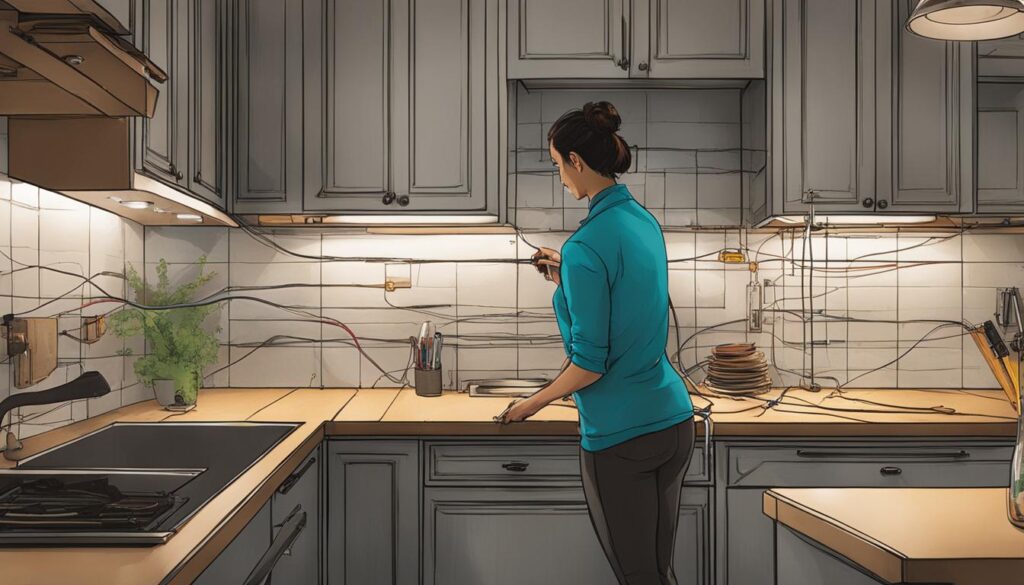
Organizing your under cabinet lighting wires is no small feat, but with some planning and thought, it’s possible to create a seamless, clean look in your kitchen. Begin by devising a discrete wire routing plan that minimizes visibility and considers factors like power sources and outlet locations.
- Identify power source: Determine where the wiring will draw power, making sure to choose an accessible and discreet location.
- Layout wire path: Chart a wire path that ensures functionality and neatness while minimizing exposure to the casual observer.
- Measure length requirements: Keeping the wire path design in mind, measure the lengths required for the needed wires.
Once you have this preliminary plan in place, consider the best ways to hide under cabinet lighting wires that work best for your particular space and setup:
“The foundation for hiding under cabinet lighting wires effectively is thorough planning.”
Next, it’s time to strategize the wire path, ensuring it runs smoothly and provides opportunities for hiding wires for under cabinet lighting. When planning wire routing, keep these tips in mind:
- Utilize corners and edges: Channel wires through the tight spaces between cabinets and walls, or use adhesive wire clips or channels to keep them discretely secured.
- Run wires behind cabinet backs: In some cases, running wires behind the back of your cabinets can minimize their exposure. Consider whether this option is feasible and would be more visually appealing in your space.
- Select the right wire management tools: Opt for wire clips that can accommodate the thickness of your wires, and be prepared to choose between adhesive, nailed, or screwed clip options.
Once your wire path is optimized and you’ve determined the best methods to hide under cabinet lighting wires, it’ll be time to move forward with the installation—knowing your setup will be organized and look professional.
Securing Wires with Clips and Channels
Keeping a tidy and organized under cabinet lighting system is vital for maintaining a polished look in your kitchen. To effectively secure wires for under cabinet lighting, using the proper cable management tools, such as wire clips and channels, is essential. These tools can be easily found at local hardware stores or through online vendors.
Purchasing the Right Cable Management Tools
When selecting the best clips for your under cabinet lighting project, you have options like nailed, screwed, or adhesive-based clips. Your choice will depend on the installation requirements and the surface where the clips will be attached. For those who prefer a more discreet wire installation, channels offer a versatile solution. These can be strategically placed and maneuvered to create an unobtrusive installation.
| Type of Clip | Advantages | Disadvantages |
|---|---|---|
| Nailed | Sturdy and secure | May leave holes when removed |
| Screwed | Strong and adjustable | Requires drilling holes |
| Adhesive-based | Easy to install and remove | Less durable over time |
Proper cable management helps to keep your wiring in position and out of sight, ensuring a meticulously organized kitchen lighting setup.
Discreet Installation Techniques
There are plenty of DIY solutions for hiding under cabinet lighting wires, and a careful approach to cable management will result in an elegant and well-organized kitchen. Adhesive channels or clips can often be removed without leaving visible damage, making them an attractive option for renters or those looking for a temporary solution. Wire channels can be especially discreet, as they can be cut to the exact length required and painted to match your cabinets.
Keep in mind that whichever cable management tools you choose, it’s always important to test your under cabinet lighting setup for functionality before completing your wire concealment process.
By choosing the right cable management tools and using discreet installation techniques, you can effortlessly create a seamless and organized kitchen lighting environment.
Considering Drilling for a More Concealed Look

For those who desire a highly discreet wire management solution, drilling holes through the backs of cabinets is a practical consideration. Properly sized holes can neatly accommodate wiring, providing a more seamless look that fully integrates with the cabinet design. This method is particularly suited for installations where the preference is to have completely hidden wires rather than surface-mounted solutions.
Drilling for wire concealment can be a daunting task for beginners, but with the right tools and some expert guidance, it is possible to execute it perfectly. Before starting, it is crucial to determine the location of the holes and the arrangement of cables within and behind the cabinets to avoid damage and ensure optimal wire concealment.
Remember to always prioritize safety when drilling holes for wire concealment. Ensure the power supply to the cabinet lighting is switched off, and seek guidance from a professional if you are uncomfortable with handling electrical tasks.
Once the drilling is complete, securely feed the wires through the holes and make any necessary connections. After this, it’s helpful to utilize a few hidden wire solutions to further conceal the wires. Consider using:
- Wire sleeves or cable wraps to enclose and consolidate the wires.
- Cable clips to ensure cables stay in place even when hidden behind the cabinets.
- Grommets for a polished finish when wires penetrate through the cabinet material.
With a proper installation, concealed wires not only minimize visual clutter, but they also prevent potential hazards such as accidental cable disconnections or tripping. The result is a clean, streamlined, and safe kitchen space that allows the under cabinet lighting to shine in all its beauty.
Using Wire Molding for a Sleek Finish
When it comes to camouflage techniques for under cabinet lighting wires, wire molding, also known as raceway, presents an ideal solution. This popular wire management approach is highly effective in encasing and concealing wiring running along cabinet surfaces. But what makes wire molding truly standout is its ability to seamlessly integrate with your kitchen’s decor, resulting in a sleek and visually appealing finish.
Wire molding comes in various materials like plastic or metal, and can be painted or stained to match the color and style of your cabinets. This simple yet transformative solution not only hides unsightly wires, but also elevates your kitchen design as a whole.
Steps to Install Wire Molding
- Measure the length of wire molding needed by determining the distance between your under cabinet lights and power source.
- Select a wire molding that coordinates with your cabinet’s color and design, allowing for a cohesive appearance.
- Cut the wire molding to size using a saw or cutting tool.
- Paint or stain the molding if necessary, ensuring it aligns with your kitchen’s color scheme.
- Attach the wire molding to your cabinet using adhesive, nails, or screws, depending on the installation requirements.
- Feed your lighting wires through the wire molding, keeping them neatly hidden and protected.
- Finish and secure the molding according to the manufacturer’s instructions.
Remember, when it comes to wire management, a well-executed installation is critical to achieving a sleek and stylish result. If you’re not confident in your ability, consider hiring a professional electrician or cabinet installer to ensure high-quality workmanship.
Ultimately, the use of wire molding adds a professional touch to your under cabinet lighting wire management, contributing to an organized and visually appealing kitchen space. The flexibility to customize the molding with paint or stain ensures that your sleek wire management solution becomes an integral part of your kitchen’s overall design.
The Role of Wire Covers and Grommets

For areas where wires penetrate through cabinet material, using wire covers or grommets provides a polished outcome. These small yet impactful accessories can help keep your kitchen looking elegant and organized. In this section, I want to share some tips for selecting wire concealing solutions that not only work well but also fit seamlessly into the design of your kitchen.
Selecting the Ideal Covers for Your Kitchen Space
Wire covers for cabinets and grommets for wire management come in various sizes and styles to accommodate different wire thicknesses and cabinet designs. When choosing the appropriate wire concealing solutions for your kitchen, it is essential to consider the following factors:
- Size: Ensure the wire covers or grommets are suitable for the wire thickness and match the size of the holes drilled in the cabinets.
- Material: Opt for materials that are durable and capable of protecting the wires from external factors, such as moisture or heat.
- Design: Select covers or grommets that have a decor-friendly appearance, allowing them to blend seamlessly into the cabinet design for optimal concealment.
Investing time and effort in selecting the best wire concealing solutions can make a significant difference in the appearance of your kitchen space. From basic round designs to more elaborate decorative options, the ideal covers or grommets will enhance the aesthetic appeal while safeguarding your wiring.
Remember: Wire covers and grommets play an instrumental role in covering drilled holes, protecting wires, and upholding an elegant and orderly kitchen environment.
In conclusion, wire covers and grommets are essential tools in any under cabinet lighting project. These accessories not only contribute to a polished and concealed wire management system but also promote a clean, organized, and visually appealing kitchen space.
Connecting and Testing Your Under Cabinet Lights
Once you have successfully concealed the wires for your under cabinet lighting, the next crucial step is to make connections to the lights and test their performance. Following the manufacturer’s guidelines to ensure secure and correct configurations is imperative for optimal functionality and safety.
- Turn off the power supply before connecting the lights to reduce the risk of electric shock.
- Follow the manufacturer’s instructions to properly connect the wires from the lighting fixtures to the power source. This may involve using wire connectors, such as wire nuts, terminal blocks, or soldering wires.
- Double-check all connections for security and proper polarity, ensuring that positive and negative wires match.
- Turn on the power supply to test the lights for proper function, being mindful of any flickering or irregular activity that may signal a poor connection.
A comprehensive testing phase is vital in pinpointing any issues prior to finalizing the wire hiding process. Inspecting the lights’ brightness, color temperature, and distribution across the cabinets is an essential part of this process.
| Item to Check | Description | Resolution |
|---|---|---|
| Brightness level | Ensure the lights reach the desired level of brightness. | If insufficient, double-check the connections or consider upgrading to brighter fixtures. |
| Color temperature | Check that the light color falls within the expected range. | If unsuitable, confirm the color temperature of the installed fixtures or replace with desired color temperature lights. |
| Distribution | Assess the overall uniformity of light across the cabinets. | If uneven, consider adding more fixtures or rearranging their distribution to improve coverage. |
By meticulously connecting and testing your under cabinet lighting, you can ensure a proper and safe lighting setup in your kitchen. Remember to routinely monitor the performance of your lights and troubleshoot any issues to maintain an elegant, functional, and well-lit kitchen space.
DIY Solutions Versus Professional Installation
Deciding between DIY under cabinet lighting installation and hiring professionals for electrical installation projects depends on an individual’s comfort level with dealing with electrical tasks. While DIY methods can be cost-effective and provide a sense of accomplishment, professional electricians offer expertise and peace of mind, especially in more complex scenarios involving electrical wiring or when drilling is necessary.

Safety should always be a primary concern when dealing with electrical installations, and the expertise of professional electricians is advised for those unfamiliar with the process. To help you decide, here are some factors to consider:
- Experience and Skill Level: Assess your own experience and skill level before starting a DIY project. If you feel confident and knowledgeable about the task, a DIY solution might be ideal for you.
- Time and Effort: Consider the time and effort required for a DIY installation. Complex projects may take longer than anticipated, which can be frustrating and overwhelming for inexperienced individuals.
- Tools and Materials: Make sure you have access to the necessary tools and materials to complete a DIY under cabinet lighting installation. In some cases, hiring a professional may be more economical if specialized tools are required.
- Electrical Safety: Consider the potential hazards associated with electrical installations. If you are not confident in your ability to work safely with electricity, it is recommended that you hire a professional.
When to Call a Professional Electrician
It’s crucial to know when to call a professional electrician for your lighting projects. If you find yourself in any of the following situations, it’s time to consider hiring an expert:
- Uncertainty about electrical work: If you are unsure about any aspect of the installation process or have concerns about your ability to complete the project safely, it is best to consult with a professional.
- Permit requirements: In some areas, permits may be required for electrical work, and a licensed electrician can help ensure compliance with local regulations.
- Existing electrical issues: If your home has pre-existing electrical problems or outdated wiring, it is essential to have a professional electrician address these issues before starting a new installation.
- Complex projects: When dealing with intricate installations or customized lighting solutions, hiring a professional electrician can save time, money, and frustration in the long run.
Ultimately, the decision between a DIY solution and professional electrical installation depends on your personal preferences, skills, and the complexity of the project. Always prioritize safety and consider consulting with a professional when in doubt.
Alternatives to Traditional Wiring: Wood Valances and Cable Protectors
When looking for alternative ways to hide under cabinet lighting wires, wood valances and cable protectors offer convenient and elegant solutions. These innovative methods enable a clean and streamlined appearance in your kitchen space while keeping the wiring organized and concealed.
Custom Wood Valance Installation
Wood valances provide a refined and visually appealing solution for wire concealment. These structures can be custom-built to match your existing cabinetry or designed uniquely to your kitchen’s aesthetics. Hinged wood valances offer accessibility, allowing you to maintain and update wiring when necessary easily.
One of the benefits of using wood valances for wire concealment is their versatility. They can be painted or stained to blend seamlessly with the overall kitchen design. This approach adds a touch of elegance and sophistication to your space while effectively hiding the under cabinet lighting wires.
“Customized wood valances offer a refined aesthetic by hiding wires behind their structure, which can be custom-built, hinged for accessibility, and painted to blend with existing cabinetry.”

Incorporating Cable Protectors and Panels
An alternative to custom wood valances is the use of cable protectors and panels. These components are designed to wrap around existing fixtures, concealing cables and providing a clean, organized appearance. Cable protectors and panels are versatile and can be customized to fit the dimensions and design of your kitchen space.
- Flexible cable protectors: These flexible casings can be cut to any necessary length and easily bend around corners or curved surfaces for a discreet installation.
- Rigid cable protectors: Offering a more structured and protective solution, rigid cable protectors generally come with snap-on covers that enclose and shield the wires beneath.
- Decorative cable protectors: These cable protectors possess an attractive design that can complement your kitchen decor, allowing for concealment without sacrificing the visual appeal of your space.
Whether you choose custom wood valances or cable protectors, these novel and sophisticated methods provide excellent alternatives to conventional wire management techniques. With the right choice, you can enhance the overall decor and functionality of your kitchen while keeping the under cabinet lighting wires neatly organized.
Conclusion
In wrapping up, there is a wide range of wire concealment methods for lighting at your disposal to enhance the elegance of your kitchen lighting. Achieving a polished and organized look for your under cabinet lighting project involves a combination of careful planning, proper tool selection, and strategic installation techniques.
From utilizing thin wires, clips, and channels to incorporating wire molding or custom solutions like wood valances, you can create a streamlined and clutter-free kitchen space. Remember that attention to detail is key when installing and hiding the wires, so don’t hesitate to seek professional assistance if necessary.
As a final thought on under cabinet lighting, remember that a well-executed wire concealment project not only contributes to the overall aesthetic of your kitchen but also ensures safety and proper functionality. With these techniques and tools in mind, you’re well on your way to creating an inviting and beautifully lit kitchen environment.
FAQ
What is the best wire gauge for hiding under cabinet lighting wires?
Choose a thinner wire gauge for easier concealment and flexibility in tight corners. Ensure that the wire thickness matches the light fixtures’ requirements for a successful installation and concealment process.
How can I effectively plan a wire routing for under cabinet lighting?
Consider factors like power sources and outlet locations when planning a discrete wire routing that minimizes visibility. Strategize the wire path to ensure neatness and functionality, preparing for wire management tools like clips, channels, or drilling.
What types of clips or channels should I use for securing wires?
Choose between nailed, screwed, or adhesive-based clips according to installation requirements and surface attachment. Channels can be strategically placed and maneuvered for an unobtrusive installation, keeping the wiring in position and out of sight.
When should I consider drilling holes for wire concealment?
Drilling holes through the backs of cabinets is recommended when a more seamless and hidden wire management solution is preferred. Properly sized holes accommodate wiring and integrate better with the cabinet design for a professional finish.
How effective is wire molding for hiding under cabinet lighting wires?
Wire molding, or raceway, is highly effective in encasing and camouflaging wiring along cabinet surfaces. It provides a sleek finish, as it can be painted or stained to match the cabinet’s décor, enhancing the overall kitchen appearance.
Can wire covers and grommets improve the look of concealed under cabinet lighting wires?
Yes, wire covers and grommets help refine the appearance by covering drilled holes and safeguarding wires. Available in various sizes and designs, they can be tailored to match different wire thicknesses and cabinet styles for an elegant and orderly kitchen environment.
When should I consider professional installation instead of DIY solutions for hiding under cabinet lighting wires?
While DIY can be cost-effective, professional electricians offer expertise and peace of mind. If you are unfamiliar with electrical installations or face complex wiring scenarios, it’s advisable to hire a professional to ensure safety and proper execution.
What are some alternative techniques for wire concealment in under cabinet lighting?
Customized wood valances and cable protector panels provide alternative methods to traditional wire concealment approaches. Wood valances offer a refined aesthetic by hiding wires behind their structure, while cable protectors and panels neatly wrap around existing fixtures to mask wires.









Serena
Who needs under cabinet lighting wires when you can just use glow-in-the-dark paint? #innovation