

Guide: How to Change Recessed Lighting Bulb Effortlessly
Affiliate links — we may earn a commission
As a homeowner, you will inevitably face the task of changing a recessed lighting bulb. While it may seem daunting, this guide will help you effortlessly replace recessed light bulbs and ensure your home stays well-lit and energy-efficient. Read along to learn how to change recessed lighting bulb with ease.
Key Takeaways
- LED retrofit kits offer convenience and energy savings.
- Understand the basics of recessed lighting for seamless maintenance.
- Properly prep the work area before beginning the bulb replacement process.
- Ensure compatibility between the new bulb and the existing fixture.
- Follow crucial safety precautions to minimize hazard risks.
- Seek advanced lighting options, such as smart LED recessed lighting kits.
- Follow a step-by-step guide to quickly and confidently replace recessed lighting bulbs.
Understanding the Basics of Recessed Lighting
Recessed lighting fixtures, commonly referred to as can lights or pot lights, are embedded into the ceiling, creating a streamlined look. Designed to lie flush with the ceiling surface, these fixtures comprise a housing that holds the bulb, often concealed by a cover or trim which adds a decorative touch while evenly distributing light. Recessed lights are a popular choice for their space-saving design and the discreet, ambient lighting they provide for various rooms and settings.
Before diving into the installation or replacement process, it is essential to be acquainted with the basics of recessed lighting, which include:
- The type of light fixture used (e.g., recessed ceiling lights, can lights, or pot lights)
- The size and shape of the housing
- The bulb type (e.g., incandescent, halogen, CFL, or LED)
- The type of cover, trim or reflector used
- The intended purpose of the lighting (e.g., task lighting, accent lighting, or general ambient lighting)
To better understand the different components involved in a recessed lighting system, refer to the following table:
| Component | Description |
|---|---|
| Housing | The metal enclosure that holds the light bulb. Various designs are available to suit different ceiling structures (e.g., insulated, non-insulated, and sloped). |
| Bulb | The light source placed within the housing. Bulbs come in various types, such as incandescent, halogen, CFL, and LED, each offering different efficiency levels and lighting effects. |
| Cover | A protective layer that helps contain heat and can shield the bulb from dust and debris. Covers are also useful when placed in damp areas like bathrooms, kitchens, or outdoor spaces. |
| Trim | The decorative ring around the bulb and housing that adds a polished look to the recessed lighting installation. Trims can help direct light or disperse it evenly in the space. |
| Reflector | A component that enhances the lighting effect by reflecting light from the bulb and directing it to a specific area or evenly distributing it in the room. Reflectors come in various materials and can impact light output and light color. |
Tip: When planning your recessed lighting layout, consider factors like room size, ceiling height, and the spacing between lights to ensure optimal illumination and avoid creating dark spots or glare.
In conclusion, understanding the basics of recessed lighting is crucial for both homeowners and professionals alike. Familiarizing oneself with its various components and functions will enable proper installation and maintenance, ensuring that the desired lighting effects are achieved and energy efficiency is maximized.
Essential Tools and Materials for Replacing a Recessed Lighting Bulb

Replacing a recessed lighting bulb efficiently requires proper preparation and selection of the right tools and materials. In this section, we’ll discuss both the process of preparing your work area, as well as choosing the correct replacement bulb.
Prepping Your Work Area
Before you start changing the recessed lighting bulb, ensure you have all the tools needed for recessed lighting bulb replacement and a safe, obstacle-free work area. Here’s a checklist to help you prepare:
- Set up a sturdy ladder to reach the ceiling and access the recessed light fixture.
- Identify and switch off the corresponding circuit breaker to eliminate any electrical hazards.
- Clear the area surrounding the ladder of any obstacles or clutter that could cause accidents.
Gathering the Right Replacement Bulb
Selecting the correct replacement bulb is crucial for a successful and seamless installation. Consider the following factors:
- Match the bulb size and wattage with the existing fixture, checking the manufacturer’s instructions for guidance.
- LED retrofit kits are an excellent option for their easy installation and energy-efficient lighting options. These kits typically include an LED bulb, mounting bracket, and other necessary components.
- Before purchasing an LED retrofit kit, verify its compatibility with the existing housing by examining the fixture’s internal brackets and mounting springs.
By preparing your work area for the light bulb change and selecting the right replacement bulb, you’ll be well-equipped to tackle your recessed lighting bulb replacement project. In the following sections, we’ll discuss how to change the recessed lighting bulb and offer tips for addressing common challenges that may arise during the process.
The Role of LED Bulbs in Recessed Lighting
LED bulbs play a pivotal role in modern recessed lighting, thanks to their impressive longevity and energy efficiency. These energy-saving light bulbs offer a convenient solution for hard-to-reach fixtures, as they considerably reduce the frequency of bulb replacements. With potential lifespans extending over a decade when used for average daily hours, LEDs are a practical and cost-effective choice for recessed fixtures.
Let’s take a deeper look at the numerous benefits of LED lighting in recessed ceiling installations:
- Energy Efficiency: LED bulbs consume significantly less energy compared to traditional incandescent and CFL bulbs, which can result in substantial savings on utility bills.
- Longevity: The average lifespan of an LED bulb ranges between 25,000 to 50,000 hours, translating to over a decade of use at normal daily consumption.
- Environmentally Friendly: LEDs are free of hazardous materials like mercury, and their long life reduces the burden on landfills due to fewer replacements.
- Temperature Control: LEDs generate less heat compared to traditional bulbs, decreasing the risk of overheating and contributing to a cooler living space.
- Instant Illumination: Unlike some energy-saving bulbs, LEDs light up immediately to full brightness upon switching on.
Choosing LED bulbs for your recessed lighting offers several advantages in terms of performance, cost savings, and environmental impact. However, it is imperative to select the right LED bulb that is compatible with your recessed lighting fixture.
| Type of Bulb | Average Lifespan | Energy Consumption | Initial Cost |
|---|---|---|---|
| LED | 25,000 – 50,000 hours | Low | Medium |
| Incandescent | 1,000 – 2,000 hours | High | Low |
| CFL | 8,000 – 10,000 hours | Medium | Medium |
In conclusion, LED bulbs have revolutionized the world of recessed lighting with their outstanding energy-saving capabilities and longevity. As a homeowner, making the switch to LED bulbs in your recessed lighting fixtures can significantly reduce your energy consumption, lower utility bills, and contribute to a greener environment.
Identifying When to Replace Your Recessed Lighting Bulb

Keeping an eye on the condition of your recessed lighting bulbs is crucial to maintain optimal lighting and ensure your safety. Recognizing the signs of a worn-out bulb is essential for timely replacements, which will, in turn, help you to avoid potential hazards and power outages. Here are a few common indicators of bulb wear and tear to look for:
- Flickering or dimming:
- Complete failure to illuminate:
- Excessive heat production:
- Visible damage, such as cracks or black spots.
Recessed light maintenance should never be neglected, as it can lead to increased safety risks and diminished lighting quality. By keeping a close eye on the condition of your bulbs and addressing any issues promptly, you will ensure that your home remains safe and well-lit.
Pro Tip: Always have a few extra bulbs on hand so you can promptly replace any damaged or worn-out bulbs as soon as you notice the signs of wear and tear.
| Sign of Wear and Tear | Action to Take |
|---|---|
| Flickering or dimming | Replace the bulb |
| Complete failure to illuminate | Replace the bulb |
| Excessive heat production | Replace the bulb |
| Visible damage (cracks, black spots, etc.) | Replace the bulb |
Remember, when it comes to recessed light maintenance, staying proactive is key. By regularly inspecting your bulbs and monitoring their performance, you can ensure that any necessary replacements are made before the bulb poses a safety hazard or impacts the quality of your home’s illumination.
Step-by-Step Guide for Replacing Recessed Lighting Bulb
Changing a recessed lighting bulb is a straightforward task that anyone can do with the right preparation. This step-by-step guide for replacing your recessed lighting bulb will make your DIY project more manageable and ensure the job is done efficiently without any issues.
Below are the steps for your DIY recessed lighting bulb change:
- Turn off the power at the circuit breaker, and allow the bulb to cool.
- Set up a sturdy ladder to safely reach the recessed light fixture.
- Remove the housing by pulling it down and turning it clockwise.
- Disconnect the old bulb from the socket.
- Connect the new LED replacement bulb.
- Ensure proper alignment before securing the housing back into the ceiling or wall.
- Turn on the breaker, and test the new bulb.
Pro tip: Always ensure the power is off at the circuit breaker to minimize the risk of electrical hazards.
| Type of LED Bulb | Lifespan | Energy Savings |
|---|---|---|
| Standard LED | 25,000 hours | 75% less energy |
| Dimmable LED | 25,000 hours | 75% less energy |
| Smart LED | 25,000 hours | 80% less energy |
By following this guide, you’re well on your way to successfully changing your recessed light bulb. And as a bonus, by choosing LED bulbs, you’re taking a step towards a more energy-efficient home. Happy DIY-ing!
Safety Precautions for DIY Recessed Lighting Bulb Change
When it comes to replacing a recessed lighting bulb, prioritizing safety is crucial in order to avoid potential hazards. By following these electrical safety tips and precautions, you can minimize the risk of injury during bulb replacement.
- Turn off the Power: Before you begin the replacement process, be sure to switch off the power at the circuit breaker. This ensures that the light fixture is not live and reduces the risk of accidental electric shocks.
- Allow the Bulb to Cool: To prevent burns, let the bulb cool for several minutes before attempting to remove it. Recessed lights can get quite hot, and handling them too soon after turning off the power can cause injury.
- Use Protective Equipment: Wearing gloves and protective eyewear is advisable, particularly when dealing with broken bulbs. This protective gear can safeguard your hands and eyes from any sharp glass or debris.

Remember, your safety should always come first when working with electrical fixtures. Take necessary precautions and follow proper guidelines to ensure a successful and accident-free bulb replacement.
In addition to these safety tips, adhering to best practices for replacing a recessed lighting bulb can prevent potential issues and complications. Some examples include:
- Using a stable ladder to safely access the light fixture
- Selecting the appropriate replacement bulb with the correct size and wattage
- Verifying compatibility between the retrofit LED unit and the existing fixture before installing
Be mindful of these electrical safety tips, precautions, and best practices while completing your DIY recessed lighting bulb change. With careful attention to detail, you can effectively minimize hazard risk and ensure a safe and successful replacement.
Troubleshooting Common Challenges During Bulb Replacement
When it comes to replacing recessed lighting bulbs, you may encounter a few obstacles. In this section, we’ll discuss common challenges like addressing fixture compatibility issues and dealing with stuck or broken bulbs. By learning how to troubleshoot these problems, you can avoid common mistakes and ensure a successful recessed lighting bulb change.
Addressing Fixture Compatibility
One of the main challenges during a recessed lighting bulb change is ensuring compatibility between the new bulb and the existing fixture. Before purchasing a new bulb, it’s essential to:
- Check for matching socket types.
- Verify that the housing can accommodate the retrofit LED unit.
- Consider any modifications or housing replacements that may be required.
In some cases, you may need to replace the entire fixture to accommodate the new bulb. However, taking these steps in advance ensures a smoother installation process and helps prevent future problems.
Pro Tip: Keep an overview of your fixture specifications and bulb types on hand to make the compatibility check smoother.
Dealing with Stuck or Broken Bulbs
Another common challenge during recessed lighting bulb replacement is removing stuck or broken bulbs. Here are some methods to consider:
- Switch off the power: Always turn off the power at the circuit breaker before attempting to remove a stuck or broken bulb.
- Use a cloth to improve grip: A cloth or rubber glove can provide additional grip, making it easier to unscrew the bulb, especially if it’s broken.
- Suction tool: A suction cup tool, specifically designed for bulb removal, can be effective in removing stuck bulbs.
For particularly stubborn bulbs, using needle-nose pliers may be necessary; however, exercise caution to avoid injury. Finally, when replacing the bulb, ensure it’s correctly screwed into the socket to avoid cross-threading and potential damage.
Advanced Options: Upgrading to Smart LED Recessed Lighting
For homeowners seeking a more innovative and convenient approach to home lighting, upgrading to smart LED recessed lighting offers a wealth of advantages. These smart home lighting solutions allow you to control your lights through mobile applications or voice-activated commands, adding a new level of flexibility and customization to your living spaces.
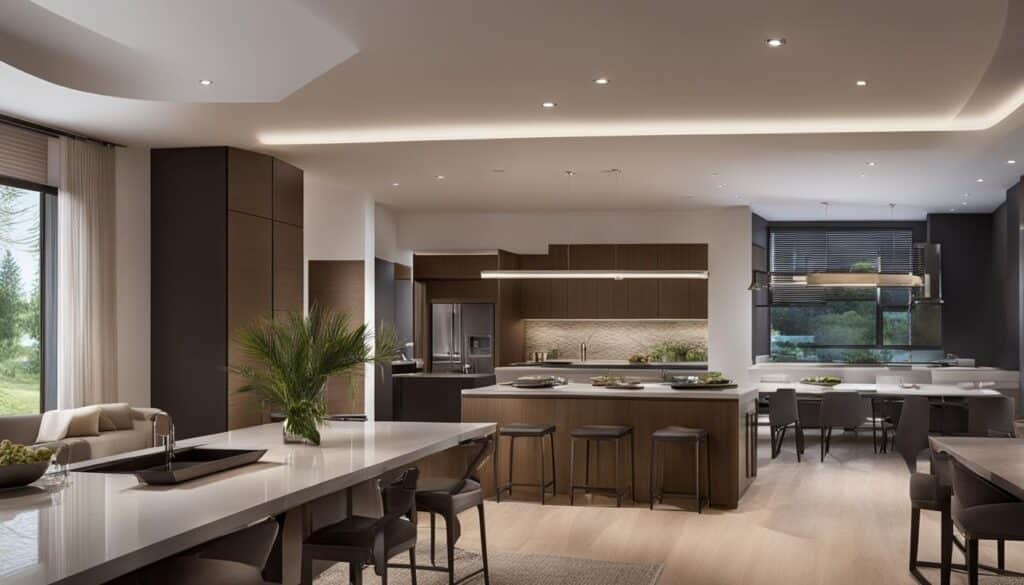
One of the key features of smart LED recessed lighting is the ability to adjust brightness levels and color temperature according to your preferences. Simply use your smartphone or speak to your virtual assistant, such as Amazon Alexa or Google Assistant, to set the desired ambiance.
“Hey Google, dim the living room lights to 50 percent.”
Moreover, smart LED lights offer increased functionality, such as setting a schedule for your lights to automatically turn on and off, adjusting lights remotely, and even integrating with other smart home devices for a seamless experience. Here are some of the notable benefits of upgrading to smart LED recessed lighting:
- Energy efficiency – Smart LED bulbs consume less power compared to traditional bulbs, resulting in lower energy bills.
- Longevity – LED bulbs can last up to 50,000 hours, significantly reducing replacement frequency.
- Convenience – Control your lights from anywhere with your smartphone, or use voice-activated commands for hands-free control.
- Customization – Adjust brightness and color temperature to create the perfect ambiance for every occasion.
- Smart home integration – Connect your smart LED lights with other devices, like smart thermostats or security systems, for a comprehensive smart home ecosystem.
To help you choose the right smart LED recessed lighting kit for your home, consider the following factors:
| Factor | Description |
|---|---|
| Compatibility | Ensure the smart LED kit is compatible with your existing recessed lighting fixtures and smart home system. |
| Color Temperature Range | Choose a kit that offers a wide range of color temperatures to suit your mood and desired ambiance. |
| Dimming Capability | Select a smart LED kit with dimming functionality for greater control over brightness levels. |
| Price | Smart LED kits are available at various price points; prioritize your needs and budget when selecting a kit. |
By upgrading to smart LED recessed lighting, you can optimize your home’s illumination while enjoying the convenience and energy savings that come with smart home technology. Make the most of your living spaces and embrace smarter lighting with this advanced solution.
Conclusion
As a DIY enthusiast, I’ve found that changing a recessed lighting bulb can be a simple yet satisfying home improvement task. By following the right tips for changing recessed lighting bulb and selecting a compatible LED replacement, homeowners can enjoy enhanced illumination while also benefiting from energy savings.
With the wealth of knowledge I’ve gained in completing recessed lighting bulb replacement projects, I can confidently say that even beginners can quickly master this skill. By adhering to essential safety guidelines and troubleshooting potential issues, this home improvement project becomes a breeze.
No matter your skill level, DIY lighting projects like these offer valuable opportunities to upgrade your home’s appearance and functionality. So, why not take the initiative and transform your living space with new, energy-efficient lighting? The outcome will surely be rewarding.
FAQ
What are the basic components of recessed lighting?
Recessed lighting fixtures mainly consist of the housing, which holds the bulb, and a trim or cover that evenly distributes light and adds a decorative touch. They are designed to lie flush with the ceiling surface, providing discreet ambient lighting.
What tools are required for replacing a recessed lighting bulb?
Essential tools for this task include a stable ladder, gloves, protective eyewear, and potentially needle-nose pliers or a suction tool for removing stuck or broken bulbs, along with the correct replacement bulb or LED retrofit kit.
Why should I consider using LED bulbs in my recessed lighting?
LED bulbs offer advantages such as energy efficiency, longevity, and reduced frequency of replacements. LED retrofit kits are especially convenient for hard-to-reach fixtures and provide significant cost savings in the long run.
How do I know when it’s time to replace a recessed lighting bulb?
Indications that it’s time to replace a bulb include flickering, dimming, a complete failure to illuminate, excessive heat, or visible damage such as cracks or black spots. Prompt replacement ensures optimal lighting quality and safety.
What are the key safety precautions to follow when changing a recessed lighting bulb?
To ensure safety while replacing a bulb, start by turning off the power at the circuit breaker. Allow the bulb to cool before handling and use gloves and protective eyewear to prevent injuries while working with potentially broken bulbs.
What challenges might I face while replacing a recessed lighting bulb?
Common challenges include ensuring compatibility between the new bulb and the existing fixture, addressing fixture modifications if required, and safely removing stuck or broken bulbs without causing damage.
Can I upgrade my recessed lighting to smart LED options?
Yes, homeowners can upgrade to smart LED recessed lighting kits which offer advanced functionality, such as scheduling, remote control, voice activation, and integration with other smart home devices.




Wow, I never knew changing a recessed lighting bulb could be such an adventure!
Wow, who knew changing a light bulb could be so complicated? I miss the good ol days when you just unscrewed it!
Are you serious? Its called progress! Get with the times, grandpa. If you cant handle a simple light bulb change, maybe its time to hire a professional. Dont hold us back with your nostalgia for outdated methods.
Comment:
Wow, who knew changing a light bulb could be so complicated? Is there an easier way?
Wow, who knew changing a light bulb could be such an adventure? #LifeSkillsUnlocked
I gotta say, I never thought changing a light bulb would require so many tools! 🤯
Who knew changing a light bulb could be so complicated? Ill just stick to candles.
Who needs a guide to change a bulb? Just call a handyman!
Wow, talk about overpaying! Calling a handyman to change a bulb? Seriously? Its not rocket science. Save your money and learn a thing or two. Its called self-sufficiency, my friend.
Comment:
Guys, can we all agree that changing a recessed lighting bulb is oddly satisfying? #DIYmagic
Who knew changing a light bulb could be such an adventure? #DIYgoals 🙌
Article: Guide: How to Change Recessed Lighting Bulb Effortlessly
Comment: Who knew changing a light bulb could be so complicated? Give me candles any day!
Light bulbs are a basic household task. If you find this complicated, maybe you should stick to candles and let others handle the grown-up stuff.
Who needs recessed lighting when you can just use a flashlight? #lowtechsolutions
Comment: Why bother changing the bulb when you can just embrace the darkness? #GothVibes
Wow, who needs a guide to change a light bulb? Just call an electrician! 🤷♂️
I dont understand why anyone would waste time changing a light bulb. Just buy a new lamp! 🤷♀️
Are you serious? Changing a light bulb takes a few seconds, while buying a new lamp is costly and wasteful. Its about being practical and environmentally conscious. Plus, some lamps hold sentimental value. Common sense goes a long way, my friend. 🤦♀️
I think replacing recessed lighting bulbs is a waste of time and money!
I dont see why changing a light bulb needs a whole guide. Just twist and replace!
Changing a light bulb may seem simple to you, but not everyone has the same experience or knowledge. Guides can be helpful for beginners or those who want to ensure theyre doing it correctly. Its about providing information and guidance, not overcomplicating a task.
I think changing the bulb is unnecessary, we should embrace the darkness.
Embracing darkness may sound poetic, but practicality trumps romanticism. Light bulbs exist for a reason – to illuminate and enhance our lives. Lets not stumble in the dark when a simple change of bulb can brighten our path. Let there be light!
Why bother changing bulbs when you can just embrace the darkness? 😉
Why bother changing bulbs when you can just live in the dark? 🤷♂️
I dont see the point in changing recessed lighting bulbs. Let them be!
I think recessed lighting is overrated – just use lamps instead!
Is it really worth the hassle to change recessed lighting bulbs? 🤔
Yes, its definitely worth the hassle to change recessed lighting bulbs. The improved lighting quality and energy efficiency make it worth the effort. Plus, its a simple task that can easily enhance the ambiance of your space. Dont let a little inconvenience deter you from brightening up your home!
Is it just me, or does changing recessed lighting bulbs feel like a puzzle sometimes?
Can changing a recessed lighting bulb really be effortless? Lets discuss!
I think changing a light bulb shouldnt be this complicated, just use a ladder!
Why bother changing the bulb when you can just change the whole fixture?
I think recessed lighting is overrated. Natural light is always better! 🌞
I respectfully disagree. Recessed lighting can provide a modern and sleek look to a space, offering versatility and control over the ambiance. While natural light is wonderful, its not always available or consistent. A well-planned lighting design can enhance any room, day or night.
Why bother changing bulbs when you can just paint the whole ceiling black?
Why bother changing bulbs when you can just embrace the darkness? 🕯️
Just read this guide, guys, and its pretty neat! But, dont you think safety precautions should be added? I mean, were messing with electricity here. Id feel better knowing Im not going to fry myself trying to change a light bulb. What do you think?
I appreciate the thorough explanation on changing a recessed lighting bulb. But, I wonder if we should consider the energy efficiency of these bulbs over the traditional ones. Also, should we worry about the disposal of the old bulb? I think these are important aspects to discuss too.
While I appreciate the detailed guide, Im curious as to why there wasnt much discussion about safety precautions. Dealing with electrical fixtures can be risky if not handled correctly. Also, are there specific brands or types of bulbs that work best for recessed lighting?
Quite an insight on changing recessed lighting bulbs! But, did anyone ever wonder why we arent moving towards more sustainable options like LED panels that need less frequent replacements? Just a thought.
LED panels are great, but not everyone can afford the upfront cost. Sustainability isnt always accessible.
Not bad, but why not consider energy efficiency in the bulb replacement guide? I mean, isnt it time to recommend LED over incandescent bulbs, considering the long term savings? Just a thought.
Interesting guide, but shouldnt there be mention of safety precautions when changing recessed lighting bulbs? Its not just about ease, safety matters too, right?
I never knew changing a recessed lighting bulb could be so complicated! Who knew there were so many steps involved? I guess Ill stick to lamps for now.
I disagree with the articles suggestion that prepping your work area is essential for changing a recessed lighting bulb. Ive never prepped and had no issues. Anyone else skip this step too?
Prepping is key for safety. Skipping steps risks accidents. Better safe than sorry.
Haha, seriously? A guide for changing light bulbs? Whats next? A tutorial on how to breathe? 😂🤦♂️
Does anyone else feel like the effortless part is exaggerated? I mean, you still need tools and prep work. Just saying!
Interesting guide, but what about dealing with recessed bulbs in high ceilings? Any tips for those not acrophobic among us?
Great tips! But how about a guide for converting recessed lighting to a different type? LED maybe? Just an idea.
Absolutely, LED conversion guide would be a game changer! Lets push for that!
Does anyone else feel that the article overlooked safety precautions while changing recessed bulbs? Its not all about the effortless part, folks!
Isnt it safer to disconnect the power at the circuit breaker before changing a recessed lighting bulb? Just wondering!
In the Prepping Your Work Area section, how crucial is it to switch off the main power supply?