

Incandescent Light vs LED: Key Differences
Affiliate links — we may earn a commission
“`html
Ever caught yourself in a spirited discussion at the hardware shop, passionately advocating for your preferred light bulb? We get it. The incandescent light vs LED dialogue can spark debates similar to a sports competition—everyone has a preference. But what truly differentiates these two players? It’s not simply about choosing a faction; it’s about grasping the incandescent light vs led distinction. So, let’s illuminate the essential elements and see if we can identify a definitive champion in the vibrant realm of lighting.
Behold the timeless elegance of the incandescent bulb, radiating with heritage, and conversely, the modern charm of the LED, shining with efficiency. In one corner, we find our cherished incandescent—straightforward, reminiscent, and echoing something from Thomas Edison’s design book. In the opposite corner stands the LED, a byproduct of contemporary innovation, eager to flaunt its low-energy credentials. As lighting enthusiasts, we are here to unwrap the intricacies of what is incandescent light vs LED and illuminate which bulb will genuinely brighten our experiences. Now, let’s not dull our intellectual inquisitiveness—immerse yourself in the remarkable distinctions between these radiant rivals.
Key Insights
- Investigating the operational contrast between incandescent bulbs and LEDs uncovers the essence of the efficiency discussion.
- Incandescent bulbs, despite their initial affordability, illuminate less vibrantly in terms of energy efficiency and lifespan.
- LEDs take the spotlight with their environmentally friendly design and impressive operational lifespan.
- The initial expense of LEDs may be elevated, but over time, they often prove to be more beneficial for both the environment and your electricity bill.
- Each type of bulb influences room ambiance with varying brightness tones, prompting us to ponder their light quality effects.
- The environmental consequences of our lighting preferences are just as crucial as their utility and price.
Comprehending Lighting Technology: Fundamentals of Incandescent and LED
Greetings, enlightened minds! Today, we’re clarifying the complex world of bulbs that have brightened our existence for ages and those that promise to illuminate the path ahead. Let’s shed some illumination on incandescent light vs LED lighting technology, the dependable classic versus the cutting-edge.
Before we plunge deeper, let’s reflect: what’s lighting up our reading spaces and casting a glow during our late-night snacks? Yes, it’s those glass spheres of intrigue – the light bulbs!
What is a LED Light Bulb?
Ah, the LED light bulb — a genuine symbol of advancement! Activate it, and behold the brilliance of science sparking to life in an instant. LEDs, with their minuscule semiconductor components, represent the pinnacle of energy efficiency. We’re referring to bulbs that not only outshine rivals but also have more lifespan than your pet turtle. Want a chameleon-like bulb that can alter colors and adjust to your mood? LEDs can accommodate that too, delivering the spectrum, minus the rain.
What is an Incandescent Light Bulb?
Next up is the classical incandescent light bulb. It’s the Edison original that has illuminated the ceilings of homes for ages. A bit of electricity, a tungsten filament, and voila – we have light! They’re the budget-friendly option that doesn’t have a lengthy lifespan but glows brightly while present, toasting itself until it says goodbye. And while we adore their warm, welcoming glow, our planet and wallets gently steer us toward a more sustainable flame.
So that’s the essence of our radiant contenders. As we proceed, prepare to be enthralled by the clash of these shimmering gladiators in our artificially illuminated arena!
Illuminating the Fundamental Differences: what is incandescent light vs led
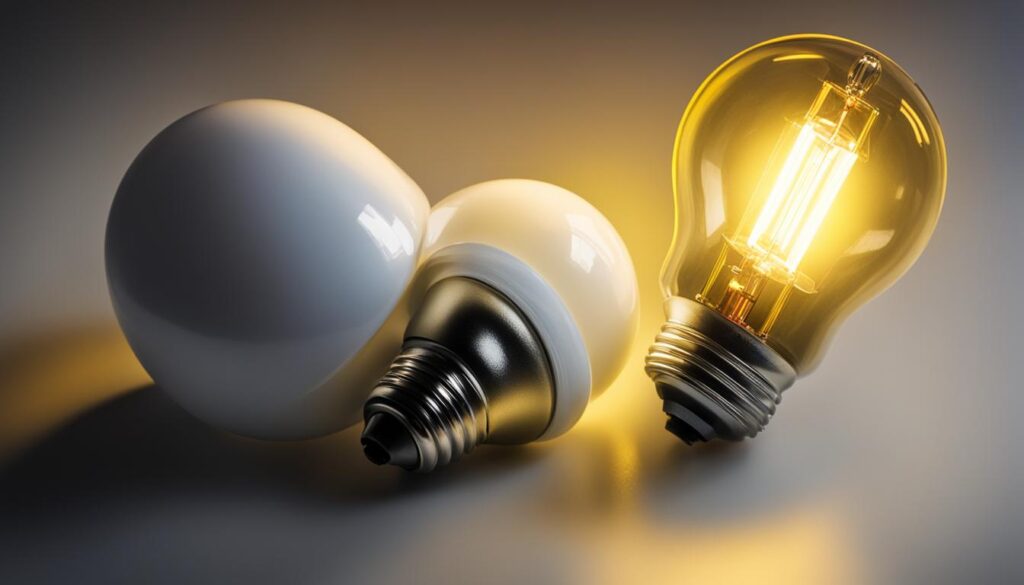
As we direct our perceptive attention towards the incandescent light vs LED difference, several gems of truth gleam amidst the promotional hype. These illuminating factions of the lighting industry diverge fundamentally in their method of light production. The incandescent bulb, reminiscent of Edison’s lamps, glows by the classic approach: heating a filament until it radiates the warmth of countless fireflies. LED bulbs, however, are the clever innovators, shining through the brilliance of semi-conductive material that responds to electrical currents like a flower to sunlight.
But hold on! Before you choose a faction in the incandescent vs LED duel, let’s tally up the score with a quintessential comparison:
| Feature | Incandescent Bulb | LED Bulb |
|---|---|---|
| Technology | Heated Tungsten Filament | Semiconductor Material |
| Energy Consumption | High (Majority converted to heat) | Low (More light, less heat) |
| Lifespan | Shorter (Approx. 1,000 hours) | Longer (Up to 100,000 hours) |
| Eco-Impact | Greater (Frequent replacement) | Lesser (Reduced waste) |
| Cost Over Time | More expensive (Higher energy bills, replacements) | Cheaper (Savings in energy and replacements) |
It’s evident as daylight that incandescent bulbs and LEDs are as different as chalk and cheese concerning the core aspects of lighting. One remains entrenched in tradition, while the other strides ahead with bright-eyed ambition for efficiency. Weigh your choices, but remember, it’s not merely about illuminating a space—it’s about doing so intelligently in the modern age.
Examining Energy Efficiency: Incandescent vs LED Power Usage
As we explore the domain of lighting, we frequently encounter a choice that transcends mere brightness. Our narrative of two bulbs—one incandescent and the other LED—is essentially a tale of power efficiency and consumption. So, let’s focus on these illuminating icons.
Incandescent Power Usage and Heat Loss
Incandescents, the pioneers of voltage, function on a principle that is as straightforward as it is inefficient. They unleash their inner furnace, expelling heat intensely, and in the scorching glow of their light, they consume 90% of their energy merely getting hot. It’s not just light they emit; it’s akin to having a small sauna inside each glass orb.
LEDs and Energy Efficiency
LEDs, by contrast, are the prodigies of wattage. These little lights pour their energy into illumination rather than radiating heat. They’re so frugal with their electricity usage that they hardly get warm, emitting light without unnecessary warmth. These bulbs excel not merely in energy efficiency; they’re advocates of energy conservation, demonstrating that saving power can be as simple as flipping a switch.
| Aspect | Incandescent Light | LED | |
|---|---|---|---|
| Energy Conversion | ~10% Light ~90% Heat |
~80% Light ~20% Heat |
|
| Average Lifespan (Hours) | 1,000 | 25,000 to 50,000 | |
| Energy Used (Watts per 800 Lumens) | 60 | 8-12 | |
| Cost Effectiveness | Lower initial investment, higher long-term cost |
Higher initial investment, lower long-term cost |
|
| Impact on Carbon Footprint | Higher due to increased “““html | energy usage | Decreased due to energy saving measures |
As we’ve clarified the distinctions in incandescent light vs LED energy efficacy and incandescent light vs LED power usage, it’s evident that each bulb not only illuminates a space but also showcases a distinct route on the journey toward energy efficiency. Ultimately, the decision is yours—will you follow the tradition of filament or lead the revolution with LEDs?
Evaluating Durability: LED and Incandescent Lifespan
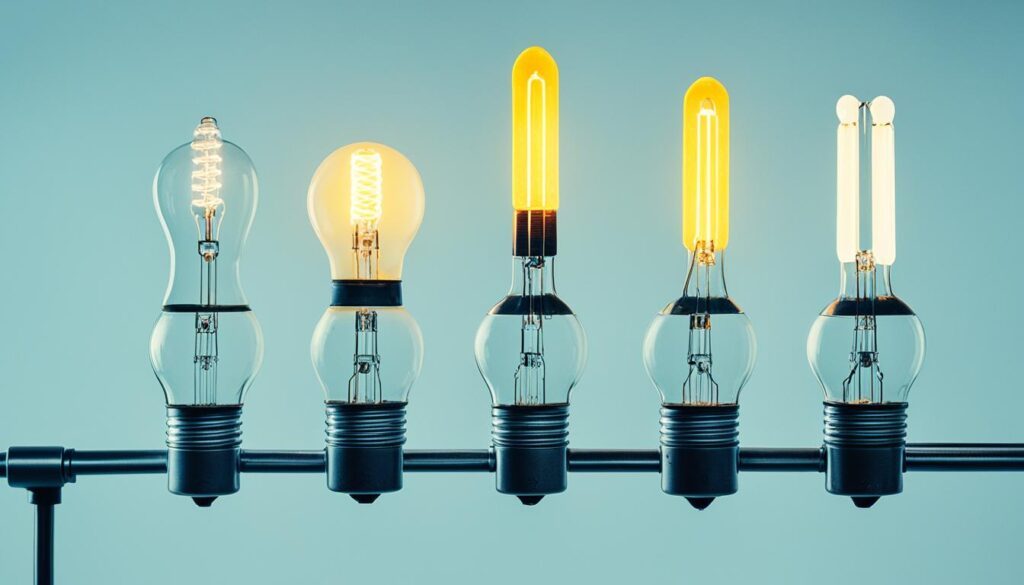
As we explore the realm of illumination, let’s focus on the durability of our lighting friends—the LED and the incandescent bulb. It’s well-known that these bulbs don’t just emit light; they also endure the test of time in remarkably distinct manners. We’re addressing a significant contrast that’s sure to make you do a double-take!
Picture, if you will, the incandescent bulb, a seasoned performer on the light scene, with a lifespan that can be characterized as a mere flicker—approximately 1,000 hours before it bids farewell. Now, turn your attention to the marathon runner of the lighting world, the LED bulb. Not only does it emit light, it genuinely persists, flaunting an astonishing LED lifespan ranging from 50,000 to 100,000 hours.
Let’s translate these figures into years, shall we? With an average usage of about three hours daily, the typical incandescent bulb may barely illuminate your summers. Conversely, an LED could reliably see you from high school into your golden years of retirement—at least regarding illumination.
Out with the outdated, in with the modern, and let the LEDs guide us into a future that’s not only brighter but also longer-lasting.
Stay tuned, as we’re about to serve a visual delight that will encapsulate the full spectrum of the incandescent light vs LED lifespan. It’s more than just digits on a page; it’s the commitment to enduring brightness.
| Light Source | Average Lifespan (Hours) | Lifespan in Years (3 Hours/Day) | Maintenance Frequency |
|---|---|---|---|
| Incandescent Bulb | 1,000 | Approx. 0.9 | Regular |
| LED Bulb | 50,000 – 100,000 | 45.7 – 91.3 | Seldom |
The above table makes it abundantly clear: LEDs outstrip incandescents in lifespan by significant margins. This difference translates to not just fewer bulb replacements, but also to convenience—an undeniably rare luxury when it comes to home upkeep. For those who prefer incandescents, keep your ladder handy; for the fans of LED, feel free to let that ladder gather cobwebs.
There you have it—a narrative of two bulbs, where one eclipses the other in the endurance race. Our radiant exploration continues, but for now, take comfort in knowing that choosing LEDs means adopting a light that lasts, and lasts… and lasts.
Examining Cost Implications: Initial and Long-Term Financial Considerations
As we turn off the traditional incandescent bulb and shine a light on LED territory, let’s clarify the topic of expenses. Certainly, incandescent bulbs appear to be the more economical choice at the register, but do they genuinely provide the best value over time? Let’s dive into the financial depths by first outlining the initial costs and then navigating through the currents of long-term savings.
Calculating Initial Expenses: A Price Assessment
Now, who doesn’t appreciate a good deal? Incandescent light bulbs entice our wallets with their lower retail prices. For the budget-conscious consumer, this might seem like the straightforward winner. However, when it comes to incandescent light vs LED expense, we’re dealing with more than just the price label—it’s a classic scenario of short-term advantage versus long-term planning.
Picture yourself selecting a 60KW incandescent bulb, and you congratulate yourself for the cents saved at checkout. Nevertheless, in this financial narrative, we must shine a light on the LED bulbs, which, while pricier initially, illuminate the savings in the long run.
Understanding Lifespan vs. Cost Benefits
Alright, let’s delve into the details of longevity and economies of scale. While incandescent bulbs take pleasure in their initial cost-effectiveness, they tend to burn out quicker than a beginner at a marathon. In the realm of durability, LED bulbs thrive in their extended lifespan—these resilient contenders can endure up to 50 times longer than their incandescent counterparts. Cha-ching!
Think of it this way: Each LED bulb is a small investment in your future peace of mind. Fewer trips to the store for replacements, less time spent precariously balancing on ladders, and a decrease in operating costs all contribute to the appeal of LED savings. For our environmentally conscious friends, keep in mind that reduced energy usage leads to lower bills and a healthier planet.
Now that we’ve examined the incandescent expense against the LED expense, wouldn’t you concur that what seems like a bargain at first glance may just be an illusion tricking your wallet? LEDs, our beacons of financial insight, not only lead the way in lumens but also in dollars saved. Stay with us as we continue to explore the range of lighting options!
Evaluating Brightness and Light Quality: Incandescent vs LED Output
As we engage in the discussion about incandescent light vs LED brightness, it’s akin to comparing the gentle radiance of a campfire to the focused beam of a flashlight. Both possess their allure and usefulness, don’t they? Yet let’s go beyond just the intensity of light these bulbs emit. It’s about the quality of light they produce and how they color our spaces with unseen hues.
Color Temperature and Room Atmosphere
Ah, the delightful warmth of incandescent lighting! It creates an atmosphere that can transform a room into a cozy retreat on a chilly evening. With their warmer color temperatures, incandescent bulbs illuminate spaces with an inviting glow, enhancing the room ambiance like a soft blanket enveloping your favorite armchair. But at what price? This warmth could become the antagonist in our energy-saving story.
LEDs, on the other hand, were once the cold relatives in the lighting family, casting an unnatural light wherever they shone. But wait a moment! LEDs have evolved remarkably. They’ve learned to replicate the warm tones of their incandescent counterparts, offering a candle-like flicker without the wax melting.
Light Directionality: Assessing Use Cases
Have you ever attempted to use a spotlight when a lantern was needed? That’s the kind of dilemma we face with incandescent versus LED. Incandescents function as the lanterns of the lighting realm, dispersing light in all directions with carefree disregard for efficiency. Excellent for a general glow, sure, but they fall short when precision is important.
Enter LEDs, the spotlights in this scenario. These concentrated beams act as your personal lighting assistant, directing brightness exactly where you want it. Whether it’s a reading nook or a spotlight on your latest creation,
“““html
LEDs exist to realize your illuminated aspirations, all while reducing the power bill. They have honed their expertise to provide led output without excess.
However, don’t assume it’s all brightness and bliss with LEDs. In situations where a soft ambient touch is sought, you’ll need to select carefully. But worry not, like knights adorned in frosted glass and dimming features, LEDs are here to vanquish all domains of lighting requirements, including those once governed by the formidable incandescent. Can we have a “‘bright’ cheer” for innovation?
Our enlightening journey continues, but always bear in mind, whether it’s incandescents that hold a cherished place in your heart or LEDs that illuminate your existence—choose prudently. After all, we’re not merely selecting a bulb; we’re establishing the ambiance for every moment that unfolds in our beautifully illuminated environments.
Understanding Environmental Impact: Incandescent and LED Sustainability
It’s a brilliant notion to reflect on how our selections illuminate not only our homes but also the fate of our planet. Delving into the eco-friendliness of lighting, we confront the ongoing debate: the enduring incandescent light vs LED environmental impact. We shine with pride when we switch on LED sustainability, as these tiny illuminators deliver a punch in eco-efficacy. Conversely, the classic radiance of the incandescent carries a carbon footprint that resembles old footwear—cozy but not particularly fresh.
Examining Carbon Emissions of Each Lighting Choice
Regarding carbon, LEDs are virtually gliding gently on the ecosystem, emitting fewer greenhouse gases due to their lower energy consumption and lasting long enough to accompany us through several seasons of our beloved TV series. In stark contrast, incandescent bulbs are the loud stompers, requiring more energy, leading to increased carbon emissions, and leaving behind a larger incandescent carbon footprint that nature must rejuvenate.
Consequences on Waste and Recycling
- In the LED arena, their durability means fewer bulbs end up in waste and fewer outcries of “Oh no, not again!” as we grab the broom to tidy up the remnants of another broken incandescent.
- Concerning recycling, LED lights emerge as less of a nuisance, since we aren’t perpetually discarding them alongside the leftovers from yesterday’s pad thai.
Let us switch on enlightenment and cast a light on the realities of lighting sustainability. It’s not merely about saving cents, but enacting lasting change—LED by LED, we’re brightening the future without exhausting our planet.
Pros and Cons: A Thorough Examination

As we revel in the brilliance of technology, let’s uncover the facts, shall we? Comparing incandescent light vs LED advantages and disadvantages is akin to a duel between the classic typewriter and the streamlined laptop. Each possesses its proponents and detractors. Incandescent bulbs are the seasoned veterans of lighting—trustworthy and typically warm. Yet, LEDs are the efficient newcomers—radiating innovation and eco-friendliness.
However, our affection for incandescent bulbs doesn’t obscure their flaws. And despite LEDs illuminating our energy-saving aspirations, they too exhibit some minor eccentricities. Let’s roll out the red carpet and present the facts in a spectacular, head-to-head comparison. It’s showtime!
| Aspect | Incandescent Advantages | Incandescent Disadvantages | LED Advantages | LED Disadvantages |
|---|---|---|---|---|
| Initial Cost | Affordably priced | Higher long-term expenditures | Economical over time | Larger initial cost |
| Energy Efficiency | Feels like a cozy embrace | Like a window left ajar in winter | Energy saver endorsed by Scrooge | May respond poorly to excessive heat |
| Lifespan | Like a brief yet memorable appearance | Frequent replacements necessary | Enduring like a classic novel | Occasionally less appealing light quality |
| Room Heating | Adds snug warmth to spaces | Not ideal during the summer heat | Remains cool throughout the year | Doesn’t aid in room heating |
| Dimming Ability | Expert in dimming | – | Improving in the dimming field | Compatibility with dimmers varies |
| Color Quality | Master of the warm, welcoming illumination | One-dimensional—mainly warm hues | A broad spectrum of color temperatures | Can be somewhat clinical in appearance |
We’ve reached a pivotal intersection—do we meander down Incandescent Lane or advance up LED Boulevard? We’ve outlined the benefits and idiosyncrasies, so whether you’re enchanted by the allure of incandescents or convinced by the savvy of LEDs, keep in mind, the choice brightens your world.
Conclusion
As we’ve illuminated the pathway through the intricate interplay of incandescent light vs LED, we arrive at the crucial moment of decision. This is where considerations clash—energy efficiency contends with cost concerns, and visual appeal dances with environmental responsibility. To resolve this match with elegance, let’s emphasize key elements that should steer our informed selection of the ideal luminary companion.
What to Consider When Selecting Your Light Source
In the red corner of the arena, incandescent bulbs envelop us in their economical glow, enticing those of us who meticulously count our coins before spending. In the opposite corner, LEDs stand, cool and composed, promising a victory in the longevity rounds and a title in sustainability. The referee of this contest is you, equipped with the insight of what is incandescent light vs LED, determining which contender better complements the decor of your everyday life and the future you envision.
How to Transition from Incandescent to LED
Should we opt to manage the transition from incandescent to LED, the narrative thickens with a splash of practical allure. This isn’t a plunge into uncertainty but a brightly lit expedition. To forge ahead without tripping, consider the compatibility of LEDs with your existing fixtures and dimmers. Reflect on how each choice will imbue your spaces with light shades that match your mood and intent. Maintain a careful watch on your utility bills and environmental impact, for this decision extends beyond mere lighting—it’s our legacy to Mother Earth. When contemplating choosing light source, we’re not merely changing bulbs; we’re steering towards a more luminous, efficient future.
FAQ
What is the Difference Between Incandescent Light and LED?
The fundamental distinction lies in their methods of generating illumination. Incandescent bulbs heat a wire filament until it radiates, while LEDs create light by directing an electric current through a semiconductive material. This technological contrast forms the basis of their differences in energy efficiency, cost, lifespan, and environmental effects.
What is a LED Light Bulb?
A LED, or Light Emitting Diode, light bulb is an innovative symbol of light efficiency. These bulbs impress with their durability and
“““html
minimalistic energy utilization, absorbing minimal amounts of electricity to illuminate your surroundings while being more gentle on your finances and our planet throughout their extensive lifetimes.
What is an Incandescent Light Bulb?
The esteemed incandescent lamp is nothing less than a relic of electric illumination, a straightforward design where electric current warms a tungsten filament until it emits light. Though delightfully economical at first glance, they are the power-hungry giants of the lighting domain—nostalgic, undoubtedly, but with an appetite for energy.
How Does the Energy Efficiency of Incandescents Contrast with LEDs?
In the realm of energy efficiency, LEDs would be sprinting at full speed while incandescent lamps would be meandering leisurely. Incandescent lamps transform approximately 90% of their energy into heat rather than light—think of them as the infrared saunas of the lighting category. LEDs are their stark counterpart, saving energy as a hoarder would with a nickel.
What’s the Difference in Lifespan Between Incandescent Bulbs and LEDs?
LEDs are the Methuselahs of lighting options, claiming lifespans ranging from 50,000 to 100,000 hours. In opposition, incandescent bulbs extinguish around a mere 1,000 hours. Therefore, you’ll be bidding farewell to incandescent bulbs much earlier than you would to their LED counterparts.
How Do Initial Expenses Compare Between Incandescent Bulbs and LEDs?
Incandescent bulbs skillfully engage in a deceptive play with their attractive starting prices, allowing you to exit the store feeling pleased with a few extra dollars in your pocket compared to purchasing LED bulbs. Nonetheless, when analyzing the long-term figures, LEDs excel with their cost-effectiveness over time, due to their energy efficiency and resistance to frequent replacements.
Can You Compare Color Temperature and Room Atmosphere Between the Two Bulb Types?
Incandescent bulbs envelop a room in the warm light of a sunset—comforting, inviting, and warmly amber. However, their enthusiastic approach to illumination can be somewhat wasteful. LEDs, on the other hand, resemble the directed beam of a lighthouse, delivering light intentionally and efficiently, and can now mimic that warm ambiance as well, thanks to recent advancements.
What is the Environmental Impact of Incandescent and LED Bulbs?
LEDs act as the sprouts and oat milk of the bulb universe—light on ecological influence, fostering a healthier environment with their energy conserving qualities and seldom need for replacement. Incandescents? Let’s just say they are comparable to throwback Styrofoam cups, possessing a larger carbon footprint and a tendency to produce more waste due to their brief lifespan.
What are the Benefits and Drawbacks of Incandescent Bulbs and LEDs?
Incandescent bulbs capture some hearts with their nostalgic radiance, cozy ambiance, and pocket-friendly initial price. They also excel in dimming. However, in the long game, LEDs dominate with their low energy costs, rare replacements, and their contemporary style that shines vibrantly in any scenario—even if they sometimes struggle with dimmers and slightly lighten your wallet at the till.
How Should I Decide Between Incandescent and LED Light Bulbs?
When considering which bulb to pursue, reflect on whether you’re after a fleeting, radiant affair or a lasting commitment. Incandescents provide instant satisfaction with a low entry cost, while LEDs are a wise investment in a luminescent future, saving you money and benefiting the planet in the long run.
“`



LEDs are overrated! Give me the warm glow of incandescent any day.
LED lights are overrated! Give me that warm glow of incandescent any day.
LED lights are energy-efficient, long-lasting, and versatile. The warm glow of incandescent bulbs may be cozy, but the benefits of LEDs outweigh nostalgia. Upgrade to the future of lighting and experience the many advantages of LED technology.
LED bulbs are overrated! Give me the warm glow of incandescent any day.
LED lights are overrated! Incandescent bulbs have a warm glow thats unbeatable.
LED lights are energy-efficient, durable, and versatile. The warm glow of incandescent bulbs may be nostalgic, but LED technology offers superior lighting options with lower energy consumption and longer lifespan. Its time to embrace the future and leave outdated lighting solutions behind.
LEDs are overrated! Give me the warm glow of incandescent any day.
LED bulbs are overrated! Incandescent gives warmer light, better for cozy vibes.
LEDs are overrated! Give me the warm glow of incandescent any day.
LEDs are the future, pal. Embrace the energy efficiency and longevity. The warm glow you crave? They make LED bulbs with that exact same cozy hue now. Its time to upgrade and leave those outdated incandescents in the past.
LED lights are overrated. Incandescent bulbs give a warm glow thats unbeatable.
LED lights are energy-efficient, long-lasting, and versatile. The warm glow of incandescent bulbs may have nostalgic value, but the benefits of LED technology cannot be denied. Its time to embrace the future and leave outdated lighting behind.
LED lights are overrated! Incandescent bulbs give a cozy warmth that cant be beat.
LEDs are superior in energy efficiency, but incandescent bulbs have a warm glow.
LED bulbs are cost-effective and eco-friendly, but incandescent bulbs have a warm glow.
LED bulbs are superior in every way! Say no to outdated incandescent bulbs.
LEDs are overrated! Incandescent bulbs give better warmth to a room. Agree?
LED lights are overhyped! Incandescent bulbs give a warm glow thats unbeatable.
LED bulbs are overrated! Incandescent lights give a warm, cozy vibe. #TeamIncandescent🔥
LED bulbs are overhyped – incandescent lights give a cozy vibe unmatched!
I respectfully disagree. LED bulbs are energy-efficient, long-lasting, and come in various color temperatures to create the perfect ambiance. Plus, they dont emit as much heat as incandescent lights, making them safer and more cost-effective in the long run. Give LEDs a chance, you might be surprised!
LEDs are overrated! Give me the warm glow of incandescent lights any day.
LED lights are a waste of money, incandescent is the way to go! Change my mind.
LED lights are overrated! Incandescent bulbs give a warmer, more cozy vibe.
LEDs are overrated! Incandescent bulbs give a warm glow thats unbeatable. Lets embrace nostalgia!
While incandescent bulbs may evoke nostalgia, the energy efficiency and longevity of LEDs cannot be denied. Embrace progress and embrace the future. The warm glow of incandescent bulbs may be comforting, but its time to prioritize sustainability and cost-effectiveness.
Quite an enlightening read on LED and Incandescent lights, thanks! However, I wonder if the author has considered the impact on our sleep cycles. Could the blue light emitted from LED bulbs affect our circadian rhythms more than that of incandescent ones? Would love to see some discussion on this!
Interesting point! But isnt limiting exposure before bedtime the real solution, not bulb type?
This article is indeed enlightening! But what about the environmental impact of LED vs incandescent bulbs? LEDs may be more energy-efficient, but arent they also harder to recycle due to the electronic components? Would love to see a detailed comparison on that aspect.
Interesting read, but arent we overlooking the charm of incandescent for the cold efficiency of LEDs? Isnt warm light worth the extra bucks?
Extra bucks for charm? Id rather save my wallet and the planet with LEDs!
Interesting comparison! But, are we ignoring the nostalgic warmth of incandescent bulbs over LEDs? Can technology truly replace emotion?
Interesting read! But arent we ignoring CFLs? Theyre a good middle ground between LEDs and incandescent bulbs. Just food for thought!
Interesting piece, but arent we missing the point? Instead of battling incandescent vs LED, shouldnt we be focusing on renewable energy sources? Solar-powered LED, anyone? Lets think bigger, folks!
Interesting read, but come on, isnt the incandescent bulbs cosy glow part of its charm? LEDs are efficient, sure, but they cant replicate that. Lets not forget aesthetics in our eco-zeal.
Sure, the glow is charming, but is it worth the environmental cost? LEDs are the future.
Interesting article, but dont LEDs produce less heat, thus reducing fire risks compared to incandescent bulbs? Any thoughts on this aspect?
Doesnt the long lifespan of LED lights trump the warm glow of incandescent bulbs? Lets think about the environment, folks.
Interesting comparison, but dont you think LEDs long lifespan outweighs incandescents warm glow in terms of practicality and cost efficiency?
Do we know if the human eye perceives LED and incandescent lighting differently? Any studies on this?
Yes, numerous studies suggest our eyes respond differently to LED and incandescent light. Google it.
Isnt it ironic how were ditching incandescents for LEDs, yet we romanticize Edison more than the LED inventors? Just some food for thought.
Edisons story sells better. LEDs lack the human drama. Marketing, not irony.