
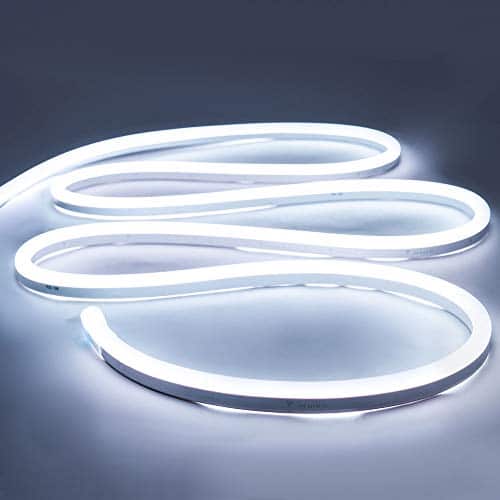
How to control multiple flexible LED strips with one controller?
Affiliate links — we may earn a commission
Have you ever wanted to create a mesmerizing light display using flexible LED strips, but weren’t sure how to control them all with just one controller? Well, fear not! In this step-by-step guide, I will walk you through the process so you can bring your lighting dreams to life.
Firstly, let’s talk about flexible LED strips. These innovative light sources are not only versatile but also incredibly popular due to their ability to bend and conform to just about any shape or surface. Whether you’re looking to illuminate your living space or add some pizzazz to an event, these LED strips are the perfect solution.
Now, onto the main attraction of this guide – controlling multiple flexible LED strips with just one controller. Did you know that with the right techniques, you can synchronize and manipulate multiple LED strips simultaneously while using a single controller? It’s like having a conductor leading an orchestra of lights!
This guide will take you on a journey from understanding the basics of LED strip controllers to the intricacies of wiring and programming. You’ll learn how to set up your controller, connect your LED strips, and even get creative with different lighting effects. By the end, you’ll be able to effortlessly control a mesmerizing display of color and brightness.
So, if you’re ready to dive into the world of flexible LED strip control and unleash your inner lighting artist, grab your controller and follow along with our step-by-step guide. Get ready to create something truly magical and impress your friends and family with your newfound expertise in LED strip manipulation!
Illuminating Your Space with Top Sellers


A Guide to Managing Multiple Addressable LED Strip Lights
Choosing the Right Controller
Researching and choosing the right controller that supports multiple flexible LED strips is essential to creating your ideal lighting setup. To begin, explore different options available in the market. Start by searching online and reading reviews or articles that compare various controllers. Look for ones specifically designed to support multiple flexible LED strips, as not all controllers are capable of this. Note down the names and models of controllers that seem to meet your requirements.
Next, delve deeper into the technical specifications of each controller on your list. Check for details such as the number of LED strips each controller can support simultaneously and the maximum length of the LED strips it can handle. It’s important to ensure that the controller has enough capacity to handle your desired setup. Additionally, consider other features that might be important to you, such as wireless connectivity, compatibility with smart home systems, or the ability to create custom lighting effects.
Once you have gathered sufficient information, it’s time to make a decision. Compare the controllers based on their capabilities, price, and any other factors that are important to you. Take into account the reviews and feedback from other users. Choosing the right controller may require some careful consideration, but with the right research and evaluation, you can find one that suits your needs and supports multiple flexible LED strips for your lighting project. Happy hunting!


Preparing the LED Strips
To ensure all LED strips are compatible with the controller and cut them to the desired length, follow these simple steps:
- Check compatibility: First, make sure that the LED strips you have are compatible with the controller. This can usually be found in the product manual or on the manufacturer’s website. Look for specifications such as voltage, power requirements, and communication protocols. If the LED strips are not compatible with the controller, you may need to purchase a different controller or LED strips that are compatible.
- Measure and cut: Once you have confirmed compatibility, measure the length you need for your LED strips. Use a tape measure to determine the desired length, and mark the cutting points on the strip. In most cases, LED strips can be cut at specific intervals (indicated by a set of copper pads or cut marks) without damaging the remaining part. Be sure to follow the manufacturer’s instructions for cutting the strips. Use sharp scissors or a precision cutting tool to make clean, straight cuts at the marked points.
Remember that precision is key when it comes to preparing LED strips. Taking the time to ensure compatibility and making accurate cuts will go a long way in ensuring a seamless installation process and optimal performance. Now you’re ready to move on to the next steps in setting up your LED lighting system.


Connecting the LED Strips
First, carefully read the manufacturer’s instructions for connecting the LED strips to the controller. These instructions will provide you with specific details on how to properly connect the LED strips. Typically, you will find a set of wires or connectors on both the LED strips and the controller that need to be matched up correctly. For example, if the LED strips have male connectors, make sure to connect them to the corresponding female connectors on the controller. Take your time to ensure that all connections are secure and properly aligned. It’s important to follow the manufacturer’s instructions to avoid any damage to the LED strips or controller.
Once you have identified the matching connectors, align them and firmly push them together until you hear or feel a click. This will ensure a secure connection. For instance, if you have a strip with an arrow indicating the direction of connection, make sure to align that arrow with the corresponding arrow on the controller. Double-check that the LED strips are connected in the correct order and orientation specified in the instructions. Sometimes, there may be color-coded wires that need to be matched up. For example, if you have a red wire on the LED strip, connect it to the red wire on the controller. Following these step-by-step instructions will help you properly connect the LED strips to the controller according to the manufacturer’s guidelines.


Powering the LED Strips
Connect the power supply to the controller and ensure it can handle the power requirements of all the LED strips. First, locate the power supply input on the LED controller. It is typically labeled as “DC Input” or “Power Input.” Next, locate the power supply output on the power supply unit itself. This is usually labeled as “DC Output” or “Power Output.”
Once you have located both the power supply input on the controller and the power supply output on the power supply unit, take a power cable and connect one end to the power supply output. Ensure that the cable is securely plugged in. Now, take the other end of the power cable and plug it into the power supply input on the controller. Again, make sure the connection is secure.
After you have connected the power supply to the controller, it is crucial to verify whether the power supply can handle the power requirements of all the LED strips. Check the power specifications of your LED strips, which are usually indicated in watts or amps. Then, refer to the power supply’s specifications to see if it can deliver enough power to all the LED strips combined. If the power supply has a lower output rating than the total power requirements of the LED strips, you will need to either use a higher-rated power supply or connect multiple power supplies to accommodate the load.
Remember, it’s important to always prioritize safety and follow the manufacturer’s instructions when connecting the power supply to the LED controller.


Controlling the LED Strips
To set up and control the LED strips, you should first familiarize yourself with the instructions provided by the controller. These instructions will typically include information about connecting the LED strips to the controller and any necessary power sources. Follow these steps carefully to ensure a proper setup. For example, the controller may require you to connect the positive and negative wires from the LED strip to the corresponding terminals on the controller. It may also specify if you need an external power supply or if the controller can provide enough power on its own.
Once the LED strips are properly set up, you can control them either individually or as a group by following the instructions provided by the controller. To control them individually, the instructions may direct you to use a smartphone app or a remote control. For instance, the app may have a user-friendly interface that allows you to select a specific LED strip and adjust its brightness, color, or even set a dynamic lighting pattern. On the other hand, if you want to control the LED strips as a group, the instructions may guide you on how to synchronize multiple strips together. This can create a cohesive lighting effect throughout a room or space. It’s important to carefully follow these instructions to ensure that you achieve the desired lighting control and effects with your LED strips.
The power of centralized control
In conclusion, effectively controlling multiple flexible LED strips with one controller requires careful consideration and implementation. Firstly, it is crucial to select a compatible controller that supports the desired LED strip type and meets your project requirements. Secondly, ensuring proper connection and powering of the LED strips is vital to avoid any issues with functionality or performance. By following these steps, you can successfully achieve synchronized control over multiple LED strips, creating stunning lighting effects and ambiances. Remember, a well-chosen controller and correct wiring are the key to unlocking the full potential of your LED strip setup.
Essential Equipment





I followed the guide step-by-step, but I’m having trouble getting the controller to recognize all the LED strips. I’ve checked the connections multiple times, but I can’t figure out what’s wrong. Any troubleshooting tips?
I’ve been using flexible LED strips for a while now and one tip I can share is to make sure you measure and cut the strips accurately before connecting them. This will help avoid any issues with the lighting pattern or the overall look of the installation.
That’s a great tip! Accurate measurement and cutting of the LED strips is indeed crucial for achieving the desired lighting effect. Thank you for sharing your experience!
I have a suggestion for a related topic – how to synchronize the LED strips with music or sound. It would be great to learn how to create a dynamic lighting display that reacts to the music playing. Can you please consider writing an article on this?
Thank you for your suggestion! Creating a lighting display that syncs with music is a great idea. We will definitely consider writing an article on this topic in the future. Stay tuned!
Who needs a disco when you can control multiple LED strips and have your own light show at home? 🌈🎉
Wow, who knew controlling LED strips could be so complicated? Im just here for the disco vibes!
Who needs one controller when you can have a disco party with multiple controllers?!
Who needs one controller when you can have a disco party with multiple ones! 🎉✨
I recently purchased some flexible LED strips, but I’m not sure how to choose the right power supply for them. Can you provide some tips on selecting the appropriate power supply for LED strips?
Choosing the right power supply for your LED strips is important to ensure they operate efficiently and safely. We will consider writing an article on this topic to provide you with tips and guidelines for selecting the appropriate power supply. Thank you for your suggestion!
Do you have any advanced tips for controlling LED strips? I’ve already mastered the basics and I’m looking for some more advanced techniques to take my lighting setup to the next level.
Why not mix different colors on each strip for a unique effect?
I followed this guide to control multiple flexible LED strips with one controller and I’m happy to say that it worked perfectly! The step-by-step instructions were clear and easy to follow. I now have a beautiful lighting setup in my living room. Thank you for this helpful guide!
Is it really necessary to control multiple LED strips with one controller?
Why bother with one controller? Each LED strip should have its own!
Why not mix different colored LED strips for a unique lighting effect? 🌈
Nah, sticking to one color theme is more classy and cohesive. Mixing colored LED strips can end up looking messy and chaotic. Sometimes less is more when it comes to lighting design. Stick with a single color for a sleek and sophisticated look.
I think controlling LED strips individually adds more creativity and personalization options.
Why not mix and match different LED strip colors for a unique lighting effect?
Why not mix different colored LED strips for a unique lighting effect? 🌈
Why not mix and match different color LED strips for a unique look? 🌈
Why not just use different controllers for each strip? More control, more fun!
Nah, thats too complicated. One controller for all the strips keeps it simple and easy to manage. Plus, who wants to deal with multiple controllers when you can have everything synced up seamlessly with just one? Keep it simple, keep it smooth.
Why not control each LED strip individually for a more dynamic display?
That would be a great idea if you want to spend hours programming each LED strip separately. Sometimes simplicity is key to achieving a desired effect without unnecessary complexity. A uniform display can be just as impactful as a dynamic one.
Why not use different controllers for each LED strip for ultimate customization?
Why not just stick to regular light bulbs? Seems like too much hassle.
Why limit to just one controller? Mix it up for a unique lighting experience!
I think using different colored LED strips could create a cool gradient effect!
Hmm, but do you think its really necessary to control multiple LED strips with one controller? I mean, wouldnt it be more fun to have each strip with its own unique settings? Just a thought! 🤔
Im all for illuminating my space with LED strips, but managing multiple addressable ones sounds like a challenge! Anyone else feeling overwhelmed by the options for controllers? #LEDlightingstruggles
Quite insightful piece! But wouldnt the power supply be a potential issue when controlling multiple LED strips with one controller? Can one power supply handle the demand, or would it overload?
Absolutely, power supply is crucial. But with the right capacity, one can definitely manage multiple LED strips.
Interesting read, but isnt it more efficient to use separate controllers for multiple LED strips? Wouldnt that reduce the risk of overloading a single controller? Just a thought!
I must say, its interesting to see how LED tech has evolved. But wouldnt it be more energy-efficient to have a single LED strip and use mirrors to distribute the light? Just a thought!
Interesting read, but why not use Bluetooth or Wi-Fi controllers for flexibility? Seems like a missed opportunity. Thoughts?
Interesting read, but isnt it more efficient to control each LED strip individually for optimal lighting customization? Just food for thought.
I get the whole one controller idea, but isnt it limiting our creativity? What if I want my LED strips to display different colors at the same time? Isnt diversity the spice of life?
Interesting read, but I question the need for one controller for multiple strips. Isnt manual control better for individualizing ambiance? Plus, wont multiple controllers minimize risk of total blackout? Just a thought.
This guide is decent, but I cant shake the feeling that using one controller for multiple LED strips might lead to uneven brightness. Is there a solution for balancing this?