
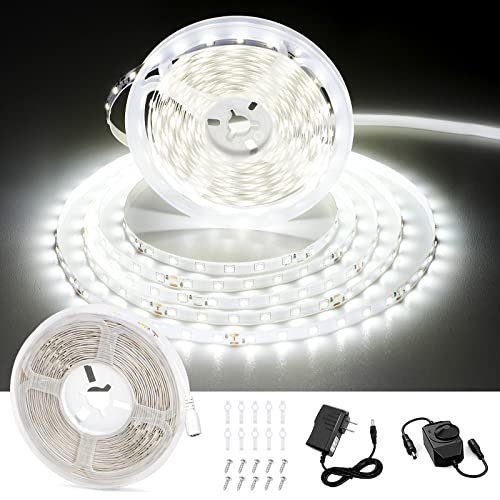
How to connect Super Bright LED Strip Light?
Affiliate links — we may earn a commission
The step-by-step guide “How to connect Super Bright LED Strip Light” will help you easily connect and set up a Super Bright LED Strip Light. By following the instructions in this guide, you will be able to create a vibrant and customized lighting effect for your home or any space.
Popular Lighting Choice for Any Space
Gather the necessary materials
Before you start your project, it’s essential to gather all the necessary materials. This way, you won’t have to interrupt your progress midway due to missing items. Here’s a checklist of what you’ll need:
- LED strip lights: These are the main component of your lighting setup. LED strips come in a variety of lengths, colors, and brightness levels. Choose the one that suits your needs best. For example, if you want to illuminate a room, you might opt for longer strips, while shorter ones may be sufficient for accent lighting.
- Power supply: LED strips require a power supply to function. You’ll need to connect the power supply to the LED strip lights using an appropriate adapter. Ensure that the power supply matches the requirements of your LED strip, as using an incompatible one may result in damage or poor performance.
- Connectors: Connectors are used to join different sections of LED strip lights together or to make turns in your installation. There are various types of connectors available, such as solderless connectors or cable connectors. Make sure to choose connectors that are compatible with your LED strips and follow the manufacturer’s instructions for a secure connection.
- Additional accessories: Depending on your project, you might require additional accessories such as mounting brackets, clips, or adhesive tape to secure the LED strips in place. These accessories can provide stability and ensure that your installation stays in position.
By gathering and double-checking these materials before you begin, you can avoid frustration and interruptions during the installation process. Having everything readily available will make the project smoother and more efficient. So take a moment to confirm that you have all the necessary items, and you’ll be ready to proceed to the next steps with confidence.
Measure and cut the strip
Measure and cut the strip: To ensure a perfect fit for your LED strip lights, it is crucial to carefully measure the length of the area where you intend to install them. Start by taking a tape measure and accurately measuring the distance you want to cover. Make sure to account for any corners or bends in the area.
Once you have obtained the correct measurements, it is time to cut the strip to the desired length. Grab a pair of scissors or a sharp knife, ensuring that you have a steady hand. Lay the strip on a flat surface and carefully cut through the designated cutting points. These cutting points are typically indicated by scissor icons or marked sections on the strip itself.
Remember, it is essential to exercise caution while cutting to avoid any accidental damage or injury. Take your time, use smooth continuous motions, and double-check your measurements before making any cuts. By following these simple steps, you’ll be able to achieve the perfect fit for your LED strip lights and ensure a visually pleasing installation. Happy measuring and cutting!
Prepare the strip
To prepare the strip, start by removing the adhesive backing. Gently peel off the protective sheet covering the sticky side of the strip. Make sure you do this slowly to prevent any damage to the strip. Once the backing is removed, you’re ready to attach it to the desired surface.
Before applying the strip, it’s crucial to ensure that the surface is clean and dry. Any dirt, dust, or moisture can affect the adhesive’s ability to stick properly. Here’s what you need to do:
- Clean the surface: Use a mild detergent or a suitable cleaner to eliminate any dust, grease, or dirt from the area where you want to attach the strip. You can use a soft cloth or a sponge to gently wipe the surface clean. For stubborn stains, you may need to use a mild scrub brush or a damp cloth.
- Dry the surface: Once the surface is clean, allow it to dry completely before proceeding. You can use a lint-free towel or give it some time to air dry naturally. It’s crucial to ensure that there’s no moisture remaining on the surface as it can affect the strip’s adhesive.
- Position the strip: Now that the surface is clean and dry, carefully position the strip on the desired area. Press down firmly along the entire length of the strip to ensure good contact with the surface. Avoid bending or twisting the strip while applying it.
Here’s an example to help you better understand: Let’s say you want to attach the strip to the wall above your desk. Before applying the strip, wipe off any dust or fingerprints on the wall using a clean cloth. Once the wall is clean, make sure it’s completely dry before peeling off the adhesive backing. Position the strip where you want it and firmly press it against the wall, ensuring it sticks securely.
Following these steps will help ensure the strip adheres well to the desired surface. Now you’re all set to move on to the next step in your project!
Connect the power supply
To connect the power supply, start by taking one end of the strip and carefully align the positive and negative terminals with the corresponding terminals on the power supply. It is important to ensure a proper alignment to avoid any electrical issues or damage.
For a clear understanding of the correct connection, consult the manufacturer’s instructions. These instructions will provide specific details on how to connect the power supply in the safest and most effective manner.
To illustrate this, let’s consider an example: Imagine you have a power supply with clearly labeled positive and negative terminals. Take the positive end of the strip and connect it to the positive terminal on the power supply. Then, take the negative end of the strip and connect it to the negative terminal. By following these step-by-step instructions and aligning the terminals correctly, you can safely connect the power supply.
Remember, always refer to the manufacturer’s instructions to ensure proper connection and avoid any potential issues.
Connect the connectors
Connecting multiple sections of LED strip lights is a straightforward process if you use connectors. Here’s a step-by-step guide to help you join them together seamlessly:
- Start by familiarizing yourself with the manufacturer’s instructions. Different LED strip lights may have specific connector types or connection methods, so it’s essential to follow their guidelines.
- Ensure that both the sections of LED strip lights you want to connect and the connectors are compatible. Check if they have the same voltage ratings and connector styles. This information is usually mentioned in the manufacturer’s documentation.
- Carefully position the LED strip lights you wish to connect. Make sure they are aligned correctly and that the copper pads or soldering points on each end are exposed and clean.
- Take the appropriate connector and insert the corresponding end of each LED strip light. Double-check that the polarity is correct, typically indicated by “+” and “-” symbols.
- Apply gentle pressure to the connector while pushing the LED strip lights together. Ensure a secure and snug fit between the strip and the connector.
- Test the connection by plugging in the power supply. If the LED strip lights illuminate and work correctly, then you have successfully connected the sections. If not, recheck the polarity and connector alignment.
- If you are connecting more than two sections, repeat the process using additional connectors until all sections are properly joined.
Remember, it’s crucial to follow the manufacturer’s instructions and take necessary safety precautions when working with electrical components. With a bit of care and attention, you’ll have your LED strip lights connected and brightening up your space in no time.
Test the connection
To test the connection before securing the strip in place, follow these steps:
- Plug in the power supply: Connect your power supply to a power outlet.
- Check the lights: Look at the LED lights on the strip. If everything is working properly, the lights should turn on. Observe if they light up in the desired color or pattern.
By performing this simple test, you can ensure that the connection between the power supply and the LED strip is functioning correctly. If the lights don’t turn on or there are any issues, double-check the connection, power supply, and any relevant settings.
Secure the strip
To secure the strip in place, follow these easy steps. First, make sure that you are satisfied with the connection by checking that all the lights are working and there are no loose connections. Once you’re confident about the setup, it’s time to secure the strip.
If you’re using adhesive, carefully peel off the backing and press the strip firmly onto the desired surface. Make sure to apply even pressure along the entire length of the strip to ensure a secure bond. If there are any areas with excess wiring, neatly tuck it away to avoid any potential hazards or visual clutter.
Alternatively, you can also use mounting brackets to secure the strip. Position the brackets along the strip at regular intervals, ensuring that they are evenly spaced and aligned. Once the brackets are in place, insert the strip into the brackets and gently push it until it is snugly held in position.
By following these instructions and taking the necessary steps to firmly attach the strip and tidy up any excess wiring, you’ll ensure a secure and visually pleasing installation. Enjoy the enhanced ambiance and lighting that your strip will provide!
Wrapping it all up
In conclusion, connecting a Super Bright LED Strip Light may seem like a daunting task at first, but with the right instructions, it can be easily accomplished. By following the steps outlined in this blog post, you have successfully connected your LED strip light and are now ready to enjoy its vibrant lighting and unleash your creativity with different color options and lighting effects. So go ahead, embrace the dazzling world of LED lighting and create the perfect ambiance for any space.
Essential Tools & Materials
Illuminate with Ease

Alex Navarro
Hi, I'm leds.to, the founder of the world's #1 LED lighting review site. At leds.to, we strive to provide you with the most comprehensive and reliable reviews on LED lighting products. Whether you're looking for car LEDs, super bright LEDs, or even grow light LEDs, you'll find all the information you need right here on our site. With years of experience in the industry, I'll guide you towards making the best purchasing decisions for your lighting needs. Trust me to shed light on the world of LEDs and help you find the perfect lighting solutions.



I’ve found that using a soldering iron and heat shrink tubing provides a more secure and professional-looking connection for the LED strip. It takes a bit more effort, but the result is worth it. Just wanted to share this advanced tip!
Thank you for sharing your advanced tip! Using a soldering iron and heat shrink tubing can indeed provide a more secure and professional-looking connection for the LED strip. It’s a great option for those who have the tools and are comfortable with soldering. Just remember to take necessary safety precautions when using the soldering iron. Your suggestion adds another level of customization and durability to the LED strip connection.
I’m a little confused about how to measure and cut the LED strip. Can you explain in more detail how to do this?
Of course! To measure and cut the LED strip, you’ll need to first determine the desired length of the strip for your project. Using a ruler or measuring tape, measure and mark the strip at the appropriate length. Then, carefully cut along the marked line using scissors or a sharp knife. Make sure to cut along the designated cut lines on the LED strip to avoid damaging the circuitry. Once you’ve cut the strip, you can proceed with the next steps.
I’ve connected multiple LED strip lights in my room and they all look great. However, I’m wondering if there are any variations to this guide if I want to connect the strips in different areas of my house. Any suggestions?
I followed these steps and successfully connected my LED strip light. It looks amazing in my room! Thanks for the clear instructions!
I’ve been using LED strip lights for a while now and I’ve found that using adhesive clips to secure the strip is a great alternative to using tape. It provides a more secure hold and is easier to remove if needed.
Thank you for sharing your tip! Adhesive clips can indeed be a great alternative to tape for securing the LED strip. They provide a more secure hold and can be easily adjusted or removed when necessary. It’s always helpful to have different options for securing the strip.
I’m having trouble getting my LED strip light to turn on. I’ve double-checked all the connections and everything seems to be in place. Any troubleshooting tips for this issue?
LED strips are overrated! I prefer classic lamps for a cozy vibe. Thoughts?
LED lights are overrated, I prefer good ol fashioned incandescent bulbs any day!
LED strip lighting is overrated! Give me some good old-fashioned incandescent bulbs any day.
LED strip lighting may be modern, but its energy efficiency and versatility make it far superior to outdated incandescent bulbs. Embrace the future and enjoy the benefits of brighter, more cost-effective lighting. Dont get stuck in the past – upgrade and illuminate your space with LED strips!
I found this guide very helpful in connecting my super bright LED strip light. However, I noticed that the power supply that came with my strip had a different connector than the ones shown in the guide. Can I still use it with the strip? Any suggestions on how to connect it?
These steps are great for beginners, but do you have any advanced tips for connecting LED strip lights? I’m looking to take my lighting setup to the next level.
I think LED strip lights are overrated, candles give a cozier vibe.
LED lights are overrated. Why not embrace the darkness for a change? 🌑
LED lights are overrated! Give me some good old-fashioned incandescent bulbs any day.
LED lights are overrated! Give me some good old-fashioned incandescent bulbs any day.
LED lights are overrated. I prefer good old-fashioned incandescent bulbs any day.
LED lights are overrated! Lets bring back the cozy glow of incandescent bulbs.
LED lights are more energy-efficient, longer-lasting, and environmentally friendly than incandescent bulbs. Embrace the future and enjoy the benefits of modern technology rather than clinging to outdated options. The cozy glow can be replicated with warm LED lights, so why not make the switch for a brighter future?
LED strips are overrated. I prefer traditional lamps for a cozy vibe. Agree or disagree?
LED strip lights are overrated. Natural lighting is the way to go!
LED strip lights are overrated, candles bring a cozy vibe! Whos with me? 🕯️
LED strip lights are overrated! Candles bring more warmth and coziness. Whos with me?
Sorry, but I have to disagree. LED strip lights offer versatility, energy efficiency, and modern aesthetics that candles simply cant match. While candles may provide a traditional ambiance, LED strip lights can create a cozy atmosphere with added functionality. Its all about personal preference!
LED strip lights are overrated. I prefer candles for a cozy atmosphere.
LED strip lights are overrated! Incandescent bulbs all the way for me.
I must say, if youre using a soldering iron to prepare the strip, please take care! One slip can ruin the whole strip. Also, anyone else think its about time manufacturers started producing LED strips in custom lengths? It would save us a lot of hassle!
Totally agree! Manufacturers need to wake up to customer needs. Safety first with soldering!
Interesting read. However, Im curious – once the strip is cut, is it possible to reuse the remaining part? Also, how do you manage if youve measured wrong? Any tips on that? Would be great to get some insight on these aspects too.
Just finished reading this article on setting up LED strip lights. Interesting stuff! But why are we cutting the strip before preparing it? Wouldnt it make more sense to prepare the strip first to prevent any potential damage? Also, wouldnt it be cool if the strip lights came with a remote control feature for easy operation? Just some food for thought.
Im curious, wouldnt using a dimmer switch with Super Bright LED Strip Lights help regulate brightness and save energy? Also, how can one safely dispose of cut off LED pieces? I feel environmental safety isnt emphasized enough in DIY projects. Although, I do appreciate the clear and concise instructions.
I think measuring and cutting the LED strip can be tricky. Anyone else find this step challenging? Maybe we can share tips or hacks to make it easier. Lets brainstorm together!
I disagree with the articles suggestion to measure and cut the LED strip. Why not just keep it in one piece and create a unique design instead? Embrace the randomness!
I think measuring and cutting the LED strip can be tricky. Anyone else struggle with getting the right length on the first try? Maybe I just need better measuring skills!
Practice makes perfect! Keep trying, youll get the hang of it. Dont give up!
I cant believe they didnt mention the importance of proper voltage for LED strips! Without the right power source, your lights could be dim or flicker. Always check your voltage, people!
Interesting read, but why arent we considering the longevity of these LED strips? Also, arent there potential issues with heat if theyre super bright? Would love some insights!
Interesting article! But wouldnt a detailed video tutorial be more helpful for visual learners, especially when it comes to the cutting and preparation of the LED strip? Just a thought!
Perhaps, but not everyone has time for videos. Written instructions can be quicker and more convenient.
Why even bother cutting and preparing LED strips? Just get smart bulbs, simpler and way more efficient! Just my two cents.
These LED strip lights are overhyped, I reckon. Anyone else think the old-school fairy lights have a warmer, cozier vibe? Just me?
LEDs are efficient and versatile. Fairy lights cant match that. Embrace the future, not the past!
Interesting points, but isnt it easier to just hire a professional? I mean, not everyones a DIY wizard. Plus, what about potential electrical hazards if done incorrectly? Just saying… 🤷♂️
Just saying, isnt it odd how were so fixated on these Super Bright LED strips? Theyre great, sure, but what happened to good old-fashioned mood lighting? Too much brightness can be overkill, dont ya think?
What if I mess up the measurements? Any hacks to fix a wrongly cut LED strip or is it a total loss?
Is soldering really necessary for LED strips? Cant we just use connectors for an easier installation process?
Did anyone find the prepare the strip step slightly confusing? Maybe a detailed video guide could help?
Isnt it easier to buy pre-cut LED strips rather than measuring and cutting them ourselves? Just a thought.