

Discover What is HID Lighting: Illuminate Your Knowledge!
Affiliate links — we may earn a commission
High-Intensity Discharge (HID) lighting, often referred to as gas discharge lamps, has been a revolutionary technology in illumination for over a century. These lamps are known for their ability to vaporize metallic salts in an electric arc chamber, serving as a powerful alternative to traditional halogen and tungsten bulbs. Due to their smaller size, HID lamps produce an equal amount of light as their larger halogen counterparts, making HID a sought-after choice for commercial spaces looking to reduce operational costs while optimizing infrastructure investments.
Key Takeaways
- HID lighting technology has been a game-changer in the illumination industry for more than a century.
- Gas discharge lamps vaporize metallic salts in an arc chamber, producing a powerful light without the size constraints of halogen and tungsten bulbs.
- The efficiency and compact size of HID lamps make them ideal for commercial and industrial spaces, reducing operational costs.
- HID lights offer equal illumination when compared to larger halogen bulbs, providing a more flexible option for various applications.
- The ability to alter the gases and phosphor composition within the lamps can change the characteristics of the emitted light, making them adaptable for both indoor and outdoor use.
The Fascinating Evolution of HID Lighting Technology
The history of HID lighting traces back centuries, with the development of gas discharge lamps being the foundation of this illuminating technology. Before understanding the marvels of modern HID lamps, it’s essential to step back and explore the origins of gas discharge lamps and the early days of the Mercury Vapor Lamp.
The Genesis of Gas Discharge Lamps
In the 17th century, the observation of glowing gas in a vacuum by Jean-Felix Picard led to Francis Hauksbee’s explanation of the glowing phenomenon in 1705. The groundwork for gas discharge lamps was set by contributions from Vasily V. Petrov and Sir Humphry Davy in the early 19th century. Eventually, Heinrich Geissler created the Geissler tubes in 1857. These tubes utilized different gases to emit multicolored illumination, sparking an interest in the diverse use of gases in lighting technology.
https://www.youtube.com/watch?v=qbw5fO5Ivbg
“Illuminating the path of HID lighting evolution leads us to the invention of Geissler tubes.”
Birth of the Mercury Vapor Lamp
As scientists continued to explore the potential of metal vapor lamps, Charles Wheatstone and John Thomas Way discovered the remarkable properties of mercury vapor in the mid-19th century. Their experiments motivated Leo Arons to develop a lamp that emitted a distinct green-blue light in 1892. This paved the way for HID lamp inventions and the first commercial Mercury Vapor Lamp in 1901, designed by Peter Cooper Hewitt.
The Mercury Vapor Lamp underwent further improvements by Eugen Kuch and Johann Retschinsky in 1906. Their enhancements in the design and function of the lamp caught the attention of General Electric, which acquired the technology in 1913. This acquisition fortified the influence of HID lighting and paved the way for future developments in the realm of gas discharge lamps.
The introduction of the Mercury Vapor Lamp was a significant milestone in the HID lighting development. It marked the beginning of a new era of enhanced illumination and the utilization of adaptive gases in the lighting industry.
- The observation of glowing gas by Jean-Felix Picard and Francis Hauksbee in the 17th century
- The groundwork for gas discharge lamps laid by Vasily V. Petrov and Sir Humphry Davy
- Heinrich Geissler’s invention of Geissler tubes in 1857
- Charles Wheatstone, John Thomas Way, and Leo Arons’ experiments with mercury vapor
- Peter Cooper Hewitt’s creation of the first commercial Mercury Vapor Lamp in 1901
As the HID lighting evolution continued, the technology saw significant advancements, with scientists and researchers fine-tuning the functions and capacities of gas discharge lamps. This historical journey demonstrates the ingenuity of human endeavor and the collaborative nature of innovation in driving technological advancements.
Exploring the Inner Workings of HID Lights
Conventional lighting solutions like incandescent bulbs may be prevalent, but they fall short in comparison to the power and efficiency provided by High-Intensity Discharge (HID) lighting. So how does HID lighting work? It all starts with understanding the HID lamp function and gas discharge illumination technology behind their design. Dive into the mechanics of these fascinating lamps and shed some light on your understanding of this innovative technology.
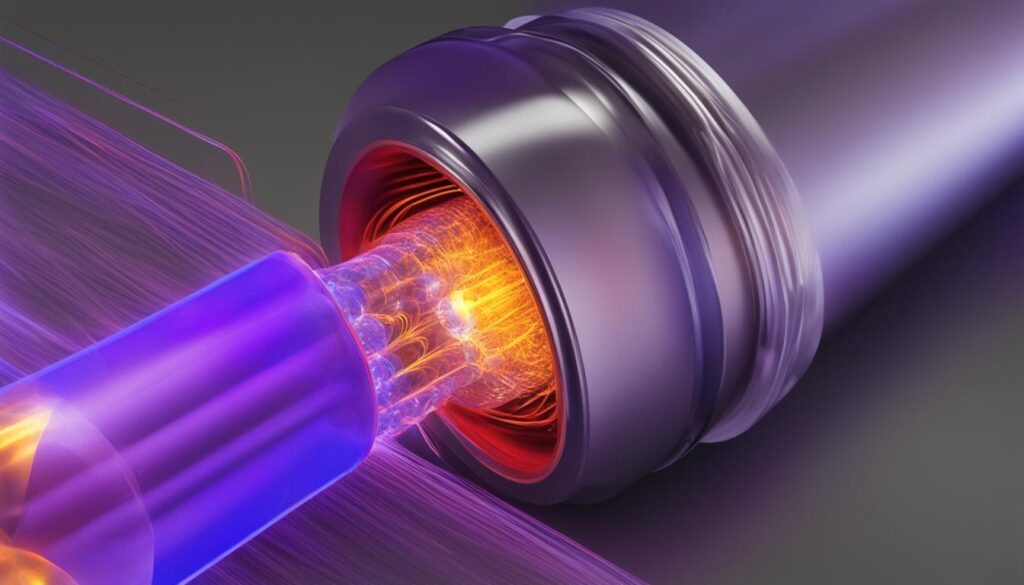
HID lights rely on a gas-filled arc tube to produce bright, energy-efficient illumination. The lamp sends an electrical current through this arc tube, resulting in the ionization of the gaseous elements inside. Ionized gases create a plasma that emits ultraviolet (UV) light. The plasma’s high-energy UV radiation is then absorbed by the phosphor coating on the inner surface of the arc tube, causing it to fluoresce and give off visible light.
The secret to HID lamps’ superior brightness and energy efficiency lies in the gas discharge illumination technology that generates intense UV radiation within the arc tube, ultimately resulting in the production of visible light.
The light’s properties, such as brightness and color temperature, can be altered by adjusting the concoction of gases and the composition of the phosphor coating inside the arc tube. By controlling these factors, manufacturers can design HID lamps tailored to various lighting needs and applications.
- Ionized gases create plasma: When an electrical current passes through the gas-filled arc tube, the gases inside become ionized, creating a plasma that emits UV light.
- UV light activates phosphor coating: The UV radiation is absorbed by the phosphor coating inside the arc tube, causing it to fluoresce and transform the UV light into visible light.
- Adjustable light properties: By altering the gas and phosphor composition, the properties of the resulting light can be controlled to match specific needs and preferences.
Throughout the years, manufacturers have experimented with various combinations of gases and phosphors to create lighting solutions for diverse applications. From automotive headlights to large-scale commercial and industrial lighting, HID lamps continue to illuminate the world with their power, efficiency, and versatility.
Peeking Under the Hood: How HID Lighting Functions
In the world of light emission technology, HID lamps have garnered widespread attention for their unparalleled effectiveness and efficiency. The heart of the HID lighting mechanism lies in the gases used in the arc tube, the light spectrum it produces, and the transition from ultraviolet to visible light. Let’s delve into the particulars of this process.
The Role of Gases in Emitting Light
Within the HID arc tube lies various gases that play a critical HID light gas role in determining the light emission characteristics. Commonly utilized gases include mercury, sodium, and more recently, metal halides, with each of these elements significantly affecting the light’s intensity and color. Innovations in HID lighting have led to the introduction of inert gases, which have been recognized for their potential in enhancing the effectiveness of discharge lamps.
From Ultraviolet to Visible: The HID Light Process
At the core of the HID lighting process is the transformation from ultraviolet to visible light, providing us with the brilliant illumination we’ve come to associate with HID lamps. The gas-filled environment within the arc tube facilitates the production of high-intensity light, as the electric current generates a plasma that emits UV light. This all-important UV light then interacts with a phosphor coating on the inner surface of the arc tube, ultimately producing the visible light we see. The intricate interplay of gases, UV light, and phosphor yields the bright, high-quality output distinctive to HID light spectrum.
“HID lights operate by creating an electrical current through a gas-filled arc tube, generating a plasma that emits ultraviolet light. This UV light activates a phosphor coating inside the arc tube to produce visible light, with the light’s characteristics adjusted by altering the gas and phosphor composition.” – Exploring the Inner Workings of HID Lights
Thanks to these technological advancements and the gases’ strategic role in emitting light, HID lamps have become a sought-after choice for various applications. The HID lighting mechanism allows for diverse customization, ensuring that businesses and individuals alike can benefit from efficient, long-lasting, and superior illumination.
Unveiling the Main Types of HID Lighting Fixtures
As the technology evolved, several types of HID lighting emerged, with each fixture distinguished by the different gases used. The main types of HID lighting fixtures are mercury vapor lamps, high-pressure sodium lamps, and metal halide lamps. Each type began with mercury vapor, followed by sodium in various pressure forms, and culminated in the versatile metal halide lamps that can simulate daylight. These lamps are optimal for settings ranging from indoor high bay applications to outdoor sports arenas.
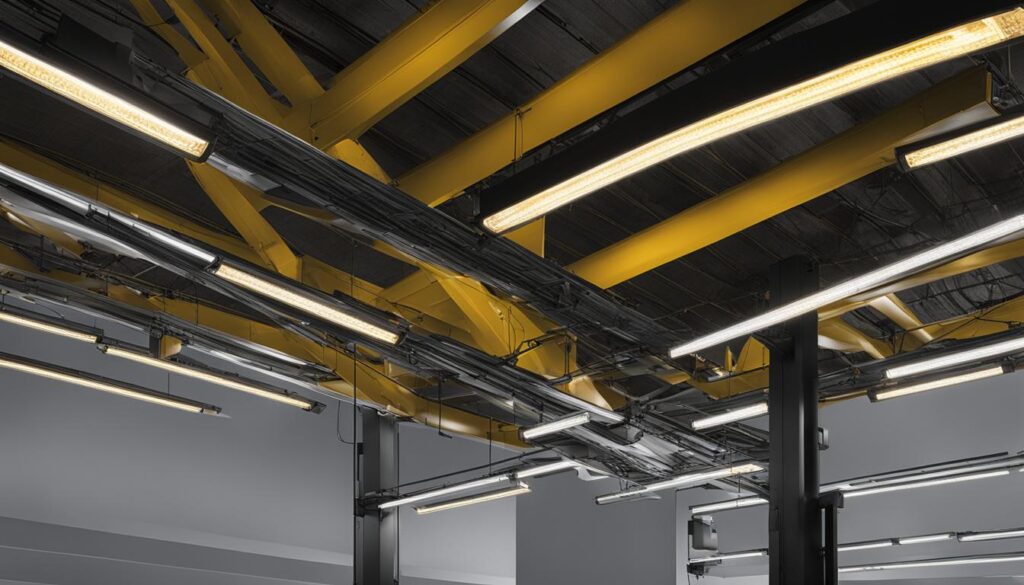
Let’s take a closer look at each of these primary HID lighting fixtures:
Mercury Vapor Lamps
As the earliest form of HID lighting, mercury vapor lamps employ mercury as the main gas to produce light. However, the emitted light tends to have a blue-green hue, making it less desirable for some applications. Mercury vapor lamps are now mostly used in outdoor settings like streetlights and parking lots owing to their longevity and relatively low operating costs.
High-Pressure Sodium Lamps
High-pressure sodium lamps use sodium as the primary gas, along with a small amount of mercury to create a high-intensity light output. Compared to mercury vapor lamps, high-pressure sodium lamps appear warm and orange, rendering them suitable for streetlights, security lighting, and industrial applications. They are known for their high energy efficiency, long lifespan, and widespread use across various industries.
Metal Halide Lamps
Lastly, metal halide lamps represent a quantum leap in HID lighting technology. These fixtures use a blend of metal halides, while their capability to simulate daylight provides unparalleled versatility. Metal halide lamps have found widespread use in indoor high bay lighting applications, outdoor sports arenas, and many other commercial and industrial settings. In addition to their diverse applications, metal halide lamps have a better color rendering index than either mercury vapor or high-pressure sodium lamps.
As we continue to explore the world of HID lighting, it is clear that these fixtures have revolutionized the lighting industry, providing efficient, long-lasting, and versatile options for various settings.
| Type of HID Lamp | Primary Gas | Color Rendering Index (CRI) | Common Applications |
|---|---|---|---|
| Mercury Vapor | Mercury | Low | Streetlights, parking lots |
| High-Pressure Sodium | Sodium | Low to moderate | Streetlights, security lighting, industrial settings |
| Metal Halide | Metal Halides | High | Indoor high bay, sports arenas, commercial spaces |
In conclusion, understanding the key differences between the main types of HID lighting fixtures can help you make informed decisions when selecting the most suitable and efficient lighting solutions for your specific needs.
The Quantum Leap: Advancements in HID From 1900s to Today
Since their inception, HID lights have undergone considerable refinements, contributing to the vast improvements in HID technology we see today. Looking back at HID lighting history, we can appreciate the significant HID advancements made from the early 1900s to the present day. These advancements have paved the way for the current HID efficiency, refinement, and widespread use.
From the humble beginnings of mercury vapor lamps, through high-pressure sodium lamps, to the versatile metal halide lamps, the evolution of HID lighting has been nothing short of remarkable.
In 1962, Robert Reiling developed durable metal halide lamps, which became popular for their energy efficiency, versatility, and true-to-life spectrum. This important milestone signified a crucial shift in HID technology, improving its performance and usability.
Another game-changing invention was the introduction of Lucalox by General Electric in 1960s. This advanced ceramic material allowed for the development of reliable high-pressure sodium lamps, which soon gained popularity for their efficient and powerful warm-tone lighting.
- Mercury Vapor Lamps: First-generation HID lamps offering long life and high lumen output, albeit with a less desirable color spectrum. (Introduced in the early 1900s)
- High-Pressure Sodium (HPS) Lamps: A major leap in efficiency and light quality with longer life, better color rendering, and higher lumen output. These lamps had yellowish-orange hues, which could be corrected by adding phosphors. (Introduced in the 1960s)
- Metal Halide (MH) Lamps: This latest generation of HID lamps boasts a higher color rendering index and improved spectrum, mimicking natural daylight. They are popular in both commercial and industrial applications for their versatility and performance. (Introduced in the 1960s)
Thanks to such HID advancements, the scope and reach of HID lighting technology have expanded dramatically. Today, HID technology improvements are continuously being made, increasing the efficiency and efficacy of high-intensity discharge lighting.
| Advancements | Impact on HID Technology |
|---|---|
| Durable Metal Halide Lamps (1962) | Improved energy efficiency, versatility, and light spectrum |
| Lucalox (1960s) | Enabled the creation of reliable high-pressure sodium lamps with efficient and powerful warm-tone lighting |
| Phosphor Addition to HPS Lamps | Enhanced color rendering and reduced color shift over time |
| Recent Technology Innovations | Expanded control options for HID lamps, enabled integration with building automation systems, and improved lighting control performance |
As we continue to witness the rapid development of lighting technology, the HID advancements of today will undoubtedly influence the innovations of tomorrow, shaping the future of illumination in ways we can barely imagine.
Practical Applications: How HID Lighting Transforms Spaces

High-Intensity Discharge (HID) lighting has revolutionized various sectors due to its high-efficiency, durability, and the intensity of lumens it produces. Being a popular choice for both automotive and commercial applications, HID brings a new dimension of visibility and aesthetic appeal to the spaces it illuminates.
HID Lighting in the Automotive World
In the realm of automotive lighting, HID’s superiority is evident in vehicle headlight replacement and upgraded car lights. These high-performance headlights enhance visibility during nighttime driving and adverse weather conditions, making journeys safer for drivers and other road users. The intense, white light emitted by HID lamps significantly raises the visual appeal of modern vehicles, underlining their sleek design and luxury features.
Commercial and Industrial Uses of High-Intensity Discharge Lighting
HID commercial lighting has wide-ranging applications in various sectors, including hospitals, schools, and entertainment venues. It is also successfully implemented in industrial uses, lighting manufacturing plants and warehouses. The popularity of HID fixtures in these environments is a testament to their ability to produce high-intensity lumens without generating excessive heat. This combination of efficiency and durability makes HID a cost-effective and modern lighting solution for businesses.
- Energy-saving: Given their lower power consumption, HID fixtures prove to be an eco-friendly choice in various applications, ranging from residential to large-scale commercial properties.
- Longevity: The impressive lifespan of HID lamps allows users to minimize maintenance costs and disruptions caused by frequent bulb replacements.
- Brightness: The high-intensity lumens emitted by HID lighting provide significantly enhanced visibility and illumination compared to traditional lighting solutions.
In conclusion, HID lighting’s versatility, efficiency, and durability have elevated it from a niche solution to a favored choice across various industries and applications. Its transformative impact on both automotive and commercial spaces speaks to the bright future of this technology as it continues to illuminate our world.
Comparing HID With LED: The Future of Lighting
In recent years, as technology continues to advance at a rapid pace, the debate has arisen among experts and homeowners alike: which lighting technology reigns superior – HID lighting vs LED lighting? This lighting technology comparison has led to intense discussions about the efficiencies, longevity, and versatility each brings to the table. Ultimately, it serves as a pivotal moment in the search for the future of lighting.
One of the primary considerations when evaluating lighting technology is the energy efficiency of each option, with both HID and LED boasting impressive capabilities in this domain. However, LED lighting may have a slight edge, as they typically consume significantly less power than HID lamps while producing the same or even higher levels of illumination.
When it comes to energy efficiency, LED lighting often takes the lead, making it an excellent choice for eco-conscious individuals and businesses looking to reduce their carbon footprint.
Another crucial factor in this comparison is the longevity of the lights, which plays a significant role in determining the overall value of the investment. In general, HID lighting boasts a long lifespan, often outlasting traditional incandescent bulbs. However, LED lights are known to last even longer, minimizing the need for frequent replacements and reducing waste.
- Energy Efficiency: LED lights often consume less power than HID lamps while producing a similar level of illumination, making them a greener choice.
- Longevity: Although HID lights have an impressive lifespan, LED lights can last even longer, reducing replacement costs and waste.
When considering versatility, it’s essential to look at the potential applications and adjustability of each lighting technology. While HID lamps are well-suited for large-scale, high-intensity applications like automotive headlights, streetlights, and industrial settings, LED lights offer a broader range of applications, as they can be used in virtually any environment and can be easily adjusted to produce the appropriate color temperature and brightness.
| Lighting Technology | Energy Efficiency | Longevity | Versatility |
|---|---|---|---|
| HID Lighting | High | Long-lasting | Ideal for high-intensity applications like automotive headlights, streetlights, and industrial settings |
| LED Lighting | Higher | Longer-lasting | Suitable for a wide range of applications and easily adjustable for color temperature and brightness |
In conclusion, while both HID and LED lighting technologies offer strong advantages in terms of energy efficiency, longevity, and versatility, LED lighting may hold a marginally higher potential in shaping the future of lighting due to its adaptability and broader range of applications. However, the debate remains ongoing, and the unique needs and preferences of each individual or business play a significant role in determining which option ultimately emerges as the superior choice.
HID Lighting Benefits: Efficiency and Longevity
Among the various lighting options, HID lighting boasts some key advantages that make it a top choice for many applications. Their remarkable efficiency and long-lasting nature are what sets them apart from other lighting types.
One of the primary benefits of HID lighting is their energy efficiency. HID lamps produce intense, white light, allowing them to provide extensive illumination with minimal power consumption. In comparison to traditional incandescent bulbs and halogen lamps, HID lamps consume less energy and generate higher light output.
- Efficient power consumption
- Higher light output
- Lower energy costs
Another notable advantage of HID lighting is its impressive lifespan. HID lamps significantly outlast traditional incandescent bulbs and halogen lamps. This makes them a cost-effective option over time, as you’ll experience reduced replacement costs and maintenance expenses.
When it comes to efficiency and longevity, HID lighting stands out as a reliable and cost-effective choice.
Besides energy efficiency and a longer lifespan, HID lamps provide other advantages, such as:
- Superior color rendition
- Enhanced safety in outdoor and commercial environments
- Wide range of applications
In conclusion, the many advantages of HID lighting make it a preferred choice for various applications. Thanks to their efficiency and long-lasting nature, these lamps provide a cost-effective and reliable lighting solution for personal, commercial, and industrial uses alike.
Conclusion
Throughout this exploration of High-Intensity Discharge (HID) lighting, we have seen how HID lighting technology has revolutionized the world of illumination. With a rich history dating back to the 17th century, HID has evolved and adapted over time to become a reliable and efficient lighting solution for various settings. Numerous HID lighting benefits make it an attractive choice for those looking to improve their home or business lighting.
From automotive use to commercial and industrial applications, HID lighting is valued for its energy efficiency, cost-effectiveness, and long-lasting performance. While the debate between HID and LED lighting continues, there’s no denying the value and benefits that HID lighting brings to the table.
If you’re considering upgrading or installing new lighting fixtures, HID fixtures installation could be the perfect option for you. With a plethora of lighting options HID presents, you select the perfect system to address your needs, and ultimately enhance your surroundings with superior lighting quality. Whether you’re seeking eco-friendly and cost-effective options or simply yearning for an intensified and creative ambiance, HID lighting proves time and time again to be a go-to illumination choice.
FAQ
What is HID lighting?
HID (High-Intensity Discharge) lighting, also known as gas discharge lamps, is a revolutionary technology in illumination that vaporizes metallic salts in an electric arc chamber to produce a powerful and efficient light source, serving as an alternative to traditional halogen and tungsten bulbs.
How does HID lighting work?
HID lights operate by creating an electrical current through a gas-filled arc tube, generating a plasma that emits ultraviolet (UV) light. This UV light then activates a phosphor coating inside the arc tube to produce visible light. The light’s characteristics can be adjusted by altering the gas and phosphor composition.
What are the main types of HID lighting fixtures?
The primary types of HID lighting fixtures include mercury vapor, high-pressure sodium, and metal halide lamps. Each type is distinguished by the different gases used and offers unique characteristics in terms of intensity, color, and efficiency.
How has HID lighting evolved over the years?
HID lighting has undergone significant refinements since its inception, with notable advancements including the development of mercury vapor lamps, high-pressure sodium lamps, and metal halide lamps. These innovations have paved the way for improved HID efficiency, refinement, and widespread use in various applications.
What are the practical applications of HID lighting?
HID lighting is widely used in the automotive sector for headlights, as well as in commercial and industrial settings such as manufacturing plants, warehouses, hospitals, schools, and entertainment venues. HID fixtures are valued for their efficiency, durability, and ability to produce intense brightness without excess heat.
How do HID lights compare to LED lights?
HID lights are known for their high energy efficiency, long lifespan, and versatility. However, advancements in LED technology have led to improvements in control, color, and sustainability. The debate continues as to which technology may dominate the future landscape of lighting.
What are the benefits of HID lighting?
HID lighting is celebrated for its efficiency and longevity, providing superior illumination with minimal power consumption. Additionally, HID lamps boast an impressive lifespan, significantly outlasting traditional incandescent bulbs, making them a cost-effective option over time.

Alex Navarro
Hi, I'm leds.to, the founder of the world's #1 LED lighting review site. At leds.to, we strive to provide you with the most comprehensive and reliable reviews on LED lighting products. Whether you're looking for car LEDs, super bright LEDs, or even grow light LEDs, you'll find all the information you need right here on our site. With years of experience in the industry, I'll guide you towards making the best purchasing decisions for your lighting needs. Trust me to shed light on the world of LEDs and help you find the perfect lighting solutions.


Who knew HID lighting had such an electrifying history? 🤯 Mind-blown by the birth of the Mercury Vapor Lamp!
Wow, who knew HID lighting had such a wild evolution? Mind. Blown. #LightingGeek
Wow, who knew lighting could be so fascinating?! HID technology has come a long way. 💡
I never knew HID lighting had such a fascinating evolution! Mind. Blown. #IlluminateTheKnowledge
I never knew HID lighting had such a fascinating history! Who wouldve thought mercury vapor lamps had a birth story?
Who knew lighting could be so captivating? HID lighting is truly illuminating our knowledge!
I never knew lamps could be so interesting! Who knew HID lighting had such a fascinating evolution?
Wow, who knew HID lighting had such a fascinating evolution? Mind-blown! 💡🚀 #IlluminateTheDarkSide
Wow, who knew HID lighting had such a fascinating evolution? Mind-blowing stuff!
Who needs HID lighting when we can just use candles? #BackToBasics
Who needs HID lighting anyway? I prefer the cozy glow of candlelight!
Im not convinced HID lighting is worth the hype. LED is the future!
HID lighting still has its place, especially for certain applications. Dont dismiss it just yet. LED may be the future, but HID can still hold its own in terms of light output and affordability. Dont knock it till youve tried it.
I think HID lighting is overrated – LED is the future!
HID lighting may be old school, but its still a reliable option. LEDs might be trending, but lets not dismiss the tried and true just yet. Both have their strengths, so lets not write off HID just because its not the latest craze.
I think HID lighting is overrated! LED is the future, lets move on.
I think HID lighting is overrated. LED technology is the future! 🌟
I think HID lighting is overrated. LEDs are the future, lets move on!
I think HID lighting is overrated. LED is the future! Whos with me?
I still prefer good ol incandescent bulbs over all this HID tech!
I cant believe they didnt mention the conspiracy theories behind HID lighting!
I still prefer good old incandescent bulbs over all this fancy HID technology!
I think HID lighting is overrated. LED is the future!
I never knew HID lighting had such a fascinating evolution! Who knew? 🤯
Is HID lighting truly the future of illumination or just a passing trend?
Is HID lighting really the future? Or are LEDs the true illuminators? 🤔
I think HID lighting is overrated. LED is the future!
Mercury vapor lamps? Sounds like a conspiracy theory waiting to happen!
Actually, mercury vapor lamps have been used for decades for outdoor lighting. They are efficient and long-lasting. No conspiracy here, just a common lighting technology. Research before jumping to conclusions.
I think HID lighting is overrated! LED is the future, lets move on.
I still prefer good old incandescent bulbs over all this HID technology hype.
I think HID lighting is overrated! LED is the future, lets move on.
I think HID lighting is a waste of energy. LED is the future!
HID lighting may use more energy, but the quality of light it provides cannot be denied. LED has its benefits, but lets not dismiss HID completely. Both have their place in the lighting industry. Lets keep an open mind and appreciate the diversity in lighting options available.
I think HID lighting is overrated. Lets bring back candles for a cozy vibe!
Candles may be cozy, but HID lighting is more efficient and practical. Lets leave the candles for special occasions and embrace the benefits of modern lighting technology. Its time to brighten up our spaces without the risk of burning down the house.
Interesting read about HID lighting! But the article seems to overlook LED technology. Arent LEDs gradually replacing HIDs due to better energy efficiency and longer lifespan? I think it would be interesting to compare these two technologies in a future article. What do you guys think?
Interesting read, but did anyone else find it odd that the article skipped over the environmental impact of mercury vapor lamps? Sure, theyve revolutionized lighting, but shouldnt there be a discussion about safe disposal methods or potential ecological hazards? Just a thought.
Interesting read about HID lighting! But did the mercury vapor lamps invention really spearhead the evolution of this tech or did other milestones contribute equally? Curious to know your thoughts.
Interesting read on HID lighting evolution! But do the environmental implications of mercury vapor lamps outweigh their efficiency? Seems like an important aspect to consider.
Interesting read on HID lighting! But wouldnt it be fair to consider the environmental impact of Mercury Vapor Lamps? They contain mercury, a hazardous material. Lets shed some light on that too.
I find it fascinating how HID lighting has evolved over time. Who would have thought the birth of the Mercury Vapor Lamp would lead to such innovative technology today? Its like a hidden gem in the world of lighting!
I find it mind-blowing how HID lighting has evolved from gas discharge lamps to mercury vapor lamps. The technology behind it is truly fascinating! Whats your take on this illuminating journey?
I prefer the simplicity of traditional incandescent bulbs. Sometimes old school is best!
I find it fascinating how HID lighting has evolved over time. But, do you think the environmental impact of these technologies is being adequately addressed in the discussion? Lets ponder on that!
I find it intriguing how HID lighting has evolved over the years. Who would have thought gas discharge lamps had such a fascinating genesis? Makes you appreciate the technology we often take for granted!
Its amazing how innovation transforms the ordinary into extraordinary. Always exciting to see progress!
Interesting read on HID Lighting! But wouldnt it be more efficient to focus on LED technology evolution, considering its more energy-saving and eco-friendly than HID? Just food for thought.
Interesting read, but Im curious about the environmental impact of HID lamps in comparison to LEDs. Did the energy efficiency evolve alongside the technology, or is there still room for improvement?
Interesting read, but isnt LED lighting more energy-efficient and eco-friendly than HID? Shouldnt we be focusing on that instead? Just a thought.
Interesting read, but arent LED lights more energy-efficient? Why are we still discussing outdated HID technology in 2022? Just a thought.
HID technology is still relevant in certain applications. Dont dismiss it just based on age.
Interesting read, but arent LED lights more energy-efficient than these HID lamps? Just wondering why were still stuck on old tech. 🤔
Interesting read! But, shouldnt we focus more on LED tech now, considering its energy efficiency and environmental impact? Just a thought.
Interesting read! But arent LED lights more energy-efficient and long-lasting than HID lighting? Curious to hear your thoughts.
Interesting read! But was the environmental impact of HID lighting considered in the evolution of this technology?
Definitely valid, but isnt the focus here LED tech? Lets stick to the topic!
Does anyone else think that the Mercury Vapor Lamp was a game-changer in the evolution of HID lighting technology?
Ever consider how HID lights impact sleep patterns? Their blue light can mess with our circadian rhythms, you know!