
Exploring Horticulture LEDs: A Greenhouse Revolution for Sustainable Food Production
Affiliate links — we may earn a commission
We invite you on an exciting journey into the green, pulsating heart of revolutionized, energy-efficient farming innovations. This venture immerses us in an exploration of horticulture LEDs, whose transformative implications could pledge a new era of sustainable food production and pioneer a dynamic shift in our broader ecological footprint.
From the humble seedlings of Arugula planted at the inception of our investigation, to the diverse Würth Elektronik supplied LED diodes that awash the benign growth in wavelengths of varying frequencies, we’ll chart an illumination pathway that is akin to a botanical ballet. Maneuvering through broad spectrums of science, encompassing biology and engineering, we narrate the intriguing fusion of natural and artificial elements at work, and analyze the tangible acceleration effect that these LEDs have on the plant growth. We will go through this revolutionary journey like an unfolding leaf, shedding light on the complexities and uncertainties, while illuminating some bright possibilities for the future.
This image is property of i.ytimg.com.
Overview of Horticulture LEDs
Explanation of horticulture LEDs
Horticulture LEDs, also referred to as grow lights, are a top contender in the technological race towards developing viable and sustainable indoor farming methods. These are specialized light-emitting diodes that mimic the natural sunlight, providing the light spectrum needed for plant photosynthesis. They differ from the regular LEDs in their capacity to emit specific light wavelengths conducive to plant growth.
Benefits of using horticulture LEDs in a greenhouse
Horticulture LEDs play a consequential part in indoor farming, particularly within greenhouses. Their distinct light spectrum boosts plant growth, targeting the specific wavelengths plants utilize for photosynthesis. This accelerates growth rates, enabling year-round cultivation irrespective of external weather conditions. Besides, these LEDs are highly energy-efficient, contributing significantly to a lower carbon footprint.
Importance of sustainable food production
Unstable climate patterns and the impending perils of climate change make the advancement of sustainable food production methods imperative. Relying on natural conditions alone is proving increasingly risky. Implementing technologies such as horticulture LEDs in indoor farming offers a way forward in producing a constant supply of food harvests, contributing to food security and environmental sustainability.
LED Types Supplied by Würth Elektronik
First LED type and its specific wavelength
The first type of LED supplied by Würth Elektronik is a deep blue LED. This LED emits a wavelength, aligning with the absorption maximum of plants, stimulating vegetative growth and curbing excessive elongation.
Second LED type and its specific wavelength
The second LED provided is the hyper red LED. This wavelength peaks at the region closely tied with photosynthesis maximization. It is instrumental in promoting flowering and fruiting in plants.
Third LED type and its specific wavelength
The third type is the far red LED. It further drives photosynthesis and governs other plant processes such as shade avoidance and photoperiodic control, guiding plant morphology.
Fourth LED type and its specific wavelength
The daylight LED is the fourth type implemented. Unlike the first three, this LED doesn’t focus on a specific wavelength. Instead, it covers a broader spectrum, replicating the visual light spectrum of the sun. This broad coverage aids other physiological processes in the plants while enabling easy visual inspection of plant health.
Designing an Aluminum LED Driver Board
Purpose of the LED driver board
The LED driver board serves to supply a steady current to the LEDs. It’s designed specifically for high-power LEDs that demand a higher current. Underdriving or overdriving these LEDs can lead to underperformance or damage. Hence, maintaining a constant current is essential for optimal plant growth and LED longevity.
Constant current provision for LEDs
The driver board ensures a constant current supply to the LEDs. It achieves this by integrating smoothly functioning switched-mode power supplies, which turn a variable input voltage into a constant output current—much like the LED step-down modules leveraged from Würth Elektronik.
Brightness adjustment capabilities
A smart feature of the LED driver board is the provision for brightness adjustment. Through Pulse Width Modulation (PWM) signals, the board enables dimming of the LEDs between 0% and 100%, offering greater control over the light intensity.
Utilization of Arduino for PWM Signals
Introduction to Arduino
Arduino, an open-source electronic prototyping platform, is used to generate PWM signals. It is a user-friendly tool which makes it simple to write codes and upload them to the board.
Generating PWM signals for LED brightness control
With Arduino, we can create the four PWM signals essential for dimming the LEDs. Thus, it offers control over the light intensity of the grow lights, allowing us to fine-tune the environment according to the plant’s needs.

This image is property of images.pexels.com.
Conducting the Arugula Seed Experiment
Comparison of growth rates under sunlight and LED lighting
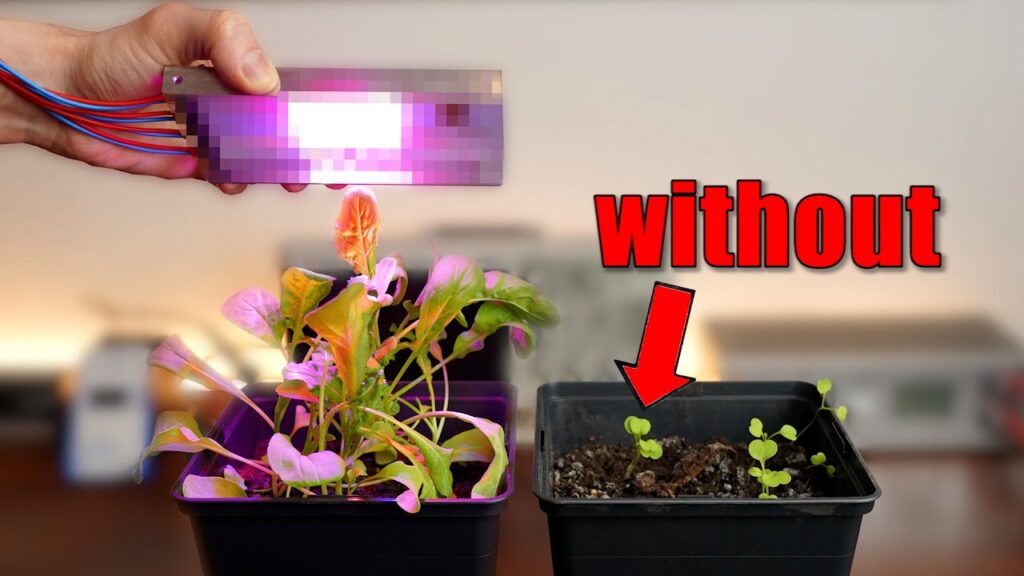
Our experiment with Arugula seeds aimed to validate the efficiency of horticulture LEDs over natural sunlight. The study gave us a real-time demonstration of how significantly the LEDs accelerate plant growth.
Experimental setup and methodology
We set up six containers, three under regular sunlight, and the rest under the LED grow lights. A rustic wood construction was made to mount the LED panel over the containers. The plants were nurtured under identical conditions, barring the light source.
Analysis of the results
While initial growth didn’t highlight any significant differences, a substantial disparity was evident after a week. The LED-lit plants exhibited expedited growth, thus affirming the theory that horticulture LEDs indeed speed up plant growth.
Accelerating Plant Growth with Horticulture LEDs
Implications of the experiment’s findings
The findings from our Arugula seed experiment emphasize the potential of horticulture LEDs in indoor farming. Not only did they outperform natural daylight, but these LEDs also underscored their ability to control and expedite the growth process.
Benefits of using horticulture LEDs for plant growth
The advantages of using horticulture LEDs for plant growth are manifold. These LEDs vspeed up the growth, enable year-round cultivation, conserve energy, and reduce the farm’s carbon footprint.
Potential for increasing sustainable food production
With the looming threat of climate change and the increasing demand for a sustainable food supply, horticulture LEDs bring much-needed hope. If correctly utilized, they can revolutionize our food production systems, making them more efficient and sustainable.

This image is property of images.pexels.com.
Costs and Benefits of Indoor Greenhouse Systems
Energy usage considerations
While the power drawn by LEDs is an expenditure, their energy efficiency pays off by reducing total electricity costs in the long run. Moreover, by optimizing the light spectrum for plant growth, we expedite the cultivation cycle, saving time and energy.
Initial setup costs
The initial investment towards an indoor gardening setup, particularly for horticulture LEDs, can be sizable. However, the ROI, both tangibly through harvest yield and intangibly via environmental sustainability, justifies the initial setup costs.
Long-term benefits for sustainable food production
Indoor greenhouse systems hold an array of long-term benefits. They ensure consistent harvests year-round, notwithstanding external weather conditions. Lower energy usage, higher crop yield, and reduced carbon footprint all testify to their instrumental role in building a sustainable future.
Encouraging Adoption of Horticulture Lighting Systems
Ease of setting up horticulture lighting systems
Setting up a horticulture lighting system doesn’t require complex machinery or expert skill. With LEDs supplied by companies like Würth Elektronik and platforms like Arduino, even beginners can set up their indoor gardens.
Availability of free samples from Würth Elektronik
Further propelling this revolution, Würth Elektronik offers free samples for horticulture LEDs. This step not only brings the technology closer to enthusiasts but also encourages more and more folks to venture and excel in indoor farming.
Importance of wider adoption in homes and communities
Wider adoption of horticulture lighting systems in homes and communities can bring about a ripple effect towards achieving sustainability. It could be instrumental in mitigating food shortages, reducing environmental footprints, and fostering local communities.
This image is property of images.pexels.com.
Exploring DIY LED Grow Light Projects
Introduction to DIY LED grow lights
Do-It-Yourself (DIY) projects for setting up LED grow lights are gaining popularity among indoor farming enthusiasts. Armed with ready-made components and user-friendly platforms like Arduino, enthusiasts can create custom horticulture lighting systems.
Benefits of DIY projects for sustainable food production
creating your LED grow light system not only cultivates a hobby but empowers a sustainable lifestyle. It nurtures self-reliance, reduces environmental footprints, and buttresses a shift towards sustainable food production.
Examples of successful DIY LED grow light projects
There are numerous examples of successful DIY LED grow light projects that echo the potential of horticulture LEDs. From small kitchen herb gardens to suburban farmhouses, people are harnessing the power of horticulture LEDs to spur the growth of everything from tomatoes to cannabis.
Conclusion
Recap of the benefits of horticulture LEDs
As the results of our Arugula seed experiment attest, horticulture LEDs undoubtedly accelerate plant growth. The ability to mimic and manipulate sunlight enables optimal plant growth, making these LEDs a linchpin for modern agricultural practices. Their energy efficiency and environmentally friendly operation further enhance their appeal.
Importance of sustainable food production
In an era where sustainable practices are not just desirable but indispensable, horticulture LEDs serve as a beacon for sustainable food production. Their utility extends beyond cultivating delicious, homegrown produce into mitigating climate change threats.
Call to action for adopting horticulture lighting systems
To reshape our food future for the better, horticulture LEDs need to be more than just a fad. We urge more folks to embrace this technology – to create your own indoor farm, to grow your fruits and vegetables. Companies like Würth Elektronik are making it more accessible. So let’s take this stride towards a sustainable future, creating an environment that not only us but also generations forward can thrive in.
Interested in learning more about components from Würth Elektronik? Click this link: https://www.we-online.com/katalog/en
Here are the Würth Elektronik products featured in our video:
-
WL-SMDC Horticulture LEDs (150353xx74500): https://bit.ly/WE_horticulture_leds_en
-
Lighting Development Kit (150001): https://bit.ly/WE_Lighting_Dev_Kit_en
-
MagI³C-LDHM LED Step Down High Current Module: https://bit.ly/MagI³C_LDHM_LED_Module_en
Check out our Würth Elektronik REDEXPERT Software: https://bit.ly/REDEXPERT_Horti_Leds
Want to deep-dive into REDEXPERT? Follow this link: https://bit.ly/REDEXPERT_LP_en
You’ll find more information on these websites featured in the video (application notes):
https://bit.ly/Let_it_grow_LP_en
Catch our previous video: • What Wire Connector is the Best? Sett…
Follow us on our social channels:
Facebook: / greatscottlab
Twitter: / greatscottlab
Instagram: / great.scott.lab
Support us to create more videos: https://www.patreon.com/GreatScott?ty=h
We use Altium Designer: https://altium.com/yt/greatscott!
In this journey, we’ll take a deep dive into horticulture LEDs or growing LEDs. We’ll explain how they enhance plant growth and showcase a practical example where we’ve built a high-power LED board along with a driver circuit for it. In the finale, we’ll utilize all the electronics to carry out an experiment, growing arugula for 3 weeks with and without growing lights. Let’s check out the results together!
Our heartfelt thanks to the Würth Elektronik eiSos Group for supporting this enlightening video.

Alex Navarro
Hi, I'm leds.to, the founder of the world's #1 LED lighting review site. At leds.to, we strive to provide you with the most comprehensive and reliable reviews on LED lighting products. Whether you're looking for car LEDs, super bright LEDs, or even grow light LEDs, you'll find all the information you need right here on our site. With years of experience in the industry, I'll guide you towards making the best purchasing decisions for your lighting needs. Trust me to shed light on the world of LEDs and help you find the perfect lighting solutions.
Wow, this LED revolution in greenhouse farming is insane! Cant wait to taste those glowing tomatoes! 🍅🔥 #GlowUp
Article: Exploring Horticulture LEDs: A Greenhouse Revolution for Sustainable Food Production
Comment: LEDs in greenhouses? Seriously? Can we just stick to traditional methods?
LEDs in greenhouses are not a joke. They offer improved efficiency, longer lifespan, and precise control over light spectrum. Traditional methods have their benefits, but its time to embrace innovation for a more sustainable future.
I dont buy this LED revolution hype! Give me good ol sunlight any day! 🌞
I dont understand why we need fancy LEDs for growing plants. Natural sunlight works just fine! 🌞
LEDs in greenhouses? Nah, plants need sunshine, not artificial lights! #OldSchoolGardening
Actually, LEDs can provide specific wavelengths of light that plants need for photosynthesis and growth, making them a valuable supplement to natural sunlight. Its not about being old school, its about optimizing conditions for healthier, more productive plants. #EmbraceTechnology
I dont buy into this LED hype! Natural sunlight is still the best for plants. 🌞🌿
Sorry, but I have to disagree. LED lights have been proven to provide the necessary light spectrum for plant growth, and they come with added benefits like energy efficiency and customizable settings. Natural sunlight is great, but LEDs are a game changer for indoor gardening. 🌱💡
LEDs in greenhouses? Is this a new trend or just a fancy gimmick?
LEDs in greenhouses are not just a fancy gimmick. They provide precise light wavelengths for optimal plant growth, energy efficiency, and longer lifespan. Its a smart technology thats here to stay. Embrace progress!
LEDs for plants? Please, just let them grow under the good ol sun!
I get your point, but sometimes sunlight isnt enough. LEDs can be a great supplement, especially for indoor gardening or areas with limited sunlight. They provide the right spectrum of light and can promote healthier plant growth. So, lets embrace technology and help plants thrive!
I think horticulture LEDs are just a fancy way to grow plants. Why not stick to good old sunshine?
While sunshine is great for outdoor gardening, horticulture LEDs offer several advantages. They allow year-round growth, control over light spectrum, and increased energy efficiency. Plus, theyre perfect for urban areas or regions with limited sunlight. So, lets embrace technology and expand our gardening possibilities!
LEDs are overrated! Plants have been growing fine without them for centuries.
Actually, LEDs have revolutionized indoor gardening by providing optimal light spectrums and energy efficiency. They enable year-round cultivation, faster growth, and higher yields. So, no, they are not overrated. Keep up with the times, mate.
I dont get the hype about horticulture LEDs. Cant we just stick to natural sunlight? 🌞
Are you kidding? Horticulture LEDs allow for controlled environments, extended growing seasons, and higher crop yields. Plus, not everyone has access to abundant sunlight. Open your mind and embrace the advancements in technology that can improve our food production.
Comment:
Okay, but what about the impact of all these LEDs on our electricity bill? 🤔
I dont get the hype about horticulture LEDs. Cant we just stick to natural sunlight? 🌞
Are you serious? Horticulture LEDs allow plants to thrive in environments where natural sunlight is limited or nonexistent. They offer precise control over light spectrum, intensity, and duration, maximizing plant growth and productivity. Its called innovation, my friend. Embrace it. 🌱💡
I think we should just stick to good old sunlight for growing plants. #NaturalIsBetter
Oh please, sunlight is so last century. We have advanced technologies for indoor farming now. Controlled environments, LED lights – they provide optimal conditions for plant growth. So, no, #NaturalIsNotAlwaysBetter.
I think using horticulture LEDs in greenhouses is just an expensive fad.
I think these horticulture LEDs are just a fancy way to grow overpriced kale. 🌱💡
Who needs horticulture LEDs when we have good old sunshine? #NaturalIsBetter
While sunlight is great for plants, horticulture LEDs offer several advantages. They provide consistent lighting, can supplement natural light in areas with limited sunshine, and allow for precise control over growth conditions. So, lets not dismiss the benefits of technology in aiding plant growth. #BestOfBothWorlds
I dont get what the fuss is about, plants dont need fancy lights to grow! #BackToBasics
Hmm, Im not convinced. Are LED lights really the key to sustainable food production? 🤔
I dont buy this LED hype. Plants need real sunlight, not artificial imitations! 🌞🌱
I used to think the same, but after trying LED lights for my indoor plants, I changed my mind. Theyre efficient, customizable, and provide the right spectrum for growth. Dont knock it till youve tried it! 🌱💡
LEDs? Seriously? I prefer the good old sun for growing my veggies! 🌞🥦
Wow, these LED lights are gonna make our veggies glow in the dark! 🌱🔦 #notsureifthatsagoodthing
I gotta say, Im not convinced about these fancy horticulture LEDs. Are they really worth the hype?
I used to share your skepticism, but after trying out horticulture LEDs, Im a believer. The results speak for themselves – faster growth, healthier plants, and higher yields. Dont knock it till youve tried it!
I dont get all the hype about horticulture LEDs. Cant we just stick to natural sunlight?
I cant see why we need fancy lights when plants have been growing just fine for centuries.
Wow, its amazing how some people resist progress. Fancy lights arent just for show. They provide the perfect conditions for plants to thrive, regardless of the season or location. Embrace innovation and stop living in the dark ages.
LEDs in greenhouses? Why not just use natural sunlight? Seems like unnecessary tech.
I think all this LED talk is just a way for Big Agro to control us! #TinfoilHat
Oh please, spare us the conspiracy theories. LED technology has revolutionized agriculture by increasing efficiency and sustainability. Its about progress, not control. Maybe take off that tinfoil hat and do some actual research.
LEDs are cool and all, but can we just stick to good old sunlight for growing plants?
LEDs in greenhouses? I dont know, sounds like a plot for plant rebellion to me. 🌱🌿
Oh please, dont be ridiculous. LEDs in greenhouses are a revolution in agriculture. They provide precise light wavelengths, promoting plant growth and reducing energy consumption. Its about efficiency and sustainability, not some sci-fi plant rebellion. Educate yourself before making absurd assumptions.
I cant write a specific comment without the actual article, but heres a random controversial opinion related to the topic: I think plants should just stick to natural sunlight, no need for fancy LEDs!
Well, thats an interesting perspective, but I have to disagree. With advancements in technology, LED lights can provide the necessary spectrum and intensity for optimal plant growth. Plus, it allows for year-round cultivation and increased crop yields. So, I believe embracing technology is beneficial in this case.
I dont understand why we need horticulture LEDs when plants have been growing fine for centuries without them.
LEDs for plants? Yeah right, next theyll tell us theyre growing Mars potatoes!
Oh, come on! Dont dismiss the idea so quickly. LED grow lights have been proven to be effective for indoor plant cultivation. And who knows, maybe one day well see Martian potatoes too. Keep an open mind and embrace the possibilities!
I dont get why were fussing over fancy lights when we have natural sunlight. 🌞
Well, some of us dont live in a sunshine paradise, you know. Plus, fancy lights can create ambiance and set the mood. So, while you bask in your precious natural sunlight, let the rest of us enjoy our fancy lights. Different strokes for different folks, my friend.
Seriously, who needs horticulture LEDs when we have good old sunlight? 🌞
Actually, horticulture LEDs offer precise control over light intensity and spectrum, ensuring optimal growth and yield. Sunlight is great, but its inconsistent and limited by location and weather. So, lets embrace technology that enhances agriculture instead of dismissing it. 🌱💡
I dont buy into this whole LED greenhouse revolution, I prefer natural sunlight for my veggies! 🌞
To each their own, but LED greenhouses offer consistent, controlled environments that maximize plant growth. No need to rely on unpredictable weather or limited sunlight. Plus, they use less water and energy. Its a smart alternative for year-round harvests. Give it a try! 🌱
Wow, who knew LED lights could revolutionize greenhouse farming? Sustainable food production FTW! 🌱🔦🌿 #GreenhouseGlowUp
Wow, who wouldve thought LEDs could revolutionize food production? This is mind-blowing!
Who would have thought that LEDs could be the key to revolutionizing sustainable food production? Mind-blowing!
Hey, I never knew LED lights could revolutionize greenhouse farming! Mind-blowing stuff, right?
Who needs natural sunlight when weve got horticulture LEDs? Bring on the greenhouse revolution!
Wow, these horticulture LEDs are mind-blowing! Theyre like disco lights for plants! 🌱💡
Wow, I never knew LEDs could have such a big impact on sustainable food production! #MindBlown
Wow, horticulture LEDs are like magic for growing plants! Who needs sunlight anymore? 🌱🔮
I never even thought about how LEDs could revolutionize food production! Mind-blowing stuff!
Wow, these horticulture LEDs sound like theyre straight out of a sci-fi movie! 🌱🚀 I never knew lighting could have such a huge impact on sustainable food production. #MindBlown
Wow, horticulture LEDs are a game-changer! Cant wait to see how theyll revolutionize food production.
Wow, after reading this article, I never knew LEDs could revolutionize greenhouse food production. Mind-blowing!
Wow, after reading this article, I never knew LEDs could revolutionize greenhouse farming! Mind blown! 🌱💡
LEDs are overrated! Traditional sunlight is all we need for sustainable food production.
I think horticulture LEDs are a waste of money. Just stick to sunlight, duh! 🌞
LEDs are overrated! Let plants grow naturally, not under artificial lights.
I think traditional farming methods are just as effective as using LEDs.
Traditional farming methods may have their place, but the efficiency and sustainability of LEDs in agriculture are undeniable. Embracing technology is essential to meet the demands of a growing population and combat climate change. Lets not overlook the benefits that innovation can bring to farming practices.
LEDs are overrated for greenhouse horticulture. Natural sunlight is the way to go!
Actually, LEDs have been proven to enhance plant growth and provide consistent light levels regardless of weather conditions. They can supplement natural sunlight effectively in greenhouse horticulture. Dont knock it till you try it!
LEDs are overrated. Traditional farming methods are just as effective for sustainability.
Actually, LEDs have been proven to be more energy-efficient and effective for sustainable farming compared to traditional methods. Embracing new technology is crucial for addressing environmental challenges. Lets support innovation for a greener future.
Are LEDs really the future of food production? What about traditional methods? 🌿🤔
I think traditional farming methods are just as effective as using LEDs.
I think we should stick to traditional farming methods instead of using LEDs.
LEDs are overrated, nothing beats natural sunlight for plant growth. Debate me!
LEDs in greenhouses? What about natural sunlight? Seems like a waste of energy.
I think horticulture LEDs are overrated. Traditional methods work just fine.
Respectfully disagree. Horticulture LEDs offer precise control over light spectrum and intensity, resulting in better plant growth and higher yields. Traditional methods have limitations that LEDs can overcome. Embracing new technology can lead to more efficient and sustainable horticulture practices.
Im not convinced that horticulture LEDs are the ultimate solution for sustainable food production. What about the cost and potential environmental impact of producing and disposing of these lights? Lets consider the bigger picture.
Im not convinced that horticulture LEDs are the ultimate solution for sustainable food production. What about the environmental impact of manufacturing these lights? Are there any long-term studies on their effectiveness? Just some food for thought.
Is anyone else surprised at how horticulture LEDs can revolutionize sustainable food production? Incredible tech, right?
Has anyone considered the potential impacts of LED usage on the nutritional value of the produce? Just a thought!